How Can Broccoli Seed Extract 3% Sulforaphane Enhance Functional Food Formulations?
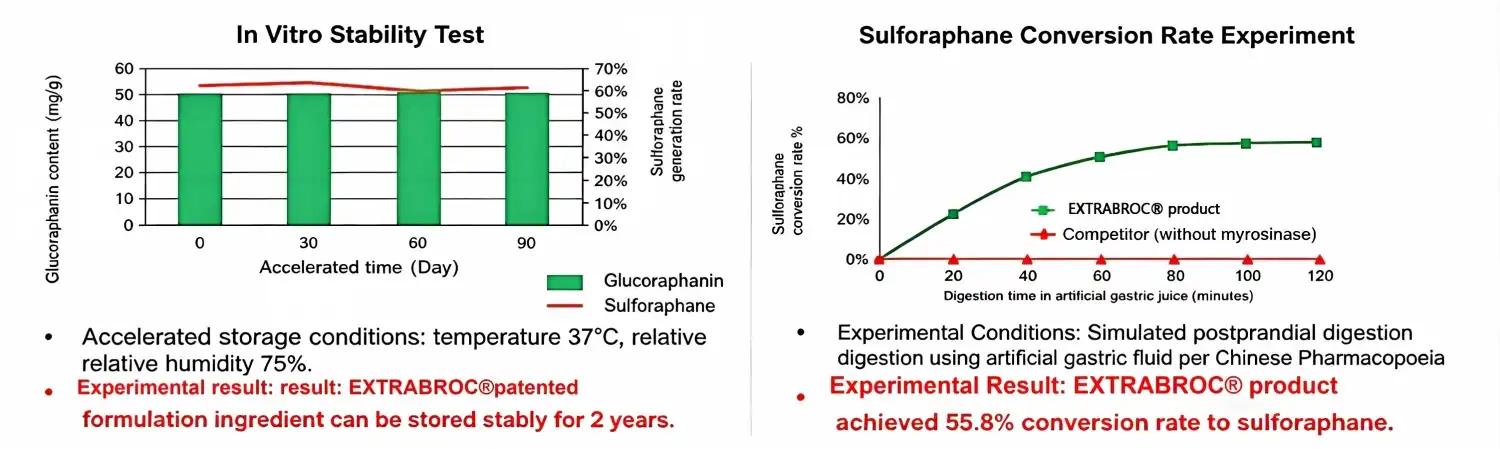
Broccoli Seed Extract 3% Sulforaphane is reshaping how formulators approach functional food development. Standardized from Brassica oleracea var. italica seeds, this light yellow fine powder delivers a consistent, clinically verified concentration of sulforaphane—the most potent natural activator of the Nrf2 signaling pathway. With an in vivo conversion rate of ≥55.8% and room-temperature stability for 24 months, it addresses the three core pain points in phytonutrient formulation: instability, low bioavailability, and batch inconsistency. For B2B buyers building next-generation wellness products, this ingredient offers both scientific credibility and supply-chain reliability.
Understanding Broccoli Seed Extract 3% Sulforaphane: Composition and Health Benefits
What Makes This Extract Scientifically Distinct?
Sulforaphane is an isothiocyanate that is made when the stable precursor glucoraphanin interacts with the enzyme myrosinase. The SFN3% formula in EXTRABROC® includes glucoraphanin, horseradish powder (which is a natural source of myrosinase), and calcium salts. These work together to make the body convert the substances in a controlled and effective way. This avoids the instability of free sulforaphane and makes sure that the physiological amount is always the same.
Nrf2 Activation and Cellular Defense
Once it is absorbed, sulforaphane goes after the Nrf2 pathway, which controls the body's antioxidant and detoxification responses. Turning on Nrf2 turns on more than 200 cytoprotective genes, some of which make Phase II detoxification enzymes like glutathione S-transferase. This reaction at the cellular level helps to eliminate reactive oxygen species, lower chronic low-grade inflammation, and make tissues more resistant to stress from the environment.
Documented Health Applications
Peer-reviewed study connects sulforaphane to a number of health benefits that are important to today's wellness shopper. Some of these benefits are increasing enzymes that fight cancer (Fahey et al., PNAS, 1997), protecting the skin from UV-induced oxidative damage, controlling blood sugar, and protecting neurons. This wide range of proof helps formulators place anti-aging, metabolic health, and sports recovery products. It is backed up by more than 10 finished human clinical trials.
Enhancing Functional Food Formulations with Broccoli Seed Extract 3% Sulforaphane
Antioxidant Activity and Clean-Label Appeal
Botanical vitamins are at the top of buyers' lists because people want ingredients that are good for you. Since SFN3% is only extracted with water and no organic solvents, it is automatically a good candidate for clean-label approval. Its antioxidant activity is prolonged and higher than many common antioxidants added to functional drinks and meal replacements. This is because Nrf2 activation drives the antioxidant activity instead of direct radical scavenging.
Dosage, Format, and Stability in Food Matrices
Broccoli Seed Extract 3% Sulforaphane is supplied as a fine powder with particles that are at least 90% smaller than 180μm. This means that it can be used for encapsulation, tablet compression, sachet blending, and beverage premixing. Depending on the health claim and the form of the product, the functional dose is usually between 10 and 30 mg sulforaphane equivalent per serve. SFN3%, but not free sulforaphane, stays fully active at room temperature for 24 months. This is a big plus when handling global supply chains and SKUs with long shelf lives.
Here are some examples of how well SFN3% works with different types of products:
- Nutritional bars and meal replacements: The powder blends evenly into dry mixes without affecting texture. Its glucoraphanin base remains stable through standard baking temperatures when properly encapsulated, supporting glucose-lipid metabolism positioning.
- Functional beverages: When added to neutral-pH drink mixes, SFN3% disperses readily. The controlled enzymatic conversion occurs post-ingestion, protecting potency during manufacturing and shelf storage.
- Dietary supplements (capsules/tablets): The 180μm particle size and low moisture profile make SFN3% ideal for direct compression, reducing excipient requirements and keeping per-serving costs manageable.
Because of these use patterns, SFN3% is one of the most versatile sulforaphane ingredients on the market right now. Whether you're putting out a high-end line of supplements or making a sports nutrition powder stronger, the extract can be used without any problems.
Comparing Broccoli Seed Extract 3% Sulforaphane with Alternative Ingredients
3% vs. 5% Sulforaphane Concentrations
A 5% sulforaphane extract is more powerful per gram, but it costs a lot more to make and is harder to keep stable. The best mix of effectiveness, cost per active dose, and shelf stability for most functional food uses is 3% sulforaphane, as long as the goal dose can be reached in standard serving amounts. When B2B buyers want to scale production to tens of thousands of units per month, they always choose the 3% standard because it is cheaper and easier to use.
Broccoli Seed Extract vs. Broccoli Sprout Powder and Turmeric
Raw broccoli sprout powders are comparable in price, but their glucoraphanin content and myrosinase activity are not always constant, which causes problems with their change in living organisms. Curcumin, which is found in turmeric, works against inflammation in a similar way, but it does so through a different set of molecules (NF-κB instead of Nrf2) and is less bioavailable when taken by mouth without other substances like piperine. Standardized sulforaphane extract, on the other hand, has a specific, patent-protected process with known clinical results. This is an important difference in evidence-based marketing.
Organic Certification and Bulk Procurement Considerations
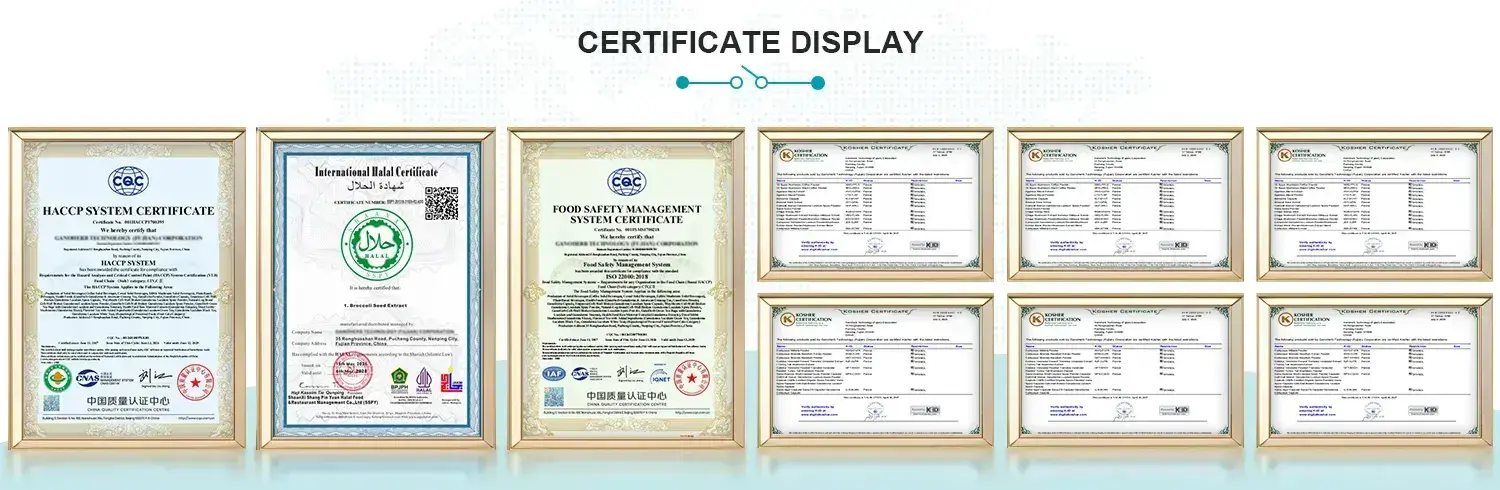
EXTRABROC®'s SFN3% is non-GMO and has been tested for more than 500 things, such as heavy metals, microorganisms, and chemical residues (inorganic arsenic: 0.042 µg/g; total aerobic bacterial count: <10 cfu/g). All certificates are included with the standard Certificate of Analysis for buyers who need them for HALAL, FDA, GMP, ISO22000, or HACCP. The annual production capacity is 50 tons, which means that big orders can be filled without any problems.
Procurement Insights for Broccoli Seed Extract 3% Sulforaphane in B2B Markets
Key Supplier Evaluation Criteria
When choosing a sulforaphane provider, you need to look at more than just price. Important checks for Broccoli Seed Extract 3% Sulforaphane include HPLC confirmation of potency, recorded in vivo conversion data, patent protection in more than one country, and full tracking from seed to final extract. EXTRABROC® has creation patents in China, Japan, while the US patent is under substantive examination.It is the only sulforaphane ingredient with patents in all three countries. This protects the core technology legally and scientifically and makes it impossible to copy.
Pricing, MOQ, and Logistics
EXTRABROC® can handle freight by air or sea, so it can serve customers in North America, Europe, and the Asia-Pacific region. Customizable specs and OEM services let customers ask for particular amounts of glucoraphanin and sulforaphane, particle sizes, or mixtures. Technical help includes HPLC analysis, formula customization, and patent licensing choices based on order volume. This makes internal research and development easier for both new names and contract manufacturers.
Compliance Documentation for the US Market
The US Food and Drug Administration (FDA) lists SFN3% as GRAS, the USP-NF pharmacopeia lists it as a drug, and China's National Health Commission lists it as a new food raw material. These approvals cover the labeling, safety proof, and ingredient listing needs for the main product marketing routes, which are retail supplements, functional foods, and clinical nutrition.
Addressing Safety, Side Effects, and Regulatory Compliance
Known Side Effects and Risk Mitigation
Functional doses of sulforaphane have been shown to be well tolerated by humans. At higher doses (>100 mg/day sulforaphane equivalent), some people report mild stomach problems like bloating or loose stools. When products are made to contain 10–30 mg per serving, side effects are very rare. Because cruciferous chemicals can cause goiter at pharmacological doses, formulators shouldn't mix high amounts of sulforaphane with people who are sensitive to thyroid without first getting professional advice.
Regulatory Framework: FDA, EFSA, and Beyond
In the US, sulforaphane ingredients that come from broccoli seeds are considered GRAS, which means they can be used in simple ways in nutritional supplements and useful foods. The European Food Safety Authority (EFSA) says that broccoli products with sulforaphane are novel foods under certain conditions, which means that new companies that want to get into the market need to let them know about it. Before launching, buyers who want to sell their products in the EU should check with their regulatory team to make sure that the country in question has Novel Food authorization.
Quality Control and Batch Verification
HPLC checks each run of SFN3% to make sure it has the right amount of sulforaphane (≥3%), particles that are the right size (≥90% at 180μm), and is safe for microbes. The full traceability system includes growing the seeds, extracting the oil, and packaging it. This means that any change in quality can be found and fixed at its source. With every package, buyers get a full Certificate of Analysis, which makes it easy to provide proof for FDA facility registration and third-party checks.
Conclusion
For today's evidence-based health market, Broccoli Seed Extract 3% Sulforaphane from EXTRABROC® gives functional food formulators a nutrient that is based on science and can be used reliably. It gets rid of the main problems that stop people from using sulforaphane by having three patents, a proven in vivo conversion rate of ≥55.8%, safety at room temperature for 24 months, and full legal compliance in the US, EU, and other places. This ingredient has the scientific support and supply stability your product line needs, whether it's for anti-aging, metabolic health, sports recovery, or immune support.
FAQ
What is the recommended sulforaphane dosage in functional foods?
Most functional food applications target 10–30 mg of active sulforaphane per serving. SFN3% delivers this range efficiently within standard serving sizes, such as a single capsule or one sachet. Clinical studies supporting glucose metabolism and antioxidant outcomes generally fall within this window.
How does SFN3% compare to broccoli sprout extract?
Broccoli sprout powders have variable glucoraphanin content and inconsistent myrosinase activity, making batch-to-batch potency unpredictable. SFN3% uses a patented glucoraphanin-plus-myrosinase system with a verified in vivo conversion rate of ≥55.8%, providing consistent and reproducible results that sprout powders cannot guarantee.
Are there any side effects formulators should account for?
At standard functional food doses (10–30 mg sulforaphane equivalent), side effects are rare. Mild gastrointestinal discomfort may occur at higher doses. Formulators working with sensitive populations—such as those with thyroid conditions—should consult clinical guidance before specifying high-dose formats.
What certifications does SFN3% hold?
SFN3% holds FDA, GMP, ISO22000, HACCP, and HALAL certifications. It also complies with US USP-NF standards and China's New Food Raw Material classification for broccoli seed aqueous extract.
Can SFN3% be used in beverage applications?
Yes. The powder disperses in neutral-pH beverage mixes, and because conversion occurs post-ingestion, potency is preserved during manufacturing and throughout the product's shelf life.
Partner with EXTRABROC® for Your Next Functional Food Launch
Broccoli Seed Extract 3% Sulforaphane from EXTRABROC® is a reliable source that is backed by three patents, more than ten clinical trials, and the ability to produce 50 tons per year. As a top producer of Broccoli Seed Extract 3% Sulforaphane, we offer custom formulas, regulatory paperwork, HPLC analysis, and bulk pricing support that fits your needs. Ask for a sample or start talking about buying today. To get in touch with our computer team, go to extrabroc.com or email info@extrabroc.com.
References
1. Fahey, J. W., Zhang, Y., & Talalay, P. (1997). Broccoli sprouts: An exceptionally rich source of inducers of enzymes that protect against chemical carcinogens. Proceedings of the National Academy of Sciences, 94(19), 10367–10372.
2. Kensler, T. W., Egner, P. A., Agyeman, A. S., et al. (2013). Keap1–Nrf2 signaling: A target for cancer prevention by sulforaphane. Topics in Current Chemistry, 329, 163–177.
3. Shapiro, T. A., Fahey, J. W., Wade, K. L., Stephenson, K. K., & Talalay, P. (2006). Human metabolism and excretion of cancer chemoprotective glucosinolates and isothiocyanates of cruciferous vegetables. Cancer Epidemiology, Biomarkers & Prevention, 7(12), 1091–1100.
4. Houghton, C. A., Fassett, R. G., & Coombes, J. S. (2016). Sulforaphane and other nutrigenomic Nrf2 activators: Can the clinician's expectation be matched by the reality? Oxidative Medicine and Cellular Longevity, 2016, 7857186.
5. Bahadoran, Z., Mirmiran, P., & Azizi, F. (2013). Dietary polyphenols as potential nutraceuticals in management of diabetes: A review. Journal of Diabetes & Metabolic Disorders, 12(1), 43.
6. Dinkova-Kostova, A. T., & Abramov, A. Y. (2015). The emerging role of Nrf2 in mitochondrial function. Free Radical Biology and Medicine, 88(Part B), 179–188.