How Astaxanthin Powder Supports Color Stability in Cosmetic Formulations
Haematococcus Pluvialis Astaxanthin Powder is one of the most potent natural antioxidants available to cosmetic formulators today. Derived from the microalgae Haematococcus pluvialis, this deep red-to-violet powder protects cosmetic pigments from oxidation, UV-induced fading, and ingredient-triggered discoloration. Its unique molecular structure allows it to neutralize free radicals across both lipid and aqueous phases, preserving the visual integrity of creams, serums, and color cosmetics throughout a product's full shelf life—without relying on synthetic preservatives.
Understanding Color Stability Challenges in Cosmetic Formulations
Too much color loss has been a big issue with makeup for a long time. People lose faith in a brand right away when they see even small changes in color. These changes can be caused by oxidation or chemical breakdown.
The Main Causes of Color Degradation
There are three main things that happen in makeup formulas that cause color loss: reactive oxygen species (ROS) cause oxidative stress, UV light breaks down pigment molecules, and ingredients that don't work well together cause chemical reactions during the formulation process. Things like these that put stress on organic and iron oxide dyes make it more likely that they will break while being stored.
Why Synthetic Antioxidants Fall Short?
Other choices, like BHT and BHA, do guard against oxidation, though. But in the US market, they aren't as popular as they used to be. This is because people want clean labels and the government is paying more attention to them. There is a lot of pressure on formulators to switch out fake ingredients for real ones that work, make money for the company, and don't make the product go bad faster.
The Shift Toward Natural Antioxidant Solutions
A lot of beauty companies in the US want antioxidants that come from plants, work well, and let them stick to clear labels. It is being studied more and more how to make color-stable makeup with astaxanthin and other carotenoids found in microalgae. This is because they protect better against photo-oxidative stress than many options made from plants.
How Haematococcus Pluvialis Astaxanthin Powder Enhances Color Stability?
It comes from Haematococcus pluvialis and has a better structure than other carotenoids. The polyene chains are linked together, and the ends of the chains are polar. This means that it can pass through the whole lipid bilayer membrane and reduce ROS. The reason for this activity across membranes is to keep color molecules safe when they mix with oil and water.
Molecular Interaction with Cosmetic Pigments
This kind of astaxanthin is mostly made up of monoesters, and it only links to color spots that are likely to turn brown. We can see this in the real world by adding astaxanthin to iron oxides, micas, and man-made dyes. These things become more stable over time. Studies have shown that it is around 6,000 times stronger than CoQ10 and 800 times stronger than Vitamin C. This means that it can still protect colors at a very low level.
Protection Against Photo-Oxidative Stress
Colors that break down faster in UV light are often found in things that are kept near windows or shown off in shops with lots of bright lights. Astaxanthin's carotenoids take in UV light and turn it into heat instead of letting it break down colors. It can block light, which is a big difference from tocopherols and rosemary extract.
Dual Benefits: Color Stability and Skin Performance
Not only does Haematococcus Pluvialis Astaxanthin Powder protect colors, but it also fights oxidative stress caused by UV light in skin tissue, makes it more elastic, and smooths out the surface. One ingredient really does protect both the formula's look and the skin of the person using it. The story here is a real one for a cosmetics brand.
Comparing Haematococcus Pluvialis Astaxanthin Powder with Other Antioxidants
When procurement workers buy antioxidants for color-stable makeup, they need to be able to tell the difference between them. This is how natural astaxanthin stacks up against the most common man-made ones.
When it comes to three things that matter to formulators, algae-based astaxanthin always works better than other brands:Astaxanthin that is made in a lab is different from the following: Esterification only happens in natural sources, not man-made ones. In reality, they are a racemic mix of different isomers. The antioxidant activity per unit weight goes down because the structures are different. This makes it harder to get approved in places that only allow natural claims. This is the only form of astaxanthin that can be found in Haematococcus pluvialis: (3S, 3'S). This is the form that can biologically work and get rid of the most free radicals. Phycocyanin, the main color of spirulina, or spirulina powder each do a unique job. It doesn't protect the lipid phase like astaxanthin does because it only fights certain types of ROS. In emulsion systems, where color breaks down where the oil and water meet, spirulina doesn't protect as well as esterified astaxanthin, which works across membranes.
- Versus synthetic astaxanthin: Synthetic variants are racemic mixtures of multiple isomers, lacking the esterification found in natural sources. This structural difference lowers antioxidant activity per unit weight and complicates regulatory positioning in markets that require natural-only claims. Natural astaxanthin from Haematococcus pluvialis contains the (3S, 3'S) isomer exclusively—the biologically active configuration with the highest free-radical scavenging capacity.
- Versus Spirulina powder: Spirulina's primary pigment, phycocyanin, functions differently—it targets specific ROS categories and lacks the lipid-phase protection that astaxanthin provides. In emulsion systems where pigment degradation occurs at oil-water interfaces, spirulina offers limited defense compared to the transmembrane activity of esterified astaxanthin.
- Organic vs. non-organic sourcing: Certified organic Haematococcus pluvialis powder carries a premium price but opens access to the US natural and organic cosmetics segment—a category valued at over $5 billion annually. For mass-market formulations where budget constraints matter, high-purity non-organic powder with FSSC22000, HACCP, HALAL, and Kosher certifications offers equivalent antioxidant performance at lower cost.
Since these are different, buying teams can find the astaxanthin grade that fits the image of a brand without having to change the results to keep the color.
Procurement Considerations for Haematococcus Pluvialis Astaxanthin Powder
Choosing the right supplier for cosmetic-grade astaxanthin involves more than comparing price per kilogram. Supply reliability and document transparency directly affect production scheduling and regulatory compliance.
Certifications and Quality Documentation
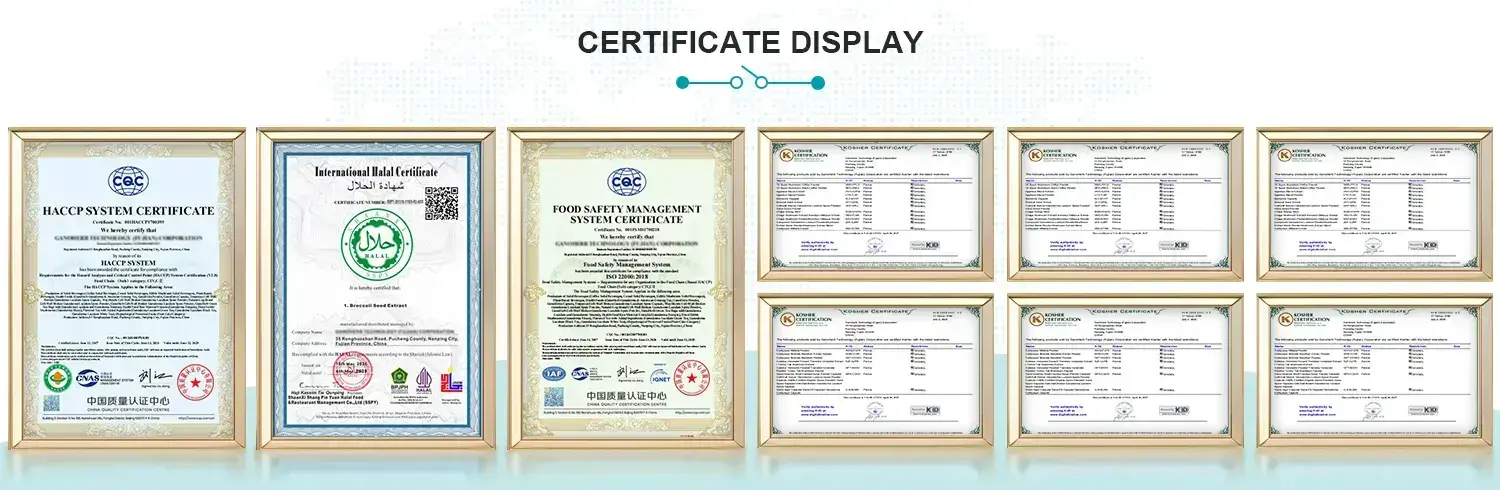
Reputable suppliers should provide a full Certificate of Analysis (CoA) with HPLC-verified astaxanthin content, microbiology results, heavy metal data, and residual solvent testing. Our Haematococcus Pluvialis Astaxanthin Powder carries FSSC22000, HACCP, HALAL, and Kosher certifications, with astaxanthin content verified at ≥2%, ≥3%, ≥4%, ≥5%, and ≥6% specifications. Appearance is confirmed as red or dark red fine powder with a 24-month shelf life.
Supply Scale and Logistics
Production capacity matters when brands scale. Our facility maintains a stable annual output of 300 metric tons, fully supporting large-volume orders and consistent batch-to-batch supply. Both air and sea freight are supported for US-bound shipments. For initial compatibility testing, sample orders are available before committing to bulk procurement.
Traceability and Process Integrity
Our exclusive pre-treatment process uses purified water in glass pipeline sealed cultivation systems. The dried algae powder achieves 99% purity with no additional substances. Full traceability from cultivation through finished powder is maintained, giving procurement teams documentation at every stage of production.
Best Practices for Integrating Astaxanthin Powder into Cosmetic Formulations
Astaxanthin from microalgae works best when used in the right amount, with other ingredients, and in the right way. Pay close attention to these things when making it.
Dosage Guidelines by Product Type
A level of 0.02 to 0.05% (w/w) in antioxidant serums keeps colors bright without turning light-colored formulas a rusty color. Face creams and masks that say they can protect against UV rays or slow down aging should have 0.05 to 0.1%. If you go over 0.1%, you might see color. For some items, this works fine, but not so much for clear serums.
pH Range and Ingredient Compatibility
Astaxanthin works best when the pH level is between 4.5 and 6.5 when it is mixed with other things. When the pH is high, the antioxidant activity goes down because the ester bonds break down faster. Because of this, folic acid, niacinamide, and vitamin E all work well with it. Taxanthine can break down more quickly before it reaches the user if it is mixed with more than 5% ascorbic acid in the same phase. This is because of the low pH and reactive potential.
Stability Testing and Shelf-Life Confirmation
A product is quickly tested for stability at 40°C/75% RH for 12 weeks before it goes on sale. The color and chemical will work for the right amount of time after these tests. People who make cosmetics have used our astaxanthin and said that the antioxidant activity and color profiles stayed the same after 24 months of real-time tests. Same amount of time that the raw material is promised to last.
Conclusion
Astaxanthin from Haematococcus Pluvialis Astaxanthin Powder stops color loss at the molecular level and is a better antioxidant and protector than forms made in a lab. HPLC specs have been tested, it is certified for a number of standards, and there is a steady supply of 300 tons per year. This makes it a reasonable and cost-effective option for people who make cosmetics and people who buy them in the US market. So brands can use a real, science-based ingredient story that people can relate to. It keeps recipe color safe and is good for skin.
FAQ
Does astaxanthin tint cosmetic formulas visibly?
At standard inclusion rates (0.02–0.05%), most formulas show no visible color shift. Higher concentrations may introduce a subtle warm hue, which is actually a selling point in some antioxidant serums. The deep red character of the raw powder disperses effectively in emulsions at low use levels.
Is natural astaxanthin approved for cosmetic use in the US?
Yes. Cosmetic-grade astaxanthin derived from Haematococcus pluvialis is widely used in US skincare products. Product claims must comply with FDA cosmetic labeling guidelines and must not reference disease treatment.
What is the minimum order quantity for cosmetic-grade powder?
MOQs vary by specification. Sample quantities are available for formulation testing before bulk commitment. Contact our team directly for specific MOQ details based on your target concentration grade.
How is quality verified in each production batch?
Every batch undergoes HPLC testing for active astaxanthin content, microbiology screening, and heavy metal analysis. Full CoA documentation is provided with each shipment.
Can the powder be used in water-based formulas?
Natural astaxanthin is oil-soluble by nature. For water-based applications, microencapsulated versions are available, offering water dispersibility while maintaining antioxidant performance in aqueous cosmetic systems.
Partner With EXTRABROC® for Reliable Astaxanthin Supply
You can buy Haematococcus Pluvialis Astaxanthin Powder from EXTRABROC®. It is safe to use in cosmetics. If a company has all the right licenses, approved specs, and the ability to make 300 tons of goods every year, it can handle regular big orders. A lot of cosmetic brands in the US depend on us to supply them with Haematococcus Pluvialis Astaxanthin Powder. We provide specifications ranging from ≥2% to ≥6%, help with custom formulas, and direct technical support. To get a taste right away, go to extrabroc.com and fill out the form or email info@extrabroc.com with your recipe needs.
References
1. Yuan, J. P., Peng, J., Yin, K., & Wang, J. H. (2011). Potential health-promoting effects of astaxanthin: A high-value carotenoid mostly from microalgae. Molecular Nutrition & Food Research, 55(1), 150–165.
2. Lorenz, R. T., & Cysewski, G. R. (2000). Commercial potential for Haematococcus microalgae as a natural source of astaxanthin. Trends in Biotechnology, 18(4), 160–167.
3. Naguib, Y. M. A. (2000). Antioxidant activities of astaxanthin and related carotenoids. Journal of Agricultural and Food Chemistry, 48(4), 1150–1154.
4. Guerin, M., Huntley, M. E., & Olaizola, M. (2003). Haematococcus astaxanthin: Applications for human health and nutrition. Trends in Biotechnology, 21(5), 210–216.
5. Davinelli, S., Nielsen, M. E., & Scapagnini, G. (2018). Astaxanthin in skin health, repair, and disease: A comprehensive review. Nutrients, 10(4), 522.
6. Ambati, R. R., Phang, S. M., Ravi, S., & Aswathanarayana, R. G. (2014). Astaxanthin: Sources, extraction, stability, biological activities, and its commercial applications—A review. Marine Drugs, 12(1), 128–152.