Broccoli Seed Extract 3% Sulforaphane Provides a Stable Ingredient Solution for Premium Wellness Product Brands
When premium wellness brands search for ingredients that can anchor a product line with real scientific credibility, Broccoli Seed Extract 3% Sulforaphane consistently rises to the top. Derived from Brassica oleracea var. italica seeds through a pure aqueous extraction process, this standardized isothiocyanate ingredient delivers a verified sulforaphane concentration of ≥3%, confirmed by HPLC analysis. For B2B procurement managers, formulators, and OEMs serving the U.S. wellness market, the combination of patent-protected technology, 24-month room-temperature stability, and over 10 completed human clinical trials makes this one of the most defensible ingredient choices available today.
Understanding Broccoli Seed Extract 3% Sulforaphane: Composition and Health Benefits
What Makes Up This Extract?
The high-efficiency EXTRABROC® Stabilized Sulforaphane (SFN3%) is a fine, light yellow powder that has glucoraphanin, horseradish powder with active myrosinase, calcium salts, and a co-formula that has been trademarked. This mix is designed to make sure that glucoraphanin is properly converted into sulforaphane by enzymes inside the body. Particles are ≥90% smaller than 180μm, and the total aerobic bacterial count stays below 10 cfu/g, which is well within the standards for pharmaceutical-grade microbiology.
Mechanism of Action at the Cellular Level
Sulforaphane mainly works by targeting the Nrf2 signaling pathway, which is the body's main controller of antioxidant defense and the activation of Phase II detoxification enzymes. Protective proteins like heme oxygenase-1 and glutathione S-transferase are made when Nrf2 is turned on. This response at the cellular level lowers oxidative stress and systemic inflammation, which are two biological factors that cause aging, metabolic dysfunction, and the risk of getting a chronic disease.
Dosage, Safety, and Regulatory Standing
The extract is FDA GRAS, meets USP-NF pharmacopeia standards, and is in line with what China's National Health Commission says about broccoli seed watery extract as a New Food Raw Material. There are no organic solvent residues, and over 500 tests were done to make sure it is free of herbicides, bacteria, and heavy metals. The amount of pure arsenic is 0.042 µg/g, which is much less than the worldwide safety limits.
Comparing Broccoli Seed Extract 3% vs. Other Sulforaphane Sources
Seed Extract vs. Sprout Powder
The amount of glucoraphanin in raw broccoli sprout powders varies, and myrosinase can be turned off during drying. Because of this, it is hard for formulators to make sure that dosages are correct from lot to lot. Standardized seed extract, on the other hand, keeps the concentration of the active ingredient at ≥3% through production that is controlled by HPLC. This gives product developers a reliable starting point for each batch.
Why 3% Concentration Hits the Practical Sweet Spot?
Higher amounts, like 5% or 10% sulforaphane extracts, tend to break down faster in normal storage settings and make final goods more difficult to taste. A standardized 3% extract strikes a good balance between strength and formulation versatility, allowing for effective physiological doses at acceptable serving sizes while keeping the characteristic cruciferous smell under control in capsule, tablet, and powder forms.
Benchmarked Against Other Botanical Antioxidants
Unlike resveratrol, quercetin, or curcumin, Broccoli Seed Extract 3% Sulforaphane works through an indirect antioxidant mechanism, activating the body's own defense enzymes instead of just scavenging free radicals. This makes the response last longer and get stronger on its own. EXTRABROC®'s SFN3% has an in vivo conversion rate of ≥55.8%, with little variation between individuals. This means that the clinical outcomes are the same for a wide range of consumer groups.
Procurement Insights for Sourcing Sulforaphane Ingredients
Evaluating a Broccoli Seed Extract 3% Sulforaphane Supplier
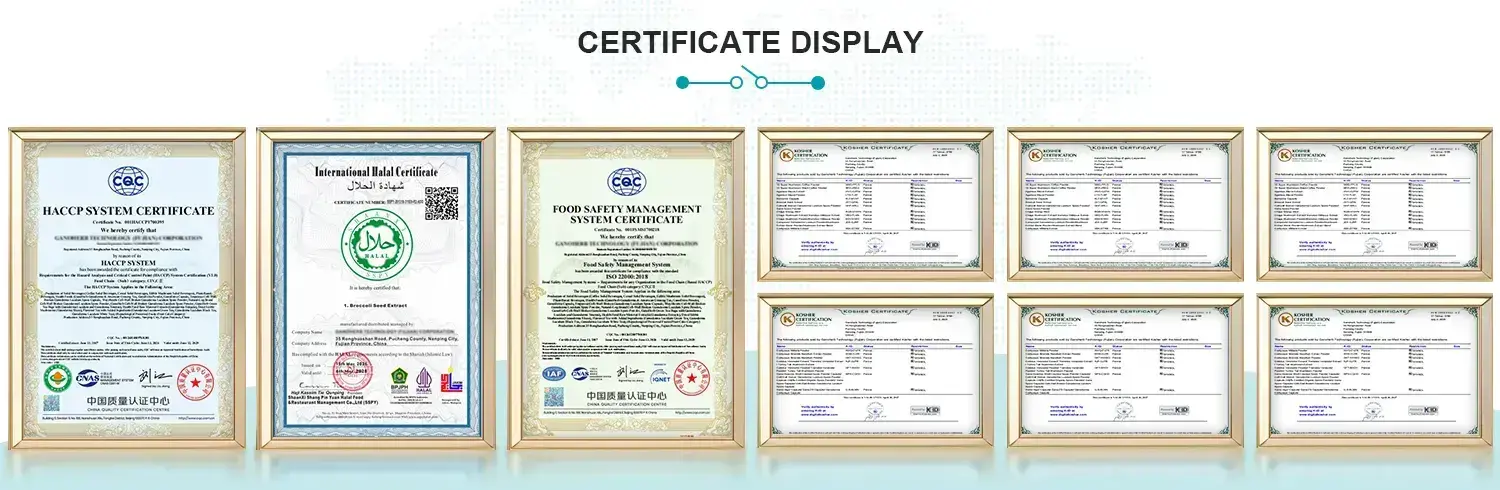
When getting this element, you can't go without licenses. At the very least, look for facilities that are certified by GMP, ISO22000, HACCP, and HALAL. When EXTRABROC® buys materials, they only get them from companies that meet all four standards, plus FDA approval. There is full tracking in the supply chain, from the seed to the finished extract. This means that every batch ships with paperwork that shows where the plants came from, how they were extracted, and the results of third-party tests.
Before making a large order, procurement teams should make sure of the following:
- Potency documentation: A Certificate of Analysis (CoA) must confirm sulforaphane ≥3% via HPLC—not estimated by glucoraphanin content alone.
- Stability data: Accelerated aging test results confirming no efficacy loss at room temperature over 24 months protect long lead-time inventory investments.
- Production scale: EXTRABROC® maintains a stable annual output of 50 metric tons, supporting large-volume orders without supply interruption.
- Shipping flexibility: Both air and sea freight options are available, accommodating different order sizes and delivery timelines.
These standards protect the quality of your product from the time it's made in the factory until it's sold in stores.
MOQ, Packaging, and Custom Specifications
EXTRABROC® lets customers change the product's details based on their needs. This includes changing the amount of ingredients, making new dosage forms, and combining ingredients in new ways. The packaging is made for business-to-business shipping, and the instructions say to store it in a cool, dry, and light-protected place for two years.
Patent Licensing and IP Protection
IP strength is one thing that sets this source apart from a common broccoli seed extract maker. The sulforaphane release method used by EXTRABROC® is protected by invention patents in China and Japan, while the US patent is under substantive examination.Because of the patent, the main mechanism for conversion can't be copied. This gives licensed partners an ingredient claim that they can defend that generic suppliers can't match.
Why Premium Wellness Brands Choose This Sulforaphane Extract?
Formulation Versatility Across Product Categories
Formulators use Broccoli Seed Extract 3% Sulforaphane in a lot of different kinds of products. It supports high-end pill and tablet lines that are based on Phase II enzyme expression in Nrf2-targeted nutraceuticals. In advanced cosmetic products, it stays chemically stable in emulsions where protecting against UV-induced oxidative stress is the main claim. In functional food uses, like powdered meal alternatives and health-focused drink mixes, it stays effective even when the pH level changes or the mixture is mixed mechanically.
Clinical Credibility That Supports Brand Claims
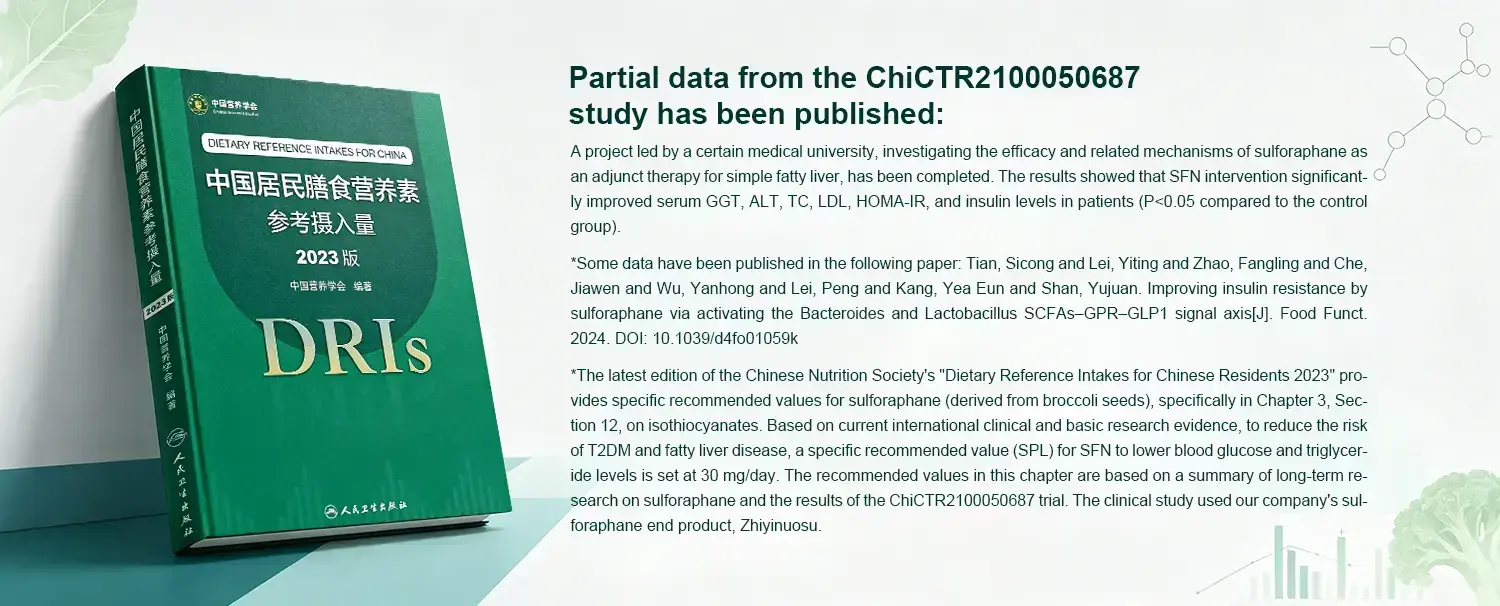
This technology has been used in more than 10 clinical trials and real-world tests with people. With that much scientific proof, wellness brands can back up their health claims about fighting aging, controlling glucose and lipid metabolism, improving mood and sleep, helping athletes recover, and managing weight. In a market where regulatory scrutiny of structure/function claims keeps growing, having backing from well-known research institutions that have been reviewed by experts is a clear competitive advantage.
Building Consumer Trust Through Ingredient Transparency
The U.S. health shopper of today reads labels. Products made with EXTRABROC®'s SFN3% can show that they are FDA GRAS, USP compliant, non-GMO, and have a clean water extraction method that leaves no organic solvent residue. These are the kinds of claims on labels that turn first-time buyers into repeat buyers and help wellness brands justify their high prices.
Future Market Direction for Plant-Based Sulforaphane Ingredients
Growing U.S. Demand for Nrf2-Activating Botanicals
The U.S. nutraceutical business keeps moving toward useful ingredients whose actions have been studied and proven. People and doctors are turning away from general antioxidants and toward treatments that target specific pathways. Sulforaphane is right in the middle of this trend because its Nrf2 activation profile is well known. This is especially true as interest in life, cellular health, and metabolic resistance grows.
Technology Improvements Expanding Application Range
Sulforaphane used to have a short shelf life, but improvements in packaging and water-based extraction have made it possible for it to be used in more foods and drinks. This problem has been solved by EXTRABROC®'s patented stabilization system, which keeps the ingredient stable at room temperature for 24 months without breaking down. This means that global distribution networks can now reliably get this ingredient.
Strategic Procurement Positioning
Brands that make deals to only buy from a Broccoli Seed Extract 3% Sulforaphane maker who can protect their intellectual property and give them clinical data are creating an ingredient moat. As the category grows, being able to get documented, patent-backed sulforaphane will help product lines stand out much more than common botanical ingredients.
Conclusion
Broccoli Seed Extract 3% Sulforaphane, as offered through EXTRABROC®'s SFN3% ingredient, answers the core demand of premium wellness brands: consistency, science, and supply reliability. With ≥55.8% in vivo conversion, 24-month ambient stability, full regulatory compliance, and U.S.-granted patent protection, this ingredient provides a genuine technical foundation for differentiated product development. Procurement teams can source with confidence, knowing the clinical evidence, quality documentation, and production scale are all in place.
FAQ
What is the difference between broccoli seed extract and broccoli sprout extract?
Seed extract standardized to 3% sulforaphane offers tighter potency control than sprout-derived powders, which vary significantly in glucoraphanin content depending on growing conditions and processing methods.
What dosage is recommended for finished supplement formulations?
Dosage depends on the target health application, but EXTRABROC®'s SFN3% is designed so that compliant serving sizes deliver effective physiological doses, supported by clinical trial data. Our technical team provides formulation guidance.
Are there known contraindications for long-term sulforaphane use?
Sulforaphane is generally well-tolerated. It carries FDA GRAS status and has a strong safety record across clinical studies. Individuals taking thyroid medications should consult a healthcare provider due to glucosinolate interactions at high doses.
Can this extract be used in food and beverage applications?
Yes. SFN3% maintains potency in functional food matrices, including products with variable pH and mechanical blending, making it suitable for powdered drinks and meal replacement formats.
How is product quality verified batch to batch?
Every batch is confirmed by HPLC analysis, with a CoA provided. Testing covers potency, heavy metals, pesticide residues, and microbiological limits.
Request a Sample or Bulk Quote from EXTRABROC®
Broccoli Seed Extract 3% Sulforaphane is more accurate at measuring strength than sprout-derived powders, whose glucoraphanin content changes a lot based on how they were grown and processed. You can email us at info@extrabroc.com or go to extrabroc.com.
References
1. Fahey, J.W., Zhang, Y., & Talalay, P. — Proceedings of the National Academy of Sciences, 1997.
2. Kensler, T.W., Wakabayashi, N., & Biswal, S. — Annual Review of Pharmacology and Toxicology, 2007.
3. Dinkova-Kostova, A.T., & Kostov, R.V. — Seminars in Cancer Biology, 2012.
4. Shapiro, T.A., et al. — Cancer Epidemiology, Biomarkers & Prevention, 2006.
5. Myzak, M.C., & Dashwood, R.H. — Cancer Letters, 2006.
6. Heber, D., et al. — Journal of Nutrition, 2014.