Stachyose 70% Powder Meets High-Quality Ingredient Requirements for Pharmaceutical and Health Food Development
When formulators and procurement managers search for a prebiotic ingredient that performs reliably across both pharmaceutical and health food applications, Stachyose 70% Powder stands out as a scientifically grounded choice. Derived from botanical sources with a long history of dietary use, this high-purity tetrasaccharide oligosaccharide delivers selective gut microbiota support, thermal stability, and a clean safety profile. For B2B buyers who need consistent raw material quality backed by certified manufacturing, this guide walks through everything that matters—from biochemical properties and quality benchmarks to sourcing strategy and formulation best practices.
Understanding Stachyose 70% Powder and Its Value for Health Food & Pharma
Stachyose is a naturally occurring tetrasaccharide with the molecular formula C₂₄H₄₂O₂₁. It appears most abundantly in Stachys affinis (Chinese artichoke), and at lower concentrations in legumes like soybeans (typically 2–4%). Because stachyose breaks down rapidly during legume germination, bean sprouts are not a meaningful dietary source—making concentrated extraction the only practical route to a functional ingredient.
What Makes the 70% Grade Clinically Relevant?
A purity level of ≥70% matters in practice. Research and traditional use both suggest that levels below 50% may be adequate for general wellness maintenance, but addressing diagnosed gastrointestinal conditions or developing pharmaceutical-grade supplements requires this higher concentration. The 70% threshold also keeps sucrose and glucose impurities low enough to maintain a negligible glycemic index—a critical specification for diabetic-friendly formulations.
Prebiotic Mechanism at the Gut Level
Stachyose resists hydrolysis by human digestive enzymes and arrives at the colon structurally intact. There, Bifidobacteria and Lactobacilli ferment it preferentially, producing short-chain fatty acids (SCFAs) that lower intestinal pH and inhibit pathogen growth. Studies indicate that stachyose accelerates Bifidobacteria proliferation approximately 40 times faster than many common prebiotic fibers, without generating the excess gas that often accompanies inulin supplementation.
Three Protective Barriers It Builds
Stachyose establishes biological, chemical, and immune barriers in the gut. Biologically, proliferating beneficial bacteria adhere to the intestinal wall and form a protective microbial film against enterotoxins. Chemically, SCFA production drives down pH and supports peristalsis. Immunologically, stachyose metabolites such as manninotriose and melibiose stimulate secretory immunoglobulin A (IgA) production, offering broad-spectrum mucosal defense.
Quality Standards and Ingredient Requirements for Pharma & Health Food Development
Pure ingredients are not enough to satisfy regulatory buyers. If a raw material passes procurement review, it is based on the integrity of the manufacturing process, the documentation, and third-party verification.
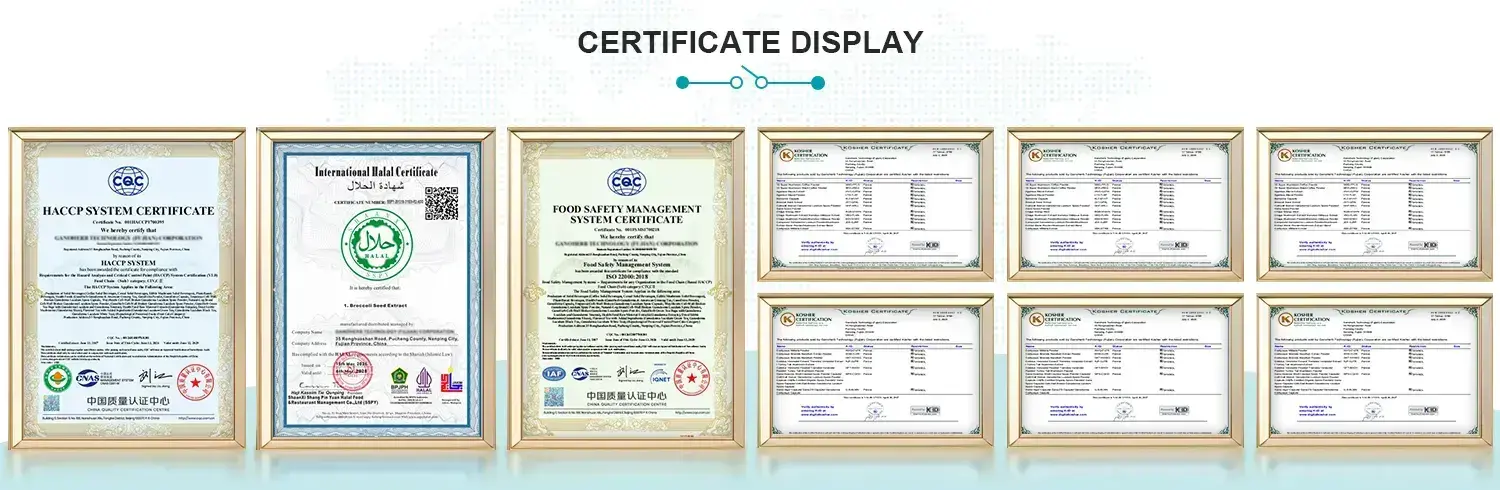
Certified Production Specifications
Our Stachyose 70% Powder is made in factories that are ISO 22000, HACCP, and HALAL approved. The product standard lists the following:
- Appearance: White powder
- Active content: Stachyose ≥70% (HPLC-verified)
- Shelf life: 24 months
- Heavy metals: Complies with international food safety limits
- Microbiology: Total plate count, yeast/mold, E. coli, and Salmonella all meet or exceed standard thresholds
- Origin: China | Annual production capacity: 1,000 tons
These standards give procurement teams the proof they need to submit to regulators in the US, EU, and other big markets.
Botanical Source and Purity Advantages
Both the purity level and the sensory profile are set by the source material. The taste of stachyose from Stachys affinis is the cleanest. It doesn't have the bitterness of Rehmannia glutinosa extracts or the off-notes of stachyose from Lycopus. For example, because Stachys affinis is a veggie, its extract has a history of being safe and doesn't need to be labeled as a new food in most places.
HPLC Testing as the Quality Anchor
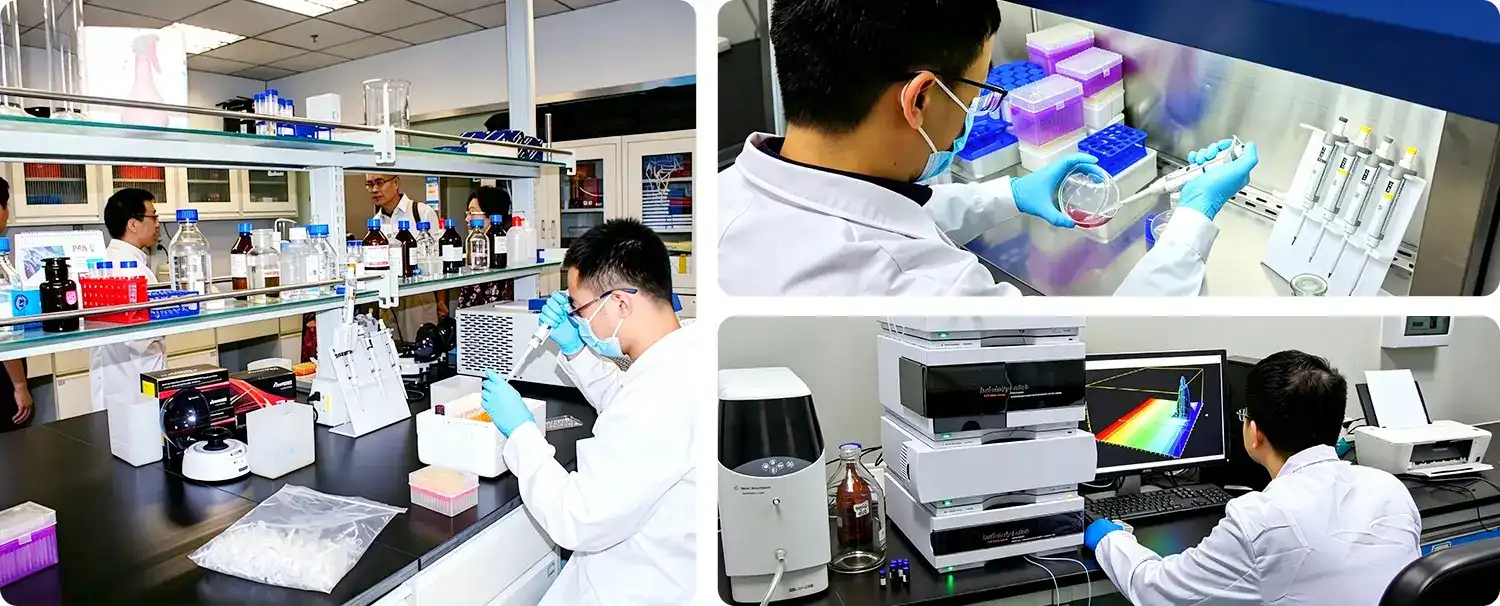
Each batch is measured using HPLC to make sure it meets the ≥70% tetrasaccharide standard. Thin-layer chromatography (TLC) is a second way to look for lower-order sugars and possible contaminants. The range of particle sizes is watched to help with even mixing in dry-mix and capsule forms. This method of testing in layers gives formulators confidence that performance won't change from batch to batch between production runs.
Comparing Stachyose 70% Powder with Alternative Prebiotics
Knowing how stachyose stacks up against other prebiotics helps buying managers make decisions that can be defended.
Now, let's look at the three most popular options side by side:
- Versus fructooligosaccharides (FOS): Stachyose tolerates processing temperatures up to 140°C and remains stable at pH 3.0–7.0, whereas FOS can undergo Maillard reactions at elevated temperatures. This makes stachyose preferable for baked meal-replacement bars and pasteurized beverages where FOS may brown or degrade.
- Versus inulin: Inulin ferments rapidly in the proximal colon, often producing uncomfortable levels of gas. Stachyose ferments more gradually and selectively, resulting in significantly lower flatulence scores in consumer tolerance studies—a meaningful commercial advantage for supplement labels targeting sensitive populations.
- Versus raffinose: Raffinose is a trisaccharide with a narrower spectrum of prebiotic selectivity. Stachyose, as a tetrasaccharide, supports a broader range of beneficial bacterial strains and offers more consistent results across diverse gut microbiome profiles.
These differences have a direct effect on how well the mixture works. Stachyose is a good choice for the backbone of prebiotics in foods that need to be heated, make low-GI claims, or have few stomach side effects.
Bulk Procurement Insights: Sourcing and Supply Chain Considerations
Competitive pricing isn't the only thing that makes a bulk supplier reliable. In a professional procurement review, things like certification status, output scale, and logistical readiness are all taken into account.
Evaluating Supplier Credentials
Buyers of Stachyose 70% Powder should make sure that the factory where a product is made has current ISO 22000, HACCP, and HALAL certificates, not just that the product says it has those certifications. As part of normal due research, you should ask for certificate numbers and expiry dates. Fushan Yuansheng Biotechnology keeps clear records of all of its certifications and accepts checks by outside parties.
Production Scale and Order Flexibility
Our facility can handle large purchases without worrying about lead times because it consistently produces 1,000 metric tons per year. You can choose between air and sea freight, and the product specifications, such as particle size, packaging format, and moisture targets, can be changed to meet the needs of each customer. Before committing to full-batch volumes, you can place a sample order.
Pricing Strategy and MOQ Considerations
Stachyose 70% Powder from plant sources costs more than less pure stachyose made from soybeans (about 30% purity, high sugar content). The higher active content, lower impurity risk, and wider regulatory support make that premium worth it. When procurement managers make cost models, they often find that the actual cost per active gram is the same for lower-purity options when dilution factors are taken into account.
Best Practices for Integrating Stachyose 70% Powder in Product Development
To get the most out of this ingredient, you need to pay attention to the amount, the style, and the people you want to use it on.
Recommended Application Formats
Stachyose 70% Powder works well with a lot of different kinds of products. It dissolves easily in water, so it can be used in lactic acid drinks, functional drinks, and oral rehydration treatments that are in liquid form without changing the taste or clarity. In solid forms, it keeps baked goods wet and changes the rheology of dough in a good way. In synbiotic capsules or sachets, it gives co-encapsulated probiotic strains a stable source of energy, which helps colony-forming units stay alive in the small intestine.
Target Population Guidance
Dosage and placement should be based on the health profile of the end user. People over the age of 65, people whose immune systems aren't working as well, and people who have digestive problems can all benefit from goods that are at least 70% pure. People who are generally "sub-health"—those who have bad diets, a lot of stress, and gut bacteria that aren't working right—also do well with taking stachyose every day. Stachyose is a normal part of diabetic eating plans because it can be broken down without insulin. It also helps the body absorb calcium and magnesium, which makes it a useful ingredient in products for pregnant women and older people.
Labeling and Regulatory Alignment
In the US market, stachyose that comes from plants is usually thought to be safe and follows FDA rules for functional food labels. Formulators should check the amount of sucrose and glucose in the grade they've chosen. Our ≥70% standard keeps these impurities well below levels that would require glycemic disclaimers, which supports the clean-label stance.
Conclusion
When choosing a prebiotic ingredient for use in medicine or health foods, purity is not the only thing that should be considered. A sensible purchasing choice takes into account things like botanical origin, manufacturing certification, thermal stability, and supply dependability. All of these things are met by Stachyose 70% Powder, which has clear instructions, is made in a certified facility, and has a molecular makeup that makes it better than other options at supporting certain gut bacteria. This high-purity oligosaccharide should be carefully considered by formulators who need a gut health ingredient that works in a variety of formats, populations, and regulatory settings.
FAQ
What are the primary gut health benefits of stachyose at 70% purity?
At ≥70% concentration, stachyose selectively feeds Bifidobacteria and Lactobacilli while resisting digestion in the stomach and small intestine. It promotes SCFA production, lowers intestinal pH, and stimulates IgA secretion—three mechanisms that together support a balanced, resilient gut environment.
How does stachyose compare to inulin for supplement formulations?
Stachyose generates significantly less gas during fermentation than inulin, which matters for consumer tolerance. It also withstands higher processing temperatures, making it more versatile in thermally processed products where inulin may degrade.
Is this ingredient suitable for diabetic nutrition products?
Yes. Stachyose is not hydrolyzed by digestive enzymes and does not require insulin for metabolism. Its glycemic index is negligible, and at ≥70% purity, sucrose impurities remain well within safe limits for diabetic formulations.
What certifications should a bulk buyer request?
Request ISO 22000, HACCP, and HALAL certificates with current expiration dates. Also ask for HPLC batch test reports confirming the ≥70% active content and microbiological compliance data for each lot.
Can this powder be used in clear beverage applications?
Yes. Stachyose 70% Powder dissolves in water to form a clear, low-viscosity solution without visible sediment or taste alteration—making it compatible with functional beverages where product clarity matters.
Request a Sample from EXTRABROC® — Your Trusted Stachyose 70% Powder Supplier
EXTRABROC® offers highly pure Stachyose 70% Powder that is certified by ISO 22000, HACCP, and HALAL, and can produce up to 600 tons of it every year. Our team can help you with technical documentation, sample batches, and a range of specification choices that can be changed to fit your development plan, whether you are expanding a current recipe or releasing a brand-new gut health product. To get a product packet, email us at info@extrabroc.com or go to our website, extrabroc.com.
References
1. Roberfroid, M. (2007). Prebiotics: The concept revisited. The Journal of Nutrition.
2. Gibson, G. R., & Roberfroid, M. B. (1995). Dietary modulation of the human colonic microbiota. The Journal of Nutrition.
3. Van Loo, J., et al. (1999). The SYNCAN project: Goals, set-up, and first results of short-term intervention with synbiotic diets. American Journal of Clinical Nutrition.
4. Tian, L., et al. (2016). Stachyose promotes growth of Bifidobacterium longum and modulates gut microbiota in vitro. Food & Function.
5. Slavin, J. (2013). Fiber and prebiotics: Mechanisms and health benefits. Nutrients.
6. Wang, Y. (2009). Prebiotics: Present and future in food science and technology. Food Research International.