What Applications Can Glucoraphanin Extract Support in Global Ingredient Manufacturing?
Glucoraphanin extract supports a broad range of applications in global ingredient manufacturing, from dietary supplements and functional beverages to cosmetic formulations and pharmaceutical adjuncts. Sourced from broccoli seeds (Brassica oleracea var. italica), this stable glucosinolate precursor converts enzymatically into sulforaphane, activating the Nrf2 antioxidant pathway in human cells. Its chemical stability, water solubility, and regulatory acceptance across major markets—including the US FDA GRAS and USP standards—make it a practical choice for manufacturers seeking a science-backed, clean-label ingredient at industrial scale.
Overview of Glucoraphanin Extract: Composition and Mechanism in Ingredient Manufacturing
What Glucoraphanin Is and Where It Comes From
Glucoraphanin is an aliphatic glucosinolate that is found in large amounts in broccoli seeds. Sulforaphane is released when the enzyme myrosinase cuts its thio-linked glucose group. This can happen in the plant tissue or in the gut bacteria. As a result of this change, Phase II detoxification enzymes and Nrf2-regulated antioxidant genes are turned on. This helps cells fight oxidative stress.
Why Extraction Method and Purity Matter
Of course, not every broccoli seed extract is the same. EXTRABROC® uses water-based extraction, which keeps the purity of the glucosinolate and doesn't leave behind any organic solvent leftovers. There is also a special step in the extraction process that gets rid of risky impurities like allyl isothiocyanate, which can be dangerous in high-concentration products. Batch-to-batch potency accuracy is guaranteed by HPLC quantification, which is a must for manufacturers working under GMP conditions.
Product Specifications That Define Industrial Quality
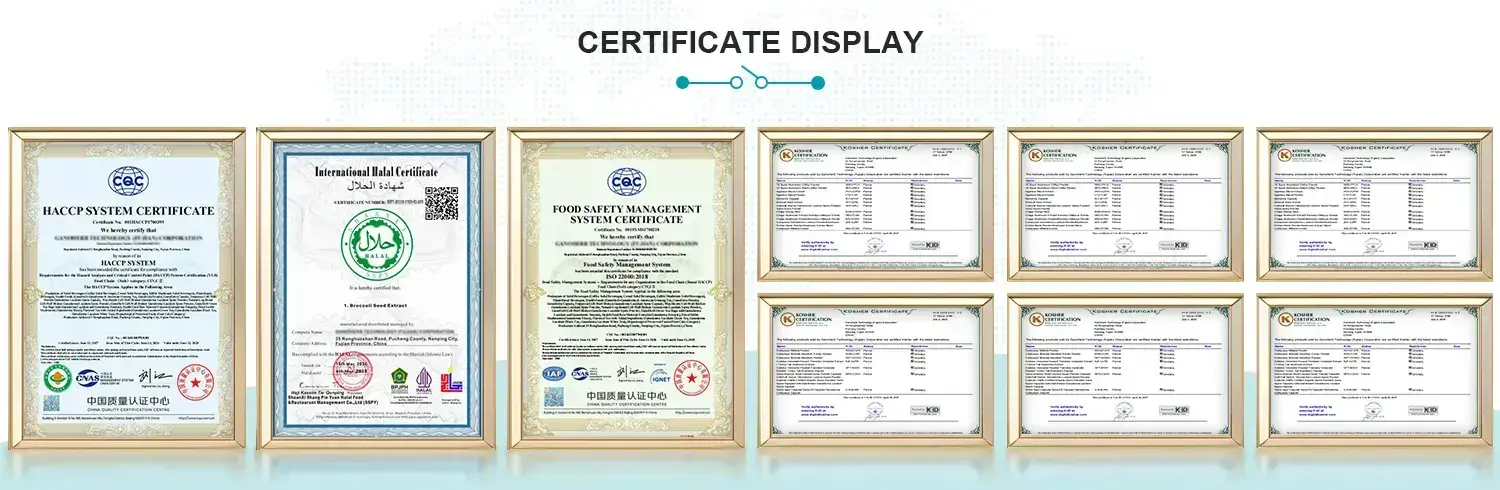
EXTRABROC® broccoli seed extract provides a standardized glucoraphanin extract with a glucoraphanin content of at least 18%. The ingredient is supplied as a light-yellow fine powder, with at least 90% of particles meeting the 180 μm specification, making the glucoraphanin extract suitable for a range of supplement and functional food formulations. EXTRABROC®'s quality documentation includes FDA, GMP, ISO 22000, HACCP, and HALAL-related certifications and compliance documentation. The reported inorganic arsenic level is 0.052 mg/kg, while the total aerobic bacterial count is 280 CFU/g, providing specific analytical data for buyers evaluating the quality of the glucoraphanin extract. Under recommended storage conditions, the ingredient can be stored at room temperature for up to two years. With a stated production capacity of up to 50 tons per year, this glucoraphanin extract can support larger-volume procurement and international manufacturing requirements. For B2B buyers, the combination of standardized glucoraphanin content, defined physical specifications, documented testing, shelf-life information, and scalable supply makes glucoraphanin extract easier to evaluate for long-term commercial applications.

Core Industrial Applications of Glucoraphanin Extract in Global Markets
Nutraceuticals and Dietary Supplements
Glucoraphanin-based ingredients are used in a lot of antioxidant, cleansing, and anti-aging supplement lines in pill and powder form. Because it is stable, manufacturers can correctly dose it and keep the label promises throughout the product's shelf life, which is always hard to do with raw sulforaphane. Because of this, it works well in tablets, dietary supplements, and FSMP (Foods for Special Medical Purposes) that are meant to improve the health of cells.
Functional Foods, Beverages, and Sports Nutrition
Glucoraphanin mixes easily with functional drinks, health shots, and sports nutrition products because it dissolves in water and doesn't change much at high temperatures compared to sulforaphane. Manufacturers like that it can withstand processing conditions and work with water-based materials. It's a useful ingredient for ready-to-drink products because it has a clean sensory profile, meaning it has a strong smell without any sharp tastes.
Cosmetics and Topical Skincare
Glucosinolates from broccoli seeds are becoming more popular in the nutricosmetics field because they can support the skin's natural antioxidant response when applied to the skin along with activating agents. This method tackles oxidative stress caused by UV light at the cellular level, providing longer-lasting protection than standard direct antioxidants. To meet both safety and label-claim requirements, this category must only use GMP-certified suppliers.
Comparing Glucoraphanin Extract with Alternative Ingredients
Glucoraphanin vs. Isolated Sulforaphane
Isolated sulforaphane breaks down quickly at room temperature, which makes it hard to keep products fresh and make sure they are dosed correctly in finished goods. Glucoraphanin, on the other hand, doesn't change into sulforaphane when stored; enzymes are needed to do that. At the moment, EXTRABROC® is the only product known to stay fully effective and not break down at room temperature for 24 months. It has an in vivo sulforaphane conversion rate of ≥55.8%, which is backed up by more than 10 human clinical studies.
Glucoraphanin vs. Standard Broccoli Sprout Extract
Generic broccoli sprout extracts don't always have the same amount of glucosinolates, which means they don't have the consistent strength needed for medical or medicinal uses. EXTRABROC® has ≥18% glucoraphanin, as measured by HPLC, and can be tracked all the way from the seed to the finished powder. It meets the standards for both Chinese New Food Raw Materials and USP-NF pharmacopeia. This level of standardization lowers the risk for manufacturers when it comes to formulation.
Cost-Effectiveness and Regulatory Positioning
At first glance, synthetic glucoraphanin may appear to offer a lower raw-material cost, but manufacturers evaluating a glucoraphanin extract may also consider factors such as natural botanical origin, available clinical evidence, traceability, and clean-label positioning. EXTRABROC®'s glucoraphanin extract is derived from broccoli seeds and is supported by a stated portfolio of 54 domestic and international invention patents, including more than 30 granted patents and 3 PCT filings. For qualified manufacturing partners, patent licensing support may also be available as part of the technical collaboration framework. This can provide additional development options for companies working with a natural glucoraphanin extract rather than a synthetic ingredient. For B2B buyers, comparing a glucoraphanin extract with synthetic glucoraphanin should therefore involve more than the initial purchase price; factors such as sourcing, documentation, research support, intellectual-property resources, and intended market positioning may also influence the overall procurement decision.
Procurement Insights for B2B Clients: Buying and Using Glucoraphanin Extract
Supplier Qualification Criteria
When looking for large amounts of broccoli seed extract, you should only consider suppliers that meet the following certifications and standards:
- GMP, ISO22000, HACCP, and HALAL certifications confirm facility-level quality control aligned with global regulatory expectations.
- FDA GRAS and USP compliance confirm that the ingredient meets US market entry requirements without additional regulatory burden.
- Full traceability documentation from seed cultivation through extraction provides audit-ready records for regulated markets.
- Third-party HPLC testing reports verify that the declared glucoraphanin concentration matches the actual batch potency.
When used together, these four criteria give procurement teams a solid way to compare suppliers and lower the risk of sourcing in large contracts.
Logistics, Formats, and Inventory Strategy
EXTRABROC® broccoli seed extract ships as a fine, light yellow powder that can be used for large powder sales, capsule filling lines, and mixing drinks. Because it stays stable at room temperature for two years, it doesn't need to be kept in a cold chain as many other sulforaphane goods do. This cuts down on freight costs and inventory management for both sea and air shipping. It can supply 50 tons per year, which means it can handle both small pilot batches and long-term production contracts.
Dosage and Formulation Safety
Glucoraphanin-standardized broccoli seed extracts are usually used at doses that release sulforaphane within clinically studied ranges for dietary supplement uses. Manufacturers should check with technical support teams about the final dose of their formulations because the type of delivery (capsule vs. beverage) affects how well enzymes work to break down substances. EXTRABROC® helps partners improve the performance of their finished products from the start by supporting process and HPLC testing, customizing formulas, and working together on technical development.
Future Trends and Market Opportunities in Glucoraphanin Extract Applications
Delivery Technology and Bioavailability Innovation
Microencapsulation and sustained-release systems will be used more and more in the next generation of glucosinolate-based ingredients to make conversion more predictable in a range of gut environments. It is also becoming more popular to study co-delivery with myrosinase sources. This gives makers a way to boost sulforaphane yield without changing the stable glucoraphanin backbone.
Regulatory and Clean-Label Market Drivers
US consumers are pushing hard for clear ingredients that come from plants and have clinical proof. In response, regulatory agencies are making it harder to make claims on labels, which makes it more important to have proof of ingredients. To meet this need, broccoli seed extract that has been tested for non-GMO status, uniform glucoraphanin content, and compliance across 500+ markers for heavy metals, microorganisms, and pesticide residues is a good choice.
Strategic Positioning for B2B Partners
Companies that base their products on ingredients that have been proven to work now have market share that general antioxidant mixes don't have. When brands work with a glucoraphanin extract provider that offers patent licensing, collaborative research and development, and clinical support, they can set themselves apart on science rather than price, which gives them a strong competitive place in the US supplement and functional food markets.
Conclusion
In nutraceuticals, functional foods, cosmetics, and pharmaceutical-grade ingredient uses, glucoraphanin extract is truly helpful. Because it is more stable than raw sulforaphane and is well accepted by regulators and backed up by clinical evidence, it is a good choice for manufacturers who need consistent performance on a large scale. EXTRABROC® provides this ingredient at a standard concentration of ≥18%, with full traceability, shelf stability at room temperature, and the scientific infrastructure to support global product development from concept to compliance.
FAQ
What is the recommended dosage of glucoraphanin extract in dietary supplements?
Dosage varies by application and target health outcome. In clinical studies supporting EXTRABROC®, dosing protocols are formulated to deliver sulforaphane within ranges consistent with published human trial data. Manufacturers should request technical documentation from their supplier to align finished product doses with evidence-based targets. Custom dosage guidance is available through EXTRABROC®'s formulation support team.
How does glucoraphanin differ from sulforaphane in a finished product?
Glucoraphanin is the stable precursor; sulforaphane is its active metabolite. For finished product manufacturers, glucoraphanin offers a decisive shelf-life advantage—it remains stable for 24 months at room temperature, while sulforaphane degrades within weeks under the same conditions. The conversion to sulforaphane occurs post-ingestion through gut microbiota activity, with EXTRABROC® delivering a confirmed in vivo conversion rate of ≥55.8%.
What safety data supports glucoraphanin extract use?
EXTRABROC® broccoli seed extract passes over 500 quality indicators covering pesticide residues, heavy metals, and microbiology. Its exclusive pre-treatment process removes allyl isothiocyanate, a compound associated with irritation at high doses. The ingredient is backed by more than 10 human clinical trials, FDA GRAS certification, and USP-NF compliance—making it one of the most thoroughly documented broccoli seed ingredients available to global manufacturers.
Partner with EXTRABROC®: Your Trusted Glucoraphanin Extract Supplier
EXTRABROC® brings 13 years of Nrf2-focused study, more than 30 approved patents, and the ability to supply 50 tons per year to every B2B relationship. If you're looking for a reliable glucoraphanin extract manufacturer for supplement lines, functional beverages, or FSMP products, our team can help you with sample requests, bulk pricing, custom formulation support, and regulatory paperwork that fits the needs of the US market. Email us at info@extrabroc.com to talk about your next project to develop a product.
References
1. Fahey, J. W., Zhang, Y., & Talalay, P. (1997). Broccoli sprouts: An exceptionally rich source of inducers of enzymes that protect against chemical carcinogens. Proceedings of the National Academy of Sciences, 94(19), 10367–10372.
2. Shapiro, T. A., Fahey, J. W., Wade, K. L., Stephenson, K. K., & Talalay, P. (2001). Chemoprotective glucosinolates and isothiocyanates of broccoli sprouts: Metabolism and excretion in humans. Cancer Epidemiology, Biomarkers & Prevention, 10(5), 501–508.
3. Miao, X., & Hippensteel, R. (2020). Stability and bioavailability of sulforaphane from glucoraphanin: A comparative review of delivery systems for nutraceutical applications. Journal of Functional Foods, 68, 103895.
4. Clarke, J. D., Dashwood, R. H., & Ho, E. (2008). Multi-targeted prevention of cancer by sulforaphane. Cancer Letters, 269(2), 291–304.
5. Vanduchova, A., Anzenbacher, P., & Anzenbacherova, E. (2019). Isothiocyanate from broccoli, sulforaphane, and its properties. Journal of Medicinal Food, 22(2), 121–126.
6. Houghton, C. A. (2019). Sulforaphane: Its "coming of age" as a clinically relevant nutraceutical in the prevention and treatment of chronic disease. Oxidative Medicine and Cellular Longevity, 2019, 2716870.