Astaxanthin Powder: Key Factors for Consistent Color in Powder Blends
One of the most reliable natural pigment sources on the market today is Haematococcus Pluvialis Astaxanthin Powder, which is great for making powder blends have consistent colour. The microalgae Haematococcus pluvialis give this deep red carotenoid its colour. It also protects against free radicals in a measurable way. Colour uniformity is a direct quality signal for B2B buying teams in the food, skincare, and supplement industries. Picking the right algae astaxanthin source decides whether your end product meets customer standards batch after batch.
Understanding Astaxanthin Powder and Its Color Properties
The Molecular Basis of Color Stability
Astaxanthin is a type of carotene called xanthophyll. It is made up of a long chain of polyene molecules bound together by double bonds. These molecules soak up light in the blue-green range, giving the colour its unique reddish-orange look. H. pluvialis powder has a lot of astaxanthin that is found as monoesters. This form is naturally esterified and is less likely to oxidise than free-form forms that are made in a lab. This helps finished goods keep their colour longer in a direct way.
Natural vs. Synthetic: What the Data Shows
It is the (3S, 3'S) stereoisomer of astaxanthin that comes from Haematococcus pluvialis. But astaxanthin made in a lab is a racemic mix that doesn't work biologically and has pigment behaviour that isn't always consistent. Marine Drugs proved that astaxanthin, which is found in nature, is a very strong antioxidant that is around 6,000 times stronger than Vitamin C. With this pigment, photographic rust is much less likely to happen. This helps keep the colours in mixed products.
Why Regulatory Acceptance Matters for Color Sourcing?
The EU and the US both allow the use of natural astaxanthin from Haematococcus pluvialis in some foods and goods. On the other hand, synthetic types can only be used for certain things. If you want to buy things for your business, you should only get them from legal sources that you can keep track of. People and shops will trust your brand and product name more if you do this.
Key Factors Influencing Consistent Color in Astaxanthin Powder Blends
Astaxanthin Concentration and Purity
The first thing to check is attention. Different products with ≥2% to ≥6% total astaxanthin content (checked by HPLC) have very different colour levels when mixed together. When co-extracted chemicals are present in the background, they stand out less when the purity is higher, like when dried algae powder is up to 99% pure. The end colour would get dull or change without these chemicals. In order to be sure of the quality, you should ask each seller for a batch proof of analysis that has been checked by HPLC.
Processing Methods and Their Impact on Pigment Integrity
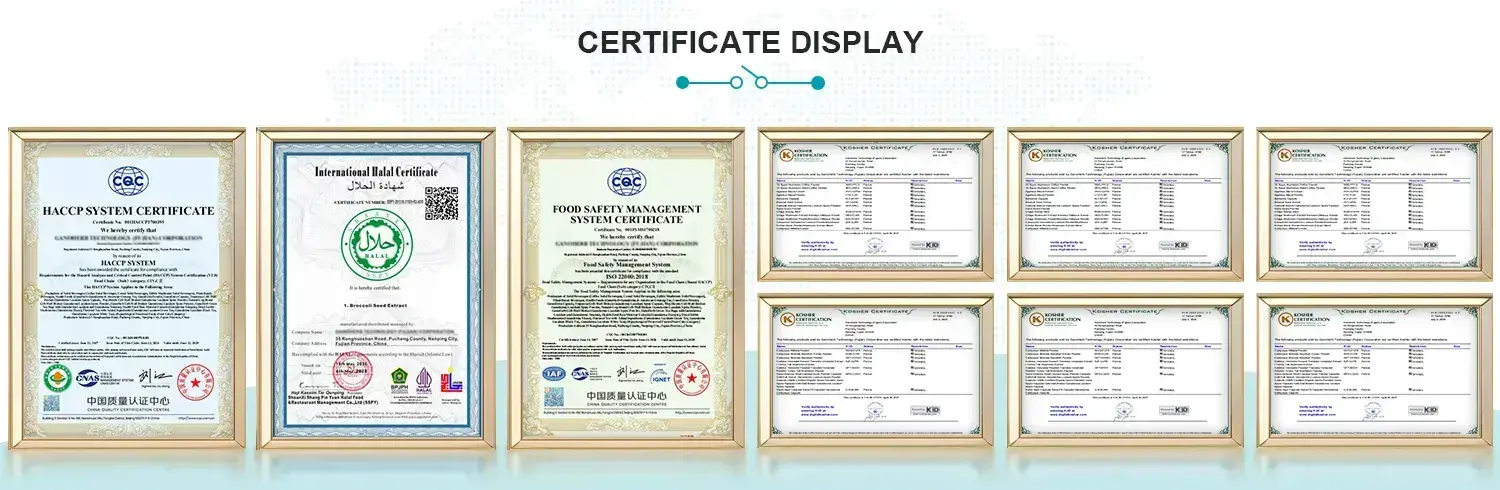
It depends on how the colour of Haematococcus Pluvialis Astaxanthin Powder is extracted and dried, and how stable it is. In high-grade commercial production, contamination and oxidation can't happen because the pipes are made of sealed glass. When astaxanthin is extracted with clean water or supercritical CO₂, its esterified structure stays better than when it is extracted with a solvent. There needs to be powders that can be used over and over again from one batch to the next. GMP rules say that these powders must be made in a certain way, and FSSC22000, HACCP, HALAL, and Kosher all agree with this.
Particle Size and Environmental Degradation Risks
How well the colour spreads when you dry blend depends on the size of the particles. Most of the time, 80–100 mesh powders don't have as many colour patches because the particles are spread out more evenly. Air, UV light, and temps above 25°C are the main things that break down things. Astaxanthin powder can be kept for 24 months in containers that are sealed with a vacuum and kept below 4°C. From the warehouse to the factory floor, the colour doesn't change.
Comparing Astaxanthin Powder Options for Optimal Color Performance
Organic-Certified vs. Standard Grades
When a crop is certified organic, it means that the inputs used to grow it are better managed. This usually means that the color profiles are cleaner. People who want to sell high-end supplements or cosmetics often need organic approval to meet the needs of stores and customers. For feed uses that don't need organic marks, standard grades can save you money. However, it's still very important to check the quality no matter what grade you use.
Pure Powder vs. Microencapsulated Formats
Because it is easy to spread out, pure algae powder works well in oil-based mixtures and feed stocks. With specialized encapsulation technology, microencapsulated powder is made that dissolves easily in water and can be used with solid dosage forms like pills, stick packs, and functional candies that are packed. The microencapsulated format gives the pigment an extra layer of protection, which makes it even less likely that it will oxidize while it is being mixed and stored. Your recipe plan and the end goal will help you decide which one is best.
Concentration Tiers and Application Fit
Businesses that want to buy should be most interested in this amount of concentration:There are two cheap options for astaxanthin powder: ≥2% and ≥3%. These are commonly used in food supplements where a small amount of color and antioxidant action is enough.
The middle-of-the-road standards for astaxanthin powder are ≥4% and ≥5%. This is what supplement brands choose when they want to make greater functional claims and make sure the color is consistent.
This is high-end astaxanthin powder (>6%), which is good for functional cosmetics, high-end supplements, and pet food where getting the most color per gram is important.
- ≥2% and ≥3% astaxanthin powder — Cost-effective options for standard dietary supplement applications where moderate color intensity and antioxidant contribution are sufficient.
- ≥4% and ≥5% astaxanthin powder — Mid-range specifications frequently chosen by supplement brands targeting visible color uniformity and stronger functional claims.
- ≥6% astaxanthin powder — Premium-grade material suited for high-end nutraceuticals, functional cosmetics, and specialty pet nutrition where maximum pigment impact per gram is the priority.
When you find the right dosage level of Haematococcus Pluvialis Astaxanthin Powder for your project, you avoid both underdosing and overdosing. When you underdose, the color is weak and uneven, and when you overdose, it costs more than it's worth and doesn't help you any more.
Best Practices for Using Astaxanthin Powder in Industrial Blends
Dosage Control and Pre-Blending Protocols
The first steps to getting color consistency at scale are to weigh and spread the color out correctly. A little of the carrier material should be mixed with the astaxanthin powder before the whole batch is added. In this way, the color will spread out evenly and not stick together. For oil-free dry mixes, this step is very important because electrostatic clustering can cause color streaks to show up in the end product.
Formulation Matrix Considerations
The lipid-soluble pigments in astaxanthin naturally dissolve in oil-based media. This makes the color more even and darker. Astaxanthin that is microencapsulated works better in powder-based media like protein mixes, pill grains, or stick pack recipes. That's because the encapsulation shell keeps the color from getting into direct contact with things that soak up water. The pH and temperature need to be watched carefully by people who make skincare and cosmetics when they work with emulsions. This is because heat above 60°C and alkaline conditions can make the pigment change color.
Scale-Up and Batch Consistency Verification
Before putting the color into production, it should be looked at and measured with a spectrophotometer several times to make sure it stays the same. It's less likely that batches will be different if you buy from a supplier whose annual production capacity is stable, like 300 tons per year, and where you can track the powder from seed to finished product. If this happens, it could mess up production schedules or cost a lot to re-mix.
Procurement Tips for Sourcing Reliable Astaxanthin Powder Suppliers
Certification Verification and Supplier Auditing
Suppliers of astaxanthin powder that you can trust should have at least FSSC22000, HACCP, HALAL, and Kosher certifications. Buyers should ask for more than just certificates. They should also ask for thorough papers that show that quality control is done at every step, from growing the algae to extracting it, drying it, and packing it. Full process tracking is something that all suppliers to the US market must have; customers expect it.
Evaluating Price Against Concentration and Consistency
When you look at stock prices, you should always check to see how much active astaxanthin there is, not how much powder it is. A less expensive powder with a concentration of ≥2% is not at all like a more expensive powder with a concentration of ≥5%. You can find out how much astaxanthin is really worth by asking for multi-batch COA data and figuring out how much it costs per gram of delivered astaxanthin. This should be done before making big orders.
Logistics and Packaging Requirements
While it is being moved, heat, light, and air can change the color of astaxanthin. If you need it, skilled providers can help with logistics in the cold chain and packaging in a controlled environment. Making sure that your supplier can handle both air and sea freight and that the goods are packed well so that they can travel for a long time will protect their quality before they get to your facility.
Conclusion
Consistent color in Haematococcus Pluvialis Astaxanthin Powder depends on astaxanthin concentration, processing methods, particle size, and proper storage. For manufacturers developing food, cosmetic, and nutraceutical products, selecting the right grade and using effective pre-blending procedures can help improve color uniformity across production batches.
Before bulk purchasing, buyers should verify HPLC test results, batch-specific COAs, relevant certifications, and packaging requirements. Working with a traceable supplier that maintains consistent quality standards helps reduce color variation, minimize production waste, and support reliable long-term sourcing.

FAQ
What causes color variation in astaxanthin powder batches?
Color variation typically traces back to differences in algae cultivation conditions, harvest timing, and processing methods. Oxidation during extraction or improper storage can degrade the carotenoid structure, shifting the powder's color from deep red toward brown or orange. Sourcing from suppliers who use sealed cultivation systems and verify each batch by HPLC minimizes this risk.
How does astaxanthin concentration affect color intensity in blends?
Higher astaxanthin concentrations directly produce deeper, more uniform color in finished powder blends. A ≥5% or ≥6% specification delivers noticeably more pigment per gram than a ≥2% grade, allowing formulators to achieve target color at lower inclusion rates. Matching concentration to application prevents under-saturation and supports consistent appearance across production runs.
Can synthetic astaxanthin be blended with natural powder for color purposes?
Technically, it is possible, but it presents regulatory and quality risks. Synthetic astaxanthin is a racemic mixture with different isomeric ratios than natural Haematococcus pluvialis-derived material. Blending the two may complicate label claims and raise compliance concerns in markets that distinguish between natural and synthetic carotenoid sources. For clean-label and premium products, using a single, verified natural source is the cleaner approach.
Partner with EXTRABROC® for Consistent, Certified Astaxanthin Powder
Haematococcus Pluvialis Astaxanthin Powder sold by EXTRABROC® is of great quality. It has been tested by HPLC and is approved by FSSC22000, HACCP, HALAL, and Kosher standards. The amounts it can hold are between ≥2% and ≥6%. For business buyers who can't stand color differences, we are a reliable source for Haematococcus Pluvialis Astaxanthin Powder. The whole process, from the seed to the powder, can be tracked. Every year, we can make 300 tons of powder. To get examples and detailed information, you can email us at info@extrabroc.com or visit our website at extrabroc.com.
References
1. Guerin, M., Huntley, M. E., & Olaizola, M. (2003). Haematococcus astaxanthin: Applications for human health and nutrition. Trends in Biotechnology.
2. Ambati, R. R., Phang, S. M., Ravi, S., & Aswathanarayana, R. G. (2014). Astaxanthin: Sources, extraction, stability, biological activities and its commercial applications. Marine Drugs.
3. Régnier, P., Bastias, J., Rodriguez-Ruiz, V., et al. (2015). Astaxanthin from Haematococcus pluvialis prevents oxidative stress. Marine Drugs.
4. Li, J., Zhu, Y., & Chen, F. (2020). Production of natural astaxanthin from Haematococcus pluvialis: Recent advances and future perspectives. Bioresource Technology.
5. Yuan, J. P., Peng, J., Yin, K., & Wang, J. H. (2011). Potential health-promoting effects of astaxanthin: A high-value carotenoid mostly from microalgae. Molecular Nutrition & Food Research.
6. Higuera-Ciapara, I., Félix-Valenzuela, L., & Goycoolea, F. M. (2006). Astaxanthin: A review of its chemistry and applications. Critical Reviews in Food Science and Nutrition.