What Applications Make Stachyose 60% Powder Suitable for Lactic Acid Drinks, Nutritional Foods, and Pet Nutrition?
Stachyose 60% Powder is a plant-derived functional tetrasaccharide extracted primarily from Stachys affinis (Chinese artichoke), offering a minimum purity of 60% verified by HPLC. Its ability to selectively proliferate Bifidobacteria and Lactobacilli — without feeding pathogenic bacteria — makes it distinctly suitable across three high-growth markets: lactic acid beverages, nutritional food products, and pet nutrition. With heat stability up to 140°C, a 24-month shelf life, and certifications including ISO22000, HACCP, and HALAL, this prebiotic oligosaccharide powder addresses real formulation challenges that product developers and procurement teams face daily.
Understanding Stachyose 60% Powder: Composition and Functional Benefits
What Is Stachyose, Chemically Speaking?
There are four types of sugars that appear naturally in stachyose. They are two D-galactose units, one D-glucose unit, and one D-fructose unit. Stachyose, unlike inulin or fructooligosaccharides (FOS), is not broken down by human digestive enzymes. This means it stays whole until it gets to the big gut. In that place, it selectively feeds Bifidobacteria, speeding up their growth at a rate that is said to be up to 40 times faster than regular prebiotics, without causing the gas that comes with shorter-chain fructans.
How It Compares to Other Prebiotic Oligosaccharides?
Studies consistently show that stachyose is easier for the body to handle than inulin, especially when higher inclusion rates are used. Its breakdown mostly happens in the distal colon, which slows down the production of gas. Furthermore, it maintains its structure from pH 3 to 7.0 and stays stable at temperatures up to 140°C. This is something that FOS and galactooligosaccharides (GOS) don't always do in acidic or heated formulations.
Safety Profile and Recommended Dosage
Clinical tests show that adults who eat 5 to 10 grams of it every day get significant bifidogenic benefits without any bad effects. The item looks like a fine, white, crystalline powder with less than 5% moisture, less than 0.5% ash, and no heavy metals that are not in line with international food safety standards. It can be used in diabetic recipes because it has a low glycemic index, and it doesn't need insulin to be broken down, which is a big plus for metabolic health product development.
Core Applications of Stachyose 60% Powder in Lactic Acid Drinks
Enhancing Probiotic Viability During Fermentation
As soon as stachyose is added to lactic acid drinks like yogurt, kefir, and fermented dairy tonics, it feeds strains of Lactobacillus and Bifidobacterium quickly. This makes it more likely that probiotics will live through fermentation and remain on the shelf. It dissolves easily in water (up to 60g/100ml at 25°C), so it mixes well with other liquids without changing their clarity or mouthfeel. This is very important for consumer-facing beverage products.
Clean-Label Appeal and Flavor Compatibility
Stachyose from Stachys affinis has a mild, vegetable-like taste and doesn't leave a metallic aftertaste. About 25–30% of the sweetness of sucrose, which means that formulators can use less added sugar without changing how good the food tastes. For companies that want to be seen as having clean labels, which is becoming a bigger factor in people buying functional drinks in the U.S., this ingredient is clear and helps gut health in a measured way.
Shelf Life Extension and Process Stability
Stachyose 60% Powder increases the prebiotic activity window in lactic acid drinks because it doesn't turn Maillard brown at pasteurization temperatures and stays chemically stable through UHT processing. Brands that use this oligosaccharide have seen better product consistency and less probiotic die-off over 12-week storage periods. This makes it a good choice for companies that want to make more of a product.
Application in Nutritional Foods: Meeting Modern Dietary Needs
Integration Into Supplements, Bars, and Fortified Snacks
Stachyose powder is easy to mix into a lot of different solid food forms. It helps protein bars keep their moisture and changes the way the dough behaves without changing the structure. Its non-hygroscopic property keeps dosage accuracy and stops caking in encapsulated supplements under normal conditions. When mixed with certain types of Bifidobacterium or vitamins B and D, it has synergistic effects on the gut-immune axis. This helps these goods fit into the growing functional nutrition group.
Supporting Metabolic and Immune Health Claims
Calcium and magnesium are important minerals for older people, pregnant women, and high-performance athletes, and stachyose helps the body absorb them. It also increases the production of immunoglobulin A (IgA), which is the body's main mucosal antibody and kills pathogens on the surfaces of the intestines. Product makers can make claims about their products that are based on solid evidence in these well-documented ways that lawmakers and health-conscious customers both like.
Competitive Positioning Against Other Prebiotics
Soy-derived oligosaccharides are usually only 30% pure and have a lot of sucrose in them. This 60%-purity botanical extract is a better choice because it works better and is easier for formulators to use. Because it only has one component and a clear molecular weight, it can be used as a marker ingredient in the processes of functional food certification and health food registration. This is a big help for brands that need to understand regulatory paperwork in places like the U.S. and EU.
Benefits of Stachyose 60% Powder in Pet Nutrition
Supporting Canine and Feline Gut Microbiomes
The prebiotic effect of stachyose works the same way in the gut systems of pets. Dogs and cats both have populations of Bifidobacterium and Lactobacillus that respond to adding stachyose. Studies on the gut microbiome of animals show that oligosaccharides that can't be digested raise the production of short-chain fatty acids in the colon. This lowers the pH of the intestines and stops harmful bacteria from growing. This makes stachyose an additive that can help dogs that have sensitive stomachs, bowel movements that don't work right, or are on drug recovery plans.
Format Versatility Across Pet Food Categories
One useful thing about Stachyose 60% Powder for pet food is that it can be made in a number of different ways. It works the same way in dry kibble (high-temperature extrusion), wet food (retort sterilization), and chewable supplement forms, and the protein matrix doesn't break down or change. Because it can handle being processed well and doesn't change the taste, OEMs and private label makers can easily add it without having to risk changing the recipe.
Quality Assurance for Pet Food Manufacturers
Our stable yearly output of 1,000 tons of stachyose powder can handle big orders. It is made under conditions that are ISO22000, HACCP, and HALAL-certified. Microbiological tests show that E. coli and Salmonella are not present, and the Total Plate Count is kept below 1,000 CFU/g. This level of paperwork cuts supplier approval time by a large amount for pet food companies that follow AAFCO-aligned quality standards or export compliance requirements.
Procurement Considerations for B2B Clients
Evaluating Quality, Purity, and Certification Standards
When looking for prebiotic foods, it's important to make sure they are pure. Our HPLC-tested standard guarantees a stachyose content of at least 60%, along with controlled ratios of raffinose and verbascose. Lower-purity alternatives made from soybeans can't always meet these requirements. Before committing to a supplier, purchasing teams should ask for Certificates of Analysis that are specific to each batch and make sure that the heavy metal and microbiology results meet both FDA and international standards.
Here are the most important things that buying workers should look at before choosing a stable supplier:
- Purity documentation: Insist on HPLC-verified COAs with each batch, confirming stachyose content and impurity profiles.
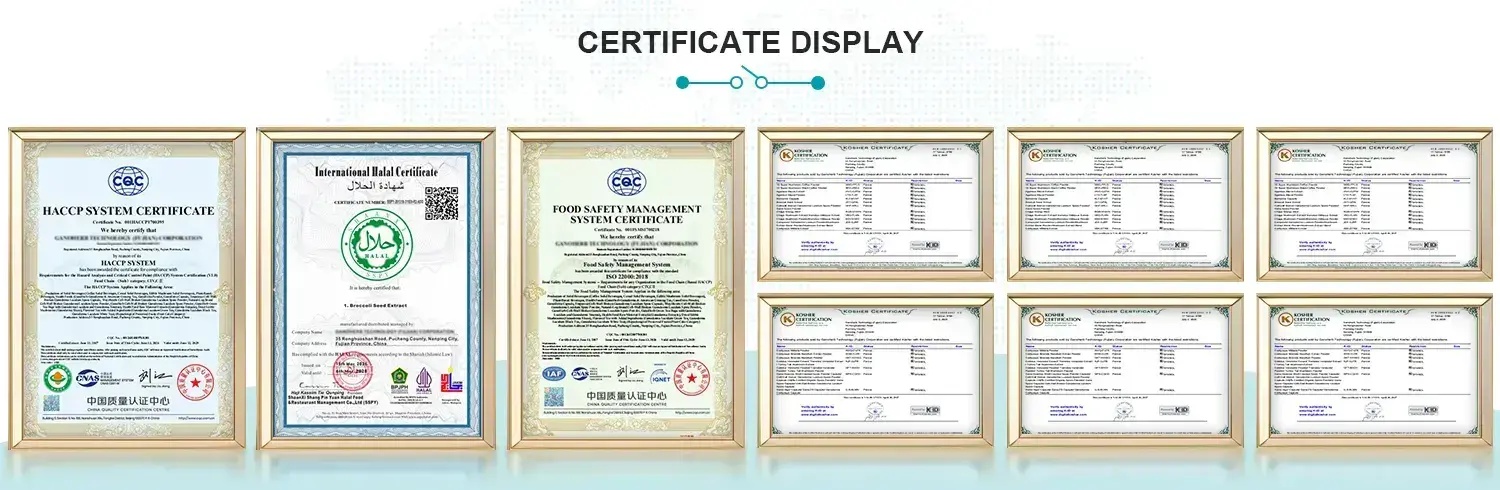
- Certifications: ISO22000, HACCP, and HALAL certifications confirm manufacturing rigor and reduce regulatory audit friction.
- Production capacity: A minimum of 1,000 tons/year output capacity is necessary to support scale-up without supply disruption.
- Shelf life and stability data: A 24-month shelf life with storage stability data covering temperature and humidity conditions is non-negotiable for global logistics planning.
- Sample availability: Request working samples before committing to bulk orders; validate performance in your specific matrix type.
All of these things lower the risk of procurement and stop expensive cycles of reformulation that are caused by inconsistent raw material quality.
MOQ, Shipping, and Supply Continuity
Factory-direct relationships with verified makers get rid of markups on the goods and give you direct access to technical data. You can choose between shipping by air or sea, so you can meet the needs of both urgent pilot production runs and cost-effective large replenishment rounds. Talking about MOQ requirements with the supplier early on protects your production schedule and pricing model.
Conclusion
Because it meets real recipe needs instead of hypothetical ones, Stachyose 60% Powder has a place in the categories of lactic acid drinks, healthy foods, and pet nutrition. It is stable in heat and acid, has a clean taste, selectively activates bifidogenic bacteria, and has a fully documented safety record. These factors make it a useful ingredient choice for both product makers and procurement professionals. This plant-extracted prebiotic oligosaccharide has ISO22000, HACCP, and HALAL certifications, and can produce 1,000 tons per year. It is a reliable source of supply and works well.
FAQ
What is the recommended dosage of stachyose in lactic acid drinks?
Clinical data suggest that 2g to 5g per serving in lactic acid beverages effectively supports probiotic viability and delivers bifidogenic benefits for end consumers. For therapeutic applications, adult daily intake of 5g to 10g is supported by research.
How does stachyose compare to inulin in pet nutrition applications?
Unlike inulin, stachyose ferments more slowly in the distal colon, which reduces gas production and gastrointestinal discomfort in pets. It also resists heat degradation during kibble extrusion, maintaining prebiotic potency where inulin may partially degrade.
Can I request a certified sample for quality validation before placing a bulk order?
Yes. Certified samples with HPLC test reports, COAs, and microbiology documentation are available upon inquiry. This allows your formulation and QA teams to validate performance in your specific product matrix before committing to volume.
Is stachyose powder suitable for diabetic-targeted nutritional products?
Yes. Stachyose has a negligible glycemic index and does not trigger insulin responses, making it appropriate for diabetic formulations. However, confirm that total sucrose or glucose content in the final blend does not exceed safe thresholds.
What certifications does this product carry?
The product holds ISO22000, HACCP, and HALAL certifications, with heavy metals and microbiology compliant with international standards. HPLC is the primary testing method for purity verification.
Partner With EXTRABROC® for Your Stachyose 60% Powder Supply
EXTRABROC® sells high-quality stachyose prebiotic powder that is guaranteed to be at least 60% pure, has batch uniformity that has been checked by HPLC, and can be made in 1,000 tons per year. Our technical and legal support team is ready to help you whether you are a Stachyose 60% Powder maker partner, a formulator making functional drinks, or a pet nutrition brand adding more ingredients to your line. To get examples and prices, email us at info@extrabroc.com or go to extrabroc.com.
References
1. Roberfroid, M. et al. — British Journal of Nutrition, 2010.
2. Rastall, R.A. & Gibson, G.R. — Journal of Applied Microbiology, 2015.
3. Gibson, G.R. et al. — Nature Reviews Gastroenterology & Hepatology, 2017.
4. Lv, X. et al. — Food Chemistry, 2019.
5. Swanson, K.S. et al. — Journal of Animal Science, 2002.
6. Bindels, L.B. et al. — Nature Reviews Gastroenterology & Hepatology, 2015.