Haematococcus Pluvialis Astaxanthin Powder for Functional Beverage Blends
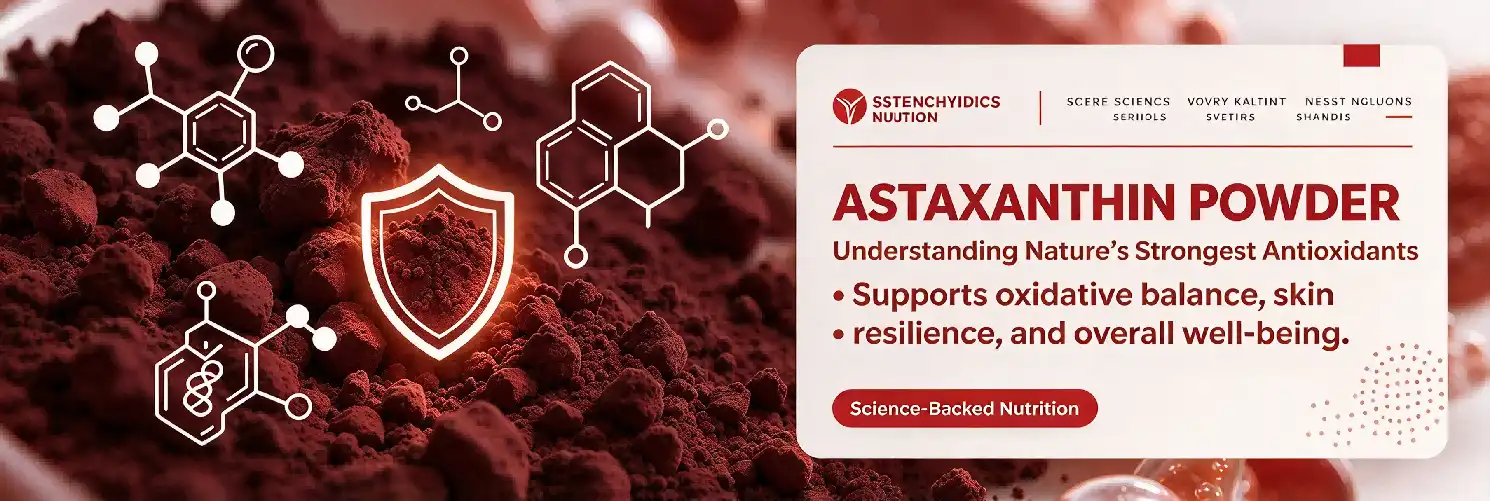
Haematococcus Pluvialis Astaxanthin Powder has become one of the most sought-after natural ingredients in the functional beverage sector. Derived from the microalgae Haematococcus pluvialis—nature's richest source of the (3S,3'S)-astaxanthin isomer—this deep red powder delivers potent antioxidant activity that far exceeds beta-carotene and Vitamin E. For B2B buyers, OEMs, and brand owners in the United States, understanding this ingredient's biological profile, quality parameters, and formulation potential is the first step toward building a competitive, science-backed beverage line.
Understanding Haematococcus Pluvialis Astaxanthin Powder
Biological Origin and Cultivation
The green algae Haematococcus pluvialis has only one cell. This is what it does when it is stressed, like when it doesn't get enough food or is out in the sun for a long time. It is possible to make dried algae powder that is up to 99% pure and has no other ingredients added when controlled photobioreactor farming is done with filtered water and glass pipeline sealed systems. The managed growth process has a direct effect on how strong and smooth the final extract is.
Extraction and Isomer Profile
How the drug was made affects how clean it is and how easy it is to get. To get rid of it, supercritical CO2 is used. This keeps the natural esterified form of astaxanthin, which is mostly made up of monoesters. Chemically, this shape is stronger than the one that was made by free-form. That's why the esterified structure fits better into human cell lipid bilayers. This is important for making drinks that use vitamins to help cells.
Natural vs. Synthetic Astaxanthin
There is only one stereoisomer found in nature, and that is 3S,3'S. However, synthetic astaxanthin is a racemic mix of three isomers that doesn't do much in living things. The same tests, but with astaxanthin from H. pluvialis, showed that it was about 20 times stronger as an antioxidant. The study was reported in the journal Marine Drugs in 2014. US business-to-business buyers must use natural ingredients in their products if they want to sell them as having clean labels.
Health and Functional Benefits in Beverage Applications
Antioxidant and Anti-Inflammatory Activity
Astaxanthin can clean up free radicals on both the inside and outside of a cell membrane at the same time because of the way its molecules are made. It has a much higher ORAC value than Vitamin C and CoQ10 because it can work across membranes. If a functional drink is meant to protect cells or improve daily health, it can say so right on the label.
Sports Recovery and Cognitive Support
Take 4–12 mg of natural astaxanthin every day. It has been shown in study after study to lower oxidative stress markers that are caused by exercise and help muscles recover faster. Though it can enter the blood, it can also get into the brain. This makes it useful for making things that are good for brain health. If a drink company wants to reach busy adults and people who are focused on performance, these steps can help them write scientifically sound product stories.
Stability in Liquid Matrices
Being naturally mixed with oil, astaxanthin is hard to mix with water in machines that make drinks. Haematococcus Pluvialis Astaxanthin Powder microencapsulation technology can be used to make astaxanthin beads that can solve this issue. These beads break down evenly in liquids, keep the color from turning brown during processing, and work well for a long time. Astaxanthin microencapsulated powder that dissolves in water is one of the best ways to add health benefits to drinks. It comes in two strengths, 1% and 2%.
Choosing the Right Astaxanthin Powder for Your Beverage Line
Key Quality Indicators to Evaluate
To find a good source of astaxanthin, you need to pay close attention to a few things. At the very least, HPLC must be used to check how much astaxanthin is present, the all-trans isomer ratio must be between 70% and 85%, heavy metal compliance must be met (Lead <0.5 ppm, Arsenic <0.2 ppm), and there must be no liquids left over. The item should have certifications that are known to be real.
Everyone in the US and the rest of the world can be sure that our Haematococcus pluvialis powder meets these requirements and has these awards: It looks like very fine red or dark red powder
The following amounts of astaxanthin are available: ≥2%, ≥3%, ≥4%, ≥5%, and ≥6% (HPLC-verified).Shelf Life: 24 months if kept in a cool, dark, and closed space
- Appearance: Red or dark red fine powder
- Astaxanthin Specification: ≥2%, ≥3%, ≥4%, ≥5%, ≥6% (HPLC-verified)
- Shelf Life: 24 months under sealed, cool, light-protected storage
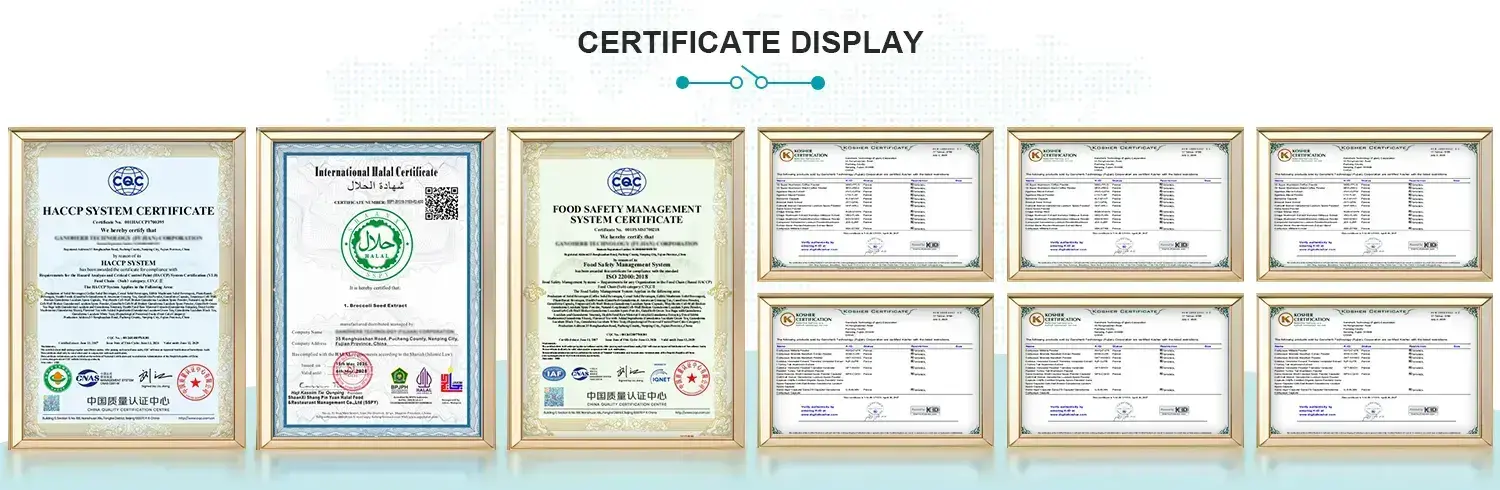
- Certifications: FSSC22000, HACCP, HALAL, Kosher
- Microbiology: Complies with international food safety standards
- Traceability: Full seed-to-product quality control and documentation
It is up to the buying teams to make sure that these parameters are met and that rules are followed.
Natural Algal vs. Synthetic: A Practical Comparison
You can buy real algae astaxanthin for more money than you can buy man-made astaxanthin. However, brands that want to attract health-conscious US buyers who read ingredient labels carefully can afford to pay the extra. Because it doesn't have any esterification and has a mixed isomer makeup, it can't be labeled as organic or non-GMO. The clean label ingredient astaxanthin comes from algae. It gives healthy drink brands that want to build long-term customer trust a strong place in the market.
Matching Specifications to Formulation Goals
It comes in different kinds for different kinds of drinks. When mixed with water, a 1% powder that is microencapsulated and stick packs well works well. A 2% microencapsulated powder that mixes with water works better for high-end RTD mixes that need to meet higher active dose goals. We can change the features to fit your needs if you let us know what amount, form, and legal requirements you need for the end market.
Procurement and Supply Chain Insights
Order Lifecycle and Lead Times
Being open is the first step to building a supply chain you can trust. Once a buyer asks for samples and checks the COA of Haematococcus Pluvialis Astaxanthin Powder, they should be able to expect clear quality standards, written lead times, and records of how each batch was made until the main order is sent out. Every year, our plant can always make 300 tons of goods. This makes it easy for us to handle the big orders that come in all the time.
Certifications and Traceability Documentation
The Certificate of Analysis was tested using HPLC, and it has records of meeting FSSC22000 and HACCP standards. It also has HALAL and Kosher certificates, and a full history of how the powder was grown into the finished product. For brands that want to be honest with store buyers about their goods, these papers are very important. Imports into the US also need to follow FDA rules.
Shipping and Packaging Options
Freight can be sent and received by air or sea in the US and other places around the world. You can get packaging that is made just for you based on how many things you buy and how you want to brand them. How to store the product is very clear. For example, it should be kept below 4°C, covered, and out of light so that it works while it's being shipped and stored.
Integrating Astaxanthin Powder into Functional Beverage Formulations
Overcoming Solubility and Color Challenges
The deep red color of astaxanthin might be what you need to make a certain type of drink. The color of a drink can tell you a lot about how strong and pure it is. It is strong and pure if it is clear or has a light color. When you mix microencapsulated CWS powder with liquid, the color doesn't run and stays spread out evenly. This is true even after a long time has passed.
Synergistic Ingredient Pairings
A lot of well-known ingredients in functional drinks work well with astaxanthin. They form a larger group of antioxidants when mixed with lutein, vitamin C, or mixed tocopherols. When mixed with collagen proteins or hyaluronic acid, it's good for your face. When mixed with BCAAs or vitamins in sports recovery drinks, astaxanthin helps fight lethargy and keep muscles strong.
US Regulatory Considerations
Astaxanthin from H. pluvialis can be bought and sold in the US thanks to the Dietary Supplement Health and Education Act (DSHEA). There should be no claims on labels that something will cure diseases. Instead, there should be claims based on studies about structure and function. In order to follow FDA rules, our team helps brands legally back up what they say about their products and help them come up with formulations that are based on proof.
Conclusion
This is a functional drink from Haematococcus Pluvialis Astaxanthin Powder that people in the US like because it is backed by science and customers like it. It comes with a clean label, works well with microencapsulation, and is an antioxidant that can get through membranes. Because of these things, it's a great choice for health drinks, fitness drinks, and drinks to help you recover from sports. A safe way to buy something is not the same as a trustworthy partner for ingredients. A trustworthy ingredient relationship chooses a source whose products can be fully tracked, whose credentials have been checked, and whose production capacity stays steady. You can get all of these from EXTRABROC® through a single chain of responsible shipping.
FAQ
What is the recommended astaxanthin dosage in functional beverages?
Clinical tests on humans have shown that a daily dose of 4–12 mg is generally enough to help heal, protect, and keep the skin healthy. When making drinks, a good goal is 4–6 mg per dose, which is a good balance between low cost and therapeutic support.
How should astaxanthin powder be stored to protect its potency?
Do not let water or light touch it. Put it away somewhere dark, cool (below 4°C), and sealed. Our product will work for 24 months if these things take place. Better insulation in the boxes and faster shipping help the quality stay the same while they're being sent.
Is natural astaxanthin powder available with HALAL and Kosher certifications?
Our Haematococcus pluvialis powder is actually kosher, FSSC22000, HACCP, and HALAL-approved. This means it can be offered in places with strict rules about food, like North America, the Middle East, and Southeast Asia.
Can the astaxanthin concentration be customized for specific formulations?
It's up to you what you want. For example, astaxanthin pills come in amounts of ≥2% to ≥6%, and all-trans isomer ratios can be changed from ≥70% to ≥85%.
Partner with EXTRABROC® for Premium Astaxanthin Supply
EXTRABROC® connects US brands with verified, high-purity Haematococcus Pluvialis Astaxanthin Powder backed by FSSC22000, HACCP, HALAL, and Kosher certifications. As a trusted Haematococcus Pluvialis Astaxanthin Powder supplier with 300 tons/year production capacity, full batch traceability, and customizable specifications, we offer more than raw materials—we offer formulation support, regulatory guidance, and long-term supply reliability. Reach out today to request a sample or discuss your next functional beverage project.
Email: info@extrabroc.com | Website: extrabroc.com
References
1. Guerin, M., Huntley, M. E., & Olaizola, M. (2003). Haematococcus astaxanthin: Applications for human health and nutrition. Trends in Biotechnology, 21(5), 210–216.
2. Fassett, R. G., & Coombes, J. S. (2011). Astaxanthin: A potential therapeutic agent in cardiovascular disease. Marine Drugs, 9(3), 447–465.
3. Naguib, Y. M. A. (2000). Antioxidant activities of astaxanthin and related carotenoids. Journal of Agricultural and Food Chemistry, 48(4), 1150–1154.
4. Ambati, R. R., Phang, S. M., Ravi, S., & Aswathanarayana, R. G. (2014). Astaxanthin: Sources, extraction, stability, biological activities and its commercial applications—A review. Marine Drugs, 12(1), 128–152.
5. Spiller, G. A., & Dewell, A. (2003). Safety of an astaxanthin-rich Haematococcus pluvialis algal extract: A randomized clinical trial. Journal of Medicinal Food, 6(1), 51–56.
6. Lorenz, R. T., & Cysewski, G. R. (2000). Commercial potential for Haematococcus microalgae as a natural source of astaxanthin. Trends in Biotechnology, 18(4), 160–167.