Can Broccoli Seed Extract 1% Sulforaphane Meet the Needs of Emerging Plant-Based Ingredient Markets?
Yes — broccoli seed extract 1% sulforaphane is well-positioned to meet the demands of today's plant-based ingredient markets. As consumers push for science-backed, clean-label bioactives, standardized sulforaphane from Brassica oleracea var. italica seeds delivers a measurable, stable, and regulatory-compliant option for nutraceutical, functional food, and cosmeceutical manufacturers. With proven Nrf2 pathway activation, room-temperature stability for 24 months, and certifications including FDA GRAS, GMP, and USP, this extract addresses both performance requirements and procurement realities for global B2B buyers.
Understanding Broccoli Seed Extract 1% Sulforaphane: Composition and Benefits
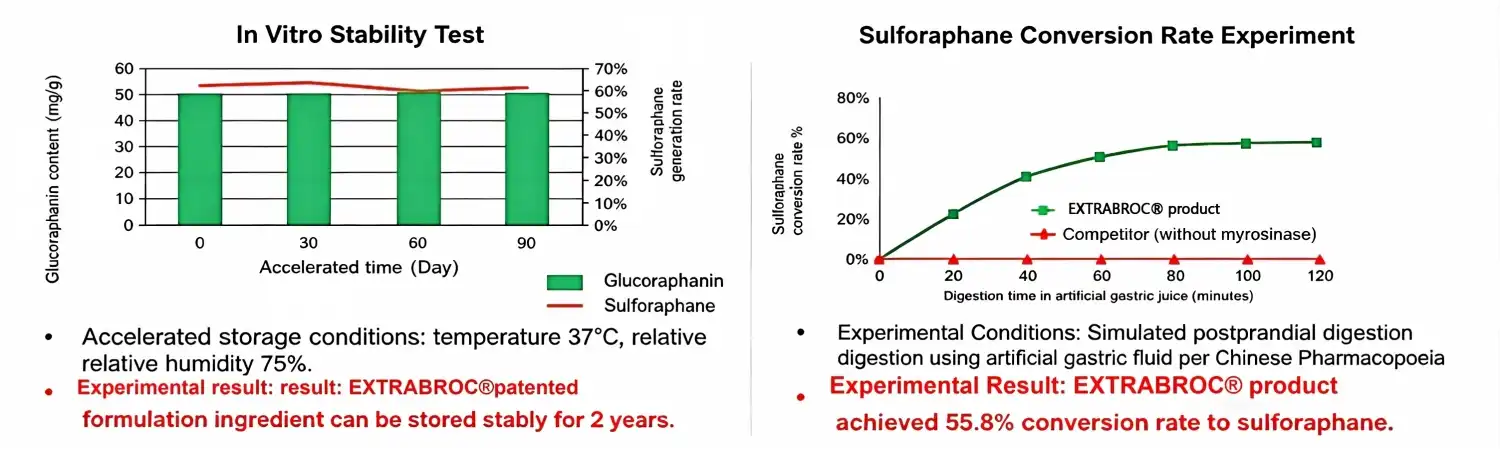
Glucoraphanin, which is found in large amounts in broccoli seeds, is used to make sulforaphane, which is an organosulfur isothiocyanate compound. When an enzyme called myrosinase comes into contact with glucoraphanin, it breaks down the molecule and makes active sulforaphane. The high-efficiency stabilized sulforaphane (SFN 1%) from EXTRABROC® is made from a unique recipe that includes glucoraphanin, horseradish powder carrying myrosinase, and calcium salts. It is extracted using pure water, leaving no organic solvent leftovers.
What Makes the 1% Concentration Commercially Practical?
The 1% standard concentration strikes a good balance between effectiveness and cost-effectiveness. Higher concentrations might bring small gains, but they also make things less stable and make pricing harder. At 1%, producers can make sure that each serve has a consistent, biologically active dose without having to pay as much for highly concentrated fractions. The in-vivo conversion rate for EXTRABROC® is ≥55.8%, which means that the body regularly turns the given precursor into active sulforaphane. This is something that many other formats can't do.
Bioavailability and the Nrf2 Mechanism
The sulforaphane chemical turns on the Nrf2 signaling pathway, which in turn turns on the body's own antioxidant and Phase II detoxification enzyme systems. This process helps protect cells from oxidative stress, which means it can be used for anti-aging, metabolic health, and neuroprotection. Fahey and Talalay's research in PNAS (2002) found that sulforaphane is the most powerful natural inducer of Phase II enzymes. This discovery has been studied by scientists for more than twenty years.
Stability Profile That Supports Scalable Production
Pure sulforaphane oil breaks down quickly at room temperature, but EXTRABROC®'s SFN 1% stays effective for 24 months when kept in a cool, dry place. Its light yellow fine powder form (particle size ≥90% passing 180μm) mixes easily into capsules, tablets, and powder blends, which is helpful for contract manufacturers who have to handle a lot of different product lines.
Sourcing and Quality Considerations for B2B Purchasers
Buying Broccoli Seed Extract 1% Sulforaphane-based ingredients is based on quality data that can be checked, not just marketing claims. Before making an order, I suggest that buyers ask for all the paperwork they need and judge sellers by standards that can be measured.
Here are the most important quality checks that professionals should make:
- Active ingredient assay: Sulforaphane ≥1% confirmed by HPLC using a C18 column — the industry standard for quantitative accuracy.
- Heavy metal compliance: EXTRABROC®'s SFN 1% reports inorganic arsenic at 0.042 μg/g, well within safe thresholds. ICP-MS screening covers Pb, As, Hg, and Cd per USP <561> guidelines.
- Microbiology: Total aerobic bacterial count <10 cfu/g, with confirmed absence of E. coli and Salmonella — a non-negotiable standard for seed-derived extracts.
- Pesticide screening: Over 500 pesticide indicators tested via GC-MS/LC-MS, meeting international safety benchmarks.
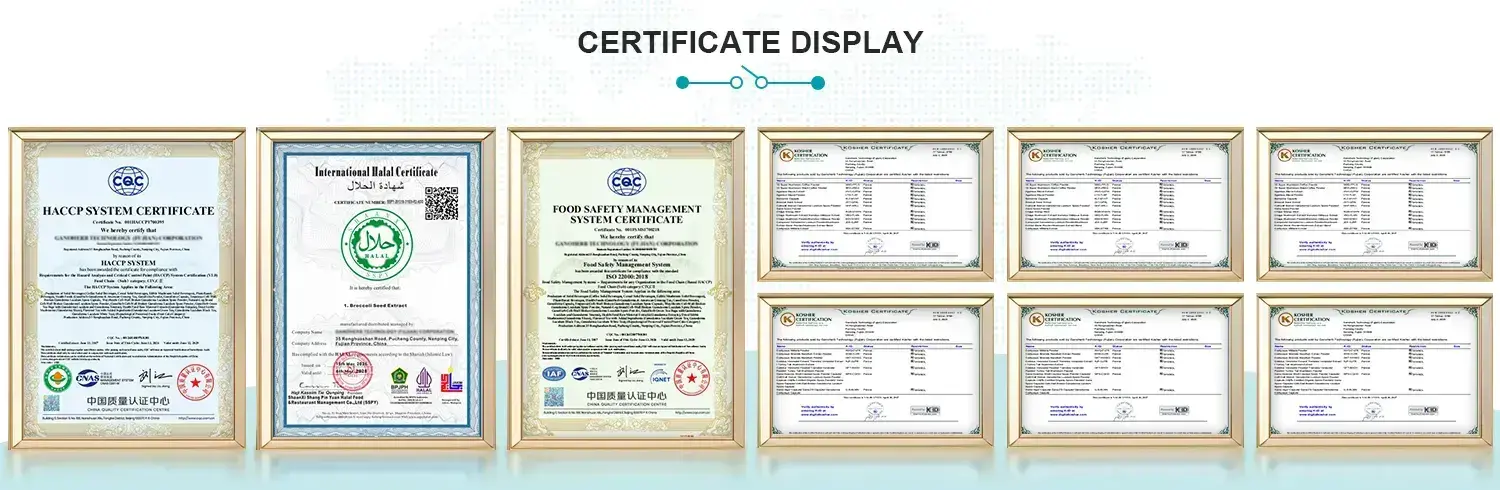
- Certifications on file: FDA, GMP, ISO22000, HACCP, and HALAL certifications confirm that production facilities maintain auditable quality systems.
It is necessary to go through these steps because they decide if a final product can enter regulated markets like the US, EU, and Japan. Buyers who don't check their documents run the chance of not following the rules at customs or during post-market monitoring.
Organic vs. Conventional Sourcing
The price of organic broccoli seed extract is higher, and clean-label product lines like it. Conventional sources, along with strict tests for pesticides and heavy metals, give the same level of purity at a lower cost, making it a good option for mass-market formulations. No matter what level of sourcing is used, EXTRABROC® uses full traceability from choosing the seeds to extracting them and packaging them.
Ingredient Format Flexibility
SFN 1% comes as a fine, light yellow powder that can be used to fill capsules, crush tablets, package in sachets, and blend dry for functional food uses. It can be shipped around the world by air or sea for 24 months, and 50 tons can be made each year, which is enough for large-scale industrial projects.
Market Comparison and Positioning
There are different kinds of sulforaphane ingredients, such as raw glucoraphanin powders, broccoli sprout extracts, and stable sulforaphane products like SFN 1%. Each has pros and cons.
For conversion, raw glucoraphanin powders rely on natural gut myrosinase activity, which is very different for each person. In 2011, the Journal of Nutrition published a study that found differences in the gut microbiome could cause up to a fourfold change in the bioavailability of sulforaphane from glucoraphanin precursors alone. The patented exogenous myrosinase addition in EXTRABROC® directly addresses this variable, achieving> 55.8% in vivo conversion with low individual variation.
Broccoli sprout extracts usually have lower uniform sulforaphane amounts and have more trouble keeping batches consistent because the plant material isn't always the same. A Broccoli Seed Extract 1% Sulforaphane is still popular for positioning as whole foods, but it is harder to get the right dose.
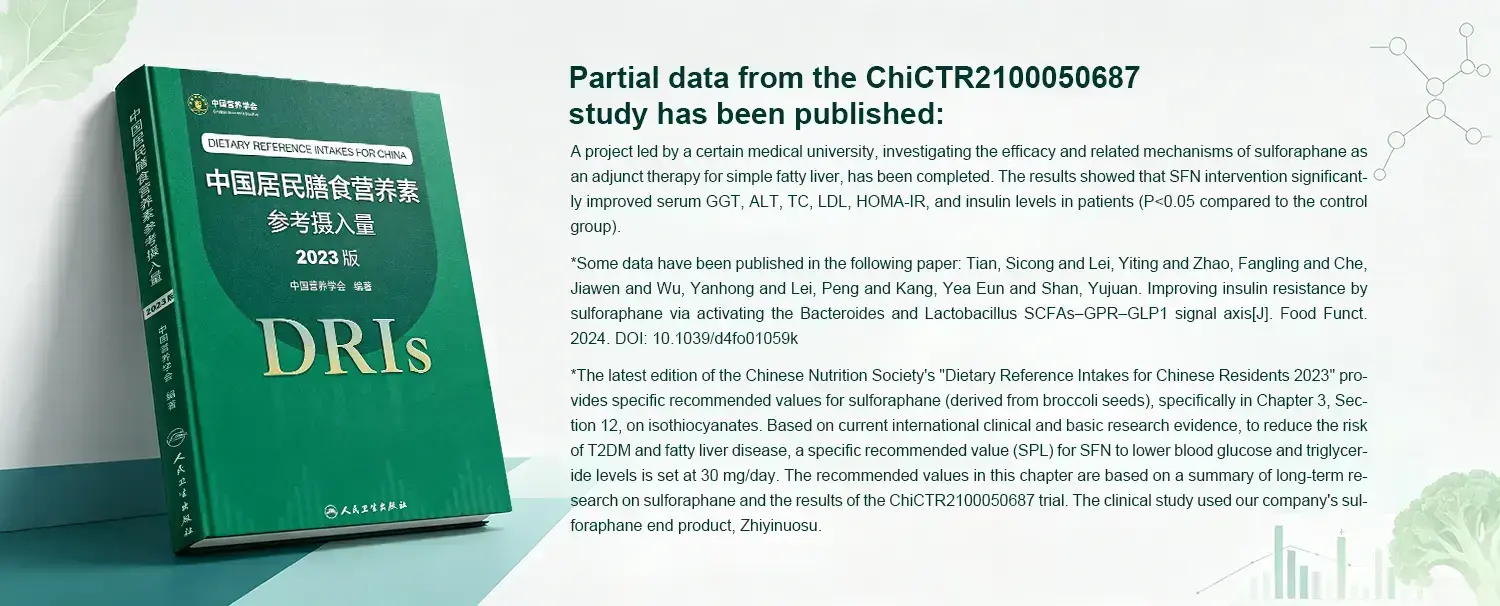
The SFN 1% in EXTRABROC® holds invention patents in China and Japan, while its US patent is under substantive examination.This gives it extra safety that other goods can't match. Over 10 finished human clinical trials and real-world studies provide the proof-based information that brand owners and regulatory teams are asking for more and more when entering the US market.
Application Scenarios and Industry Use Cases
Sulforaphane seed extract can be used in a lot of different types of products because it has a wide range of functions. Here's how different types of businesses are using it:
- Nutraceutical supplements: Capsule and softgel formats targeting cellular longevity, liver detoxification, and cognitive protection. Sulforaphane's Nrf2 activation profile aligns directly with the anti-aging supplement segment, one of the fastest-growing categories in the US market.
- Sports nutrition: Metabolic efficiency and inflammation management matter to active consumers. SFN 1% supports these outcomes through antioxidant enzyme induction, fitting well in recovery blends and performance formulas.
- Functional food and beverage: Powder blending into superfood mixes, meal replacements, and fortified drink powders. The stable powder format tolerates normal processing conditions and dry blending without significant sulforaphane loss.
- Cosmeceuticals: Topical formulations targeting UV-induced oxidative stress and skin aging incorporate sulforaphane for its gene-level cytoprotective activity. This positions the ingredient across both ingestible and topical product development pipelines.
How to Procure SFN 1% Efficiently?
To start buying from a sulforaphane supplier, you need to follow a structured process. Ask for a Certificate of Analysis (CoA) that includes the results of the sulforaphane test, the moisture content, the heavy metals test, the microbiology test, and the pesticide test. Before you do a sample, compare these numbers to the legal limits of your target market.
EXTRABROC® lets you ask for samples, change the formula based on the ingredients and dosage form needs, and work together on technical development for finished products that are based on evidence. You can license patents, but only if you place a lot of orders. HPLC analysis help is included for qualified buyers to make sure that the uniformity of each batch.
Set your annual volume goal early on so that you can talk about prices. SFN 1% is available for bulk orders of up to 50 tons per year. When you know your number tier, it's easier to negotiate prices, wait times, and private labeling deals.
Conclusion
Broccoli Seed Extract 1% Sulforaphane standardized to 1% sulforaphane meets real buying needs: it is bioavailable, stable at room temperature for 24 months, approved by regulators in major global markets, and can be used in a wide range of categories. The SFN 1% from EXTRABROC® adds a patent-protected technology layer that is backed by clinical study data. This makes it a good choice for brands that want to make product lines that are based on evidence. This ingredient should be carefully considered by B2B buyers who are new to or growing in the plant-based ingredient market.
FAQ
What is the recommended dosage for SFN 1% in supplement formulations?
Standard clinical studies on sulforaphane in humans usually use daily doses of 10 to 100 mg of active sulforaphane. Formulators figure out how much SFN 1% to use by figuring out how much stabilized powder is needed to give the goal amount of sulforaphane, taking into account the ≥55.8% in vivo conversion rate. Your EXTRABROC® technical team can help you come up with the right formulation for your needs.
Is broccoli seed extract 1% sulforaphane safe for long-term use?
Over 10 human clinical studies show that EXTRABROC®'s sulforaphane version is safe. The ingredient has been approved by three separate regulatory bodies, namely the US FDA, the USP-NF pharmacopeia, and China's New Food Raw Materials rules. Each of these groups has looked over the safety data on its own.
How does SFN 1% compare to broccoli sprout extract?
Broccoli sprout extract is the main source of glucoraphanin; the change process depends on the bugs in your gut. SFN 1% gives you stabilized, already-converted sulforaphane with extra myrosinase added, which greatly lowers the variability of conversion. This leads to more stable bioavailability and helps product makers plan doses more accurately.
What certifications does EXTRABROC® SFN 1% carry?
SFN 1% has FDA, GMP, ISO22000, HACCP, and HALAL standards, which help it get into controlled markets in the US, the Middle East, and other countries.
Partner With EXTRABROC® — Your Trusted Broccoli Seed Extract 1% Sulforaphane Supplier
EXTRABROC® has a Broccoli Seed Extract 1% Sulforaphane raw material that is backed by science and covered by a patent. It is designed for industrial production around the world. Our team has been researching Nrf2 for 13 years, can supply 50 tons a year, and has all the necessary paperwork to help your product enter the US market. They can help you choose the right ingredients and make sure the final formula is perfect. Get in touch with us right away to get samples, bulk pricing, or technical advice. You can email our buying team at info@extrabroc.com or go to our website at extrabroc.com.
References
1. Fahey, J. W., & Talalay, P. (2002). Proceedings of the National Academy of Sciences (PNAS) — Sulforaphane as a potent inducer of Phase II detoxification enzymes.
2. Shapiro, T. A., et al. (2006). Journal of Nutrition — Bioavailability of sulforaphane from broccoli sprouts and supplements in humans.
3. Kensler, T. W., et al. (2013). Cancer Prevention Research — Sulforaphane chemoprevention: From mechanisms to clinical application.
4. Murillo, G., & Mehta, R. G. (2001). Nutrition and Cancer — Cruciferous vegetables and cancer prevention.
5. Houghton, C. A. (2019). Nutrients — Sulforaphane: Its properties, mechanisms of action, and practical applications in medicine.
6. Yanaka, A. (2018). Journal of Clinical Biochemistry and Nutrition — Daily intake of broccoli sprouts normalizes bowel habits in human subjects.