Astaxanthin Oleoresin: Factors Affecting Color Retention in Processing
When purchasing astaxanthin oleoresin, colour is used for a lot more than just looks. A good Haematococcus pluvialis extract has a deep red colour that shows how much pigment is in it, how strong the antioxidants are, and how well the product is made overall. Astaxanthin oleoresin is a concentrated form of a lipid-soluble keto-carotenoid that comes from microalgae. It is very sensitive to oxygen, heat, and light when it is being processed. Anyone who works with this ingredient on a large scale needs to know which factors cause colour loss and how to control them. This is a useful skill that will save them money.
Understanding Astaxanthin Oleoresin and Its Color Properties
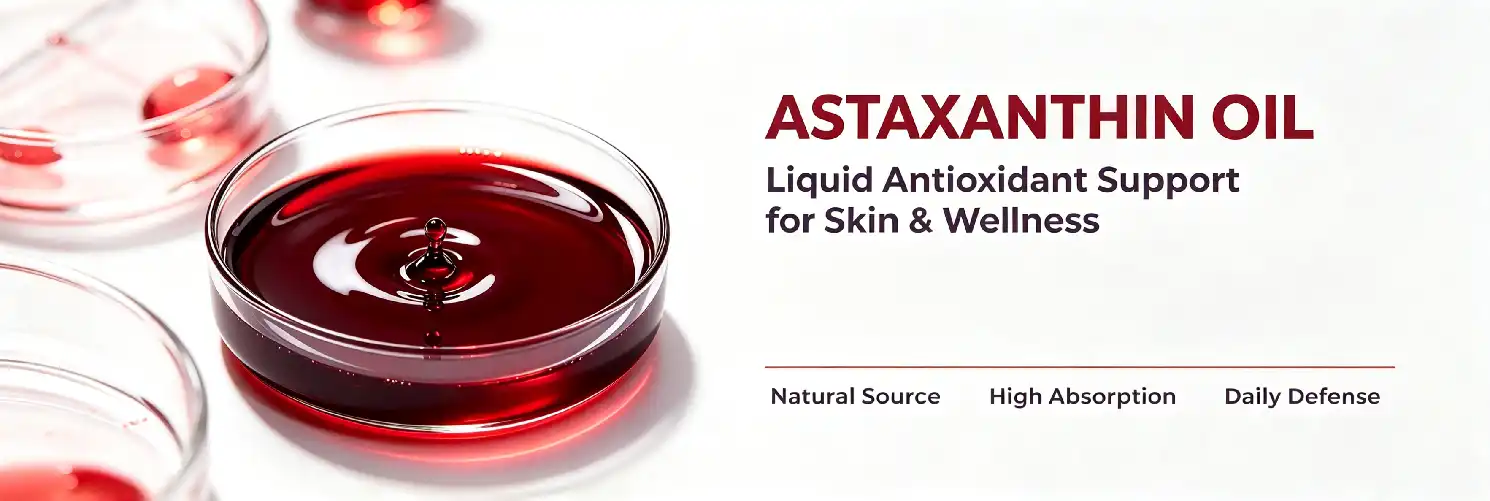
What Gives the Oleoresin Its Deep Red Color?
As mono- and di-esters of the xanthophyll molecule it comes from, it is mostly found. It comes from Haematococcus pluvialis. From 470 to 495 nm, these ester links absorb light, which makes the colour look dark red. The colour of an oleoresin can be used to tell if it is good or not with HPLC. There shouldn't be any silt, phase separation, or cloudiness in a good oleoresin. It should be a clear, see-through, ruby-red oil.
Natural vs. Synthetic: Why It Matters for Color Stability
A lot of the time, natural oleoresin is esterified and in the (3S, 3'S) stereoisomer form. It is much less likely to be damaged by light than astaxanthin made in a lab, which is a racemic mix that isn't esterified. Even after being heated and subjected to oxidative stress at the same levels, natural esterified forms kept their colour strength longer after being processed. How the colours of finished things stay the same over time is changed by this.
Why Color Retention Is a Quality Benchmark?
Loss of color is a safe early sign of damage from oxygen. When the conjugated polyene chain of astaxanthin breaks down, it loses both its color and its protective power. It is possible to tell when a product has lost biological activity because it is pale or brown when it gets to the customer's dock. Customers in the business world see color changes between runs as a style flaw, but they are also a sign of bad supply chain management.
Core Factors Affecting Color Retention in Astaxanthin Oleoresin Processing
Extraction Method and Pigment Integrity
It is possible to use supercritical CO₂ extraction at low temperatures, and it doesn't leave behind any harmful solvents. This keeps the weak ester bonds that are necessary for the pigment to stay stable. When our unique cell-wall-breaking preparation process is used on dried algae powder that was grown in clean water in glass pipelines, the oil is very pure, flows well, and doesn't have many solvents left over. When the color starts its trip with this clean-entry method, there are fewer things that can break it down.
Temperature, Oxygen, and Light Exposure During Storage
Together, these three things lead to degradation of Astaxanthin Oleoresin. Chain reactions involving free radicals happen faster at high temperatures. Oxygen keeps attacking the backbone of the polyene. UV and visible light start photo-oxidation within hours of exposure without protection. According to data from the business world, astaxanthin loses a lot of its color after a few weeks of being stored at room temperature. It stays stable for 24 months, though, if kept below 4°C in containers that are sealed and filled with nitrogen. A good way to see right away if reactive control is working is to keep the peroxide level below 5.0 meq/kg.
pH and Heat Exposure During Formulation
When making finished goods, acidic conditions below pH 4 and processing temperatures above 60°C are two things that people often forget about. When they are in an acidic environment, astaxanthin esters break down faster, becoming the less stable free-form molecule. Processing temperatures should be kept as low as possible, and the end product shouldn't be in acidic media for long periods of time. This will give it more color depth and biological activity.
Comparing Astaxanthin Oleoresin with Other Forms: Impact on Color Stability
Oleoresin vs. Microencapsulated Powder
Astaxanthin oleoresin is great for softgels, cosmetic serums, and carrier oil blends because it can be delivered directly and dissolves in oil. Because the concentrated pigment load can be adjusted from ≥5% to ≥20%, formulators can precisely control the amount that is used. Microencapsulated powder, which is made using a special encapsulation technology, gives up some of its original colour intensity so that it can dissolve in water and work with a wider range of solid dosage forms, like compressed tablets and stick-pack drinks. In situations where colour consistency in a lipid matrix is important, oleoresin is still the standard.
Natural Oleoresin vs. Synthetic Astaxanthin
There is a big difference between these two kinds in terms of regulation and colour stability. Natural oleoresin is safe for food and meets the standards of the US Food and Drug Administration (FDA) and major foreign food safety organisations. The racemic isomer profile of synthetic astaxanthin is 3S,3'S / 3R,3'S / 3R,3'R in a 1:2:1 ratio. It is also not esterified, which means that finished goods with this astaxanthin have less oxidative stability and a less saturated colour. Natural astaxanthin is the standard choice for global brands because it is accepted by more regulatory bodies for use in food and health products.
Choosing the Right Form for Your Application
Here's how that works for different kinds of products:
- Astaxanthin oil at 5% or 10% gives softgels and oil-based vitamins a steady colour and the ability to fill straight lines. It is often mixed with lutein, zeaxanthin, or fish oil.
- You can use 1% or 2% microencapsulated powder in tablets and solid drinks. It dissolves in water and keeps its colour in dry blends.
- It is said that oleoresin in stable emulsion systems can fight photoaging and oxidative stress caused by UV light in cosmetic serums and creams.
- Aquaculture and pet food: Pure oil helps salmon and colourful fish make better colours and stays solid while the extruder is being set up.
Each form needs its own way to be packed and stored so that the colour specifications are kept up until the customer.
Best Practices for Enhancing Color Retention in Procurement and Storage
When the colour of Astaxanthin Oleoresin goes from the source to the factory floor, extra care needs to be taken to keep it safe. You can get things and handle them better if you follow these tips.
- Ask for certificates of analysis (COA) that are backed up by HPLC. For example, ask for batch-specific HPLC data that proves the total amount of astaxanthin and the peroxide value. Just looking at something isn't enough.
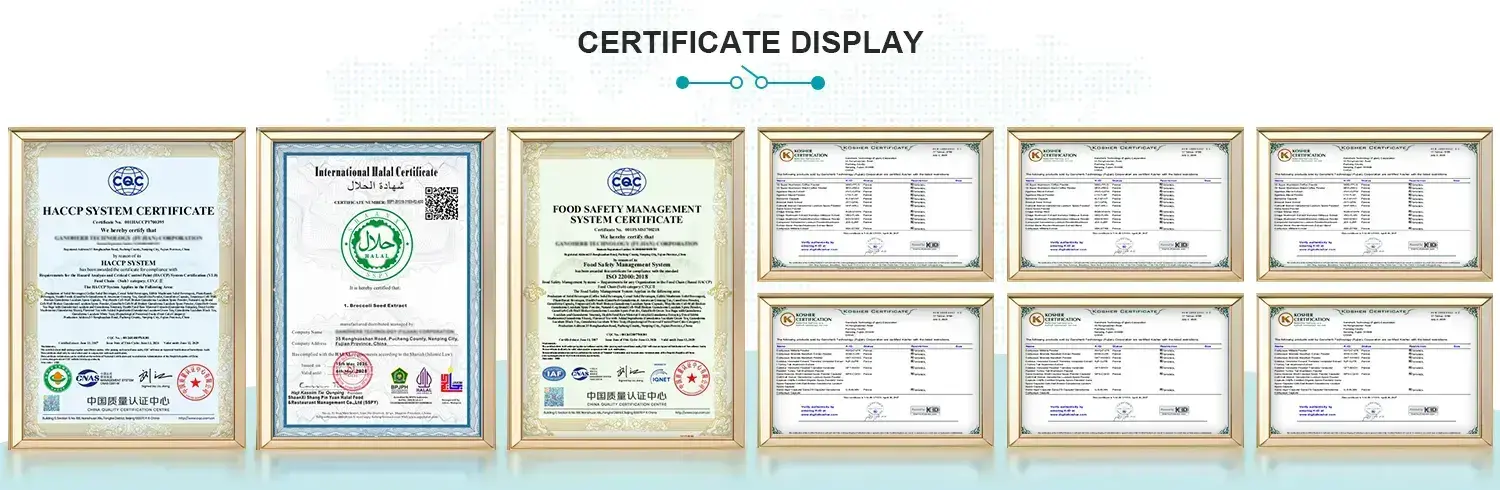
- Check that the seller has more than one certification. Suppliers with FSSC22000, HACCP, HALAL, and Kosher badges show that they have thorough quality control, not just random testing. It is possible to keep track of and check the company that has these licenses.
- Pack things in boxes that don't let light or air through. Amber glass or multi-layer paper packing with nitrogen flushing keeps things from going bad while they're in transport. This can't be changed for goods sent by international freight.
- Need full-chain traceability: There should be good written data for every step of the process, from growing algae to extracting it to storing it. We make it possible to follow the whole process, from the seed to the finished extract.
- Ask for evidence on stability more quickly: Ask the company for the results of a stability study that shows how the colour and peroxide value change after being stored in a certain way for 12 to 24 months.
It would be helpful to make a list of the COAs that have been checked by HPLC: Ask for HPLC data that is specific to the batch and shows how much peroxide and astaxanthin are present. Just looking at something isn't enough.
Check the papers to see if they have more than one certification. For instance, suppliers who have FSSC22000, HACCP, HALAL, or Kosher certificates show that they are always responsible for quality, not just when tests are needed. With these badges, you can check the work and keep track of it.
Conclusion
It's not a mistake that colour is kept when astaxanthin oleoresin is handled. It's because of how the product is taken out of the ground, kept, packed, and how the seller checks the quality. This deep red oil from Haematococcus pluvialis will stay that colour for 24 months if you properly remove it and store it below 4°C in containers that keep air out. People who use these criteria when they buy something protect both the product's quality and the brand's reputation. Working with a company that provides known, tracked, and HPLC-verified oleoresin is the best way to get legal finished goods that are the same colour.
FAQ
What is the ideal storage temperature for astaxanthin oleoresin bulk inventory?
Keep at or below 4°C in bags that have been sealed and nitrogen-flushed. Do not put them in full sunlight. When we store our oleoresin in these ways, it stays good for 24 months. Leaving something at room temperature makes oxidation happen faster, and the colour fades in a few weeks.
How do I verify color quality on incoming batches?
To make sure the total astaxanthin content is between 5% and 10%, the peroxide value is below 5.0 meq/kg, and the product is microbiologically safe, ask for an HPLC COA that is specific to the batch. There shouldn't be any cloudiness or sediment in the oil; it should be clear and dark red.
Does pH in the finished formulation affect color stability?
Yes. Esters break down when the pH drops below 4. This turns safe esterified astaxanthin into the free form, which breaks down more quickly. To keep the colour pure, the matrix needs to be neutral to slightly acidic, and the temperature during production needs to stay below 60°C.
What certifications should I require from my astaxanthin supplier?
At least FSSC22000 and HACCP should be used for food safety. More people can buy from you if you have HALAL and Kosher approvals. Because it shows the whole chain of events, the paperwork your supplier gives you can be used as proof for regulatory purposes in the US, EU, and other places.
Request a Sample from EXTRABROC® — Your Trusted Astaxanthin Oleoresin Supplier
Looking for a reliable Astaxanthin Oleoresin supplier for nutraceutical, cosmetic, or aquaculture applications? EXTRABROC® supports ingredient buyers seeking consistent pigment quality and reliable bulk sourcing.
Contact our team to discuss your astaxanthin concentration requirements, review available HPLC-based COA documentation, and explore suitable packaging and storage solutions to help preserve color stability during transport and storage.
Email info@extrabroc.com to request a sample, obtain product specifications, or discuss your bulk procurement needs.
References
1. Guerin, M., Huntley, M. E., & Olaizola, M. (2003). Haematococcus astaxanthin: Applications for human health and nutrition. Trends in Biotechnology.
2. Yuan, J. P., Peng, J., Yin, K., & Wang, J. H. (2011). Potential health-promoting effects of astaxanthin: A high-value carotenoid mostly from microalgae. Molecular Nutrition & Food Research.
3. Naguib, Y. M. A. (2000). Antioxidant activities of astaxanthin and related carotenoids. Journal of Agricultural and Food Chemistry.
4. Régnier, P., Bastias, J., Rodriguez-Ruiz, V., & Caballero-Casero, N. (2015). Astaxanthin from Haematococcus pluvialis prevents oxidative stress on human endothelial cells without toxicity. Marine Drugs.
5. Ambati, R. R., Phang, S. M., Ravi, S., & Aswathanarayana, R. G. (2014). Astaxanthin: Sources, extraction, stability, biological activities, and its commercial applications. Marine Drugs.
6. Sachindra, N. M., Bhaskar, N., & Mahendrakar, N. S. (2006). Recovery of carotenoids from shrimp waste in organic solvents. Waste Management.