Broccoli Seed Extract 2% Sulforaphane Supports Customized Solutions for Natural Ingredient Suppliers and Product Developers
If you work in natural ingredient sourcing or product development, you already know how difficult it is to find a standardized botanical extract that performs consistently at scale. Broccoli Seed Extract 2% Sulforaphane—derived from Brassica oleracea var. italica seeds using a pure water extraction process—answers that challenge directly. This post walks through what makes this ingredient worth your attention, how to compare variants, and what a reliable supply partnership looks like in practice.
Understanding Broccoli Seed Extract 2% Sulforaphane: Composition and Health Benefits
What Sets the Seed Extract Apart From Other Forms?
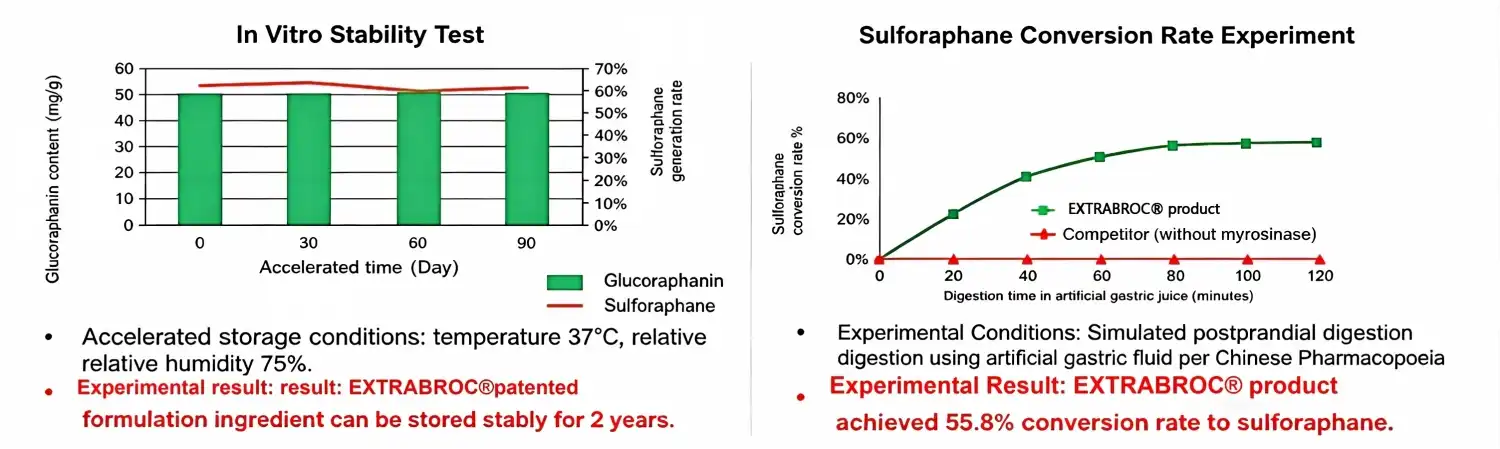
Not every source of sulforaphane is the same. Endogenous myrosinase activity is very important for broccoli sprout extract, but it varies a lot between batches and people. Isolated sulforaphane powder breaks down quickly because its molecules are naturally unstable. On the other hand, Broccoli Seed Extract 2% Sulforaphane uses a unique mix of glucoraphanin, horseradish powder with exogenous myrosinase, calcium salts, and other special ingredients to make sure that the body converts it consistently and effectively. This makes a fine, light yellow powder with a unique smell and a confirmed in vivo sulforaphane conversion rate of ≥55.8%.
Scientifically Validated Health Benefits
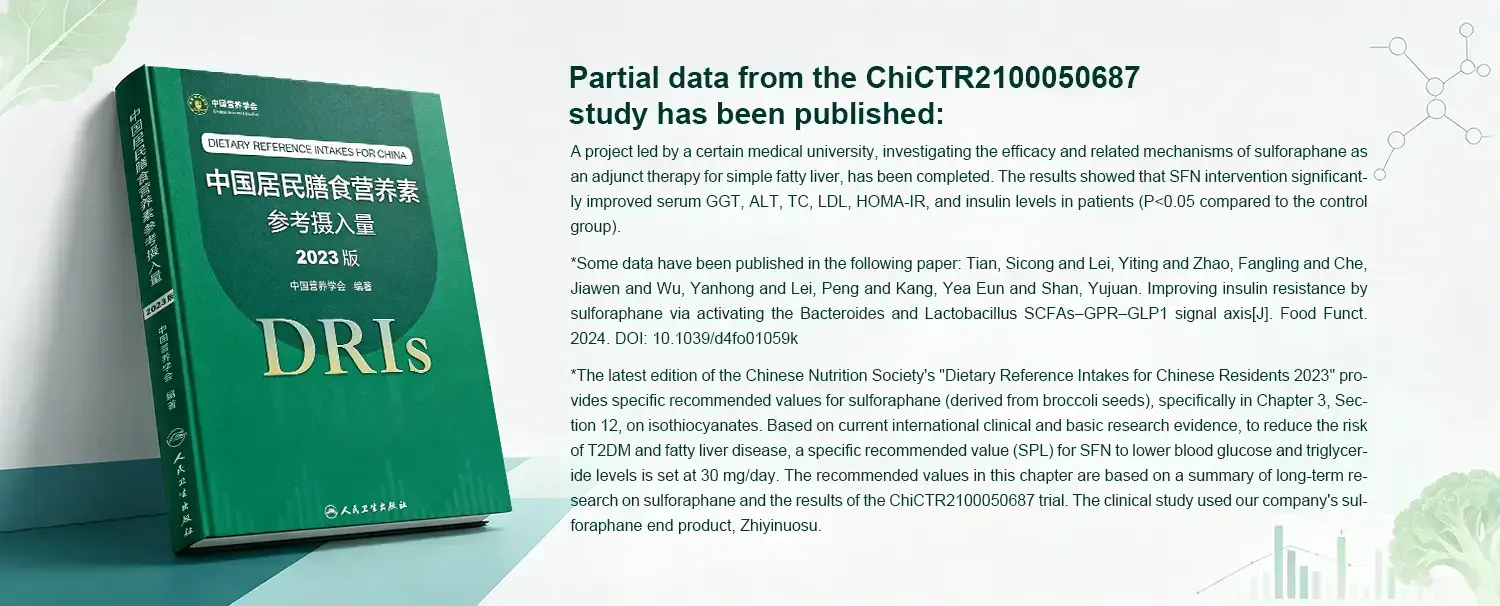
The Nrf2 signaling route is the body's main cell defense system, and it is the process that has been studied the most. Published clinical studies show that sulforaphane intake can lower oxidative stress markers, help keep glucose and fat metabolism in check, and may even be good for brain function. The claims that the EXTRABROC® formulation works are backed up by more than 10 completed human clinical trials and real-world studies. This gives product developers proof they can use in marketing and regulatory submissions.
Safe Dosage Parameters for Formulation
Most studies that have been released say that you should take between 20 mg and 50 mg of sulforaphane every day for physiologically useful results. Using a standardized 2% extract, this means that each daily dose has between 1,000 mg and 2,500 mg of the finished ingredient. This is a range that works with normal capsule, tablet, and powder-stick forms. Because EXTRABROC® has small differences in conversion rates between individuals, formulators can be more sure about the amount they use compared to sprout-based or raw vegetable-derived sources.
Comparing Broccoli Seed Extract Variants and Sulforaphane Forms for Procurement Decisions
2% vs. Higher-Concentration Variants
For most nutrition and functional food uses, a 2% sulforaphane powder is the best way to start. It strikes a good mix between strength and formulation freedom at a low cost. Higher concentrations, like 5% or 10%, cost more per kilogram . The 2% grade is the best value for money when it comes to mass-market supplements, protein mixes, or healthy drinks that use sulforaphane as one of several active ingredients.
Natural vs. Synthetic Sulforaphane
In the US market, natural Broccoli Seed Extract 2% Sulforaphane that comes from broccoli seeds has clear regulatory benefits. EXTRABROC® meets the standards of the US Food and Drug Administration (FDA) for GRAS status, the USP-NF pharmacopeia, and China's National Health Commission as a New Food Raw Material. Even though synthetic sulforaphane is chemically the same, it is looked at more closely by regulators and doesn't have the full-chain tracking that many store brands now need. The natural plant origin is a clear marketing differentiator for product makers who want to position their products as "clean labels."
Delivery Form Considerations
The EXTRABROC® SFN2% is made as a fine, light yellow powder. About 90% of the particles can pass through a 180 μm sieve. This profile of particles makes it possible to blend ingredients consistently in capsule fills, compressed tablets, sachets, and food matrices. The amount of total aerobic bacteria is less than 10 cfu/g, and the amount of inorganic arsenic is 0.042 μg/g, which is well below the safety limits set by the international community. HPLC is used for testing because it is the usual way to measure glucosinolates and isothiocyanates.
Customized Solutions for Natural Ingredient Suppliers: Integrating Broccoli Seed Extract 2% Sulforaphane
Formulation Flexibility Across Categories
The application range of this extract is broader than most buyers initially expect. Here are the primary categories where the 2% sulforaphane extract performs well in finished products:
- Anti-aging and longevity supplements: Capsules and softgels pairing sulforaphane with resveratrol or CoQ10 for Nrf2-pathway synergy and cellular protection.
- Glucose-lipid metabolism products: Functional tablets and sachets targeting metabolic health, supported by clinical data on sulforaphane's role in insulin sensitivity studies.
- Sports nutrition and weight management: Pre- or post-workout formulations where antioxidant defense and inflammation control are key consumer claims.
- Mood and sleep regulation: Emerging research connects Nrf2 activation to neuroprotective pathways relevant to stress response and circadian rhythm support.
- Dermaceutical applications: Topical anti-aging serums where stabilized sulforaphane helps neutralize UV-induced oxidative stress in skin cells.
These categories represent proven commercial segments in the US natural products market, and each benefits from the consistent bioavailability that a patented, stabilized extract delivers.
Documentation and Certification Support
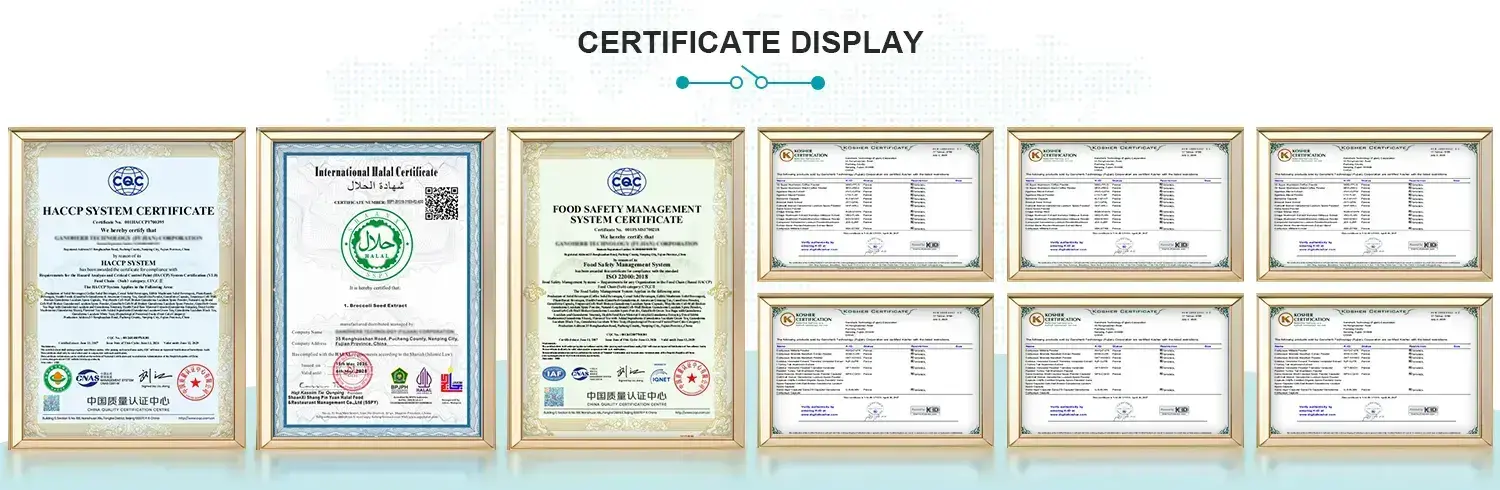
Reliable documentation is not optional in B2B ingredient sourcing—it is the baseline. EXTRABROC® provides certificates of analysis verified by HPLC, along with FDA, GMP, ISO22000, HACCP, and HALAL certifications. Suppliers integrating this ingredient receive full-process traceability from seed cultivation through final extraction, a requirement that increasingly appears in retailer supplier audits and third-party certification programs like NSF and Informed Sport.
Quality Control From Seed to Finished Powder
The production process uses pure water extraction with no organic solvent residues, and the raw material meets standards for more than 500 indicators covering pesticide residues, microbiology, and heavy metals. The ingredient is sourced from non-GMO broccoli seeds. Annual production capacity stands at 50 tons, which supports large-scale orders without compromising batch-to-batch consistency.
Procurement Strategies for Broccoli Seed Extract 2% Sulforaphane in Bulk and Wholesale Markets
Evaluating Supplier Credentials
The first thing to look for in bulk Broccoli Seed Extract 2% Sulforaphane is the status of their certification. A reliable provider of broccoli seed extract should have at least GMP and ISO22000 certifications. HACCP and HALAL certifications are also good signs of how strict the facility is. Patent protection is a secondary but important filter. EXTRABROC® has been granted invention patents in China, Japan, and the US. This means that competitors can't legally copy the underlying technology. This is important for setting your goods apart in the long run.
Pricing, MOQ, and Logistics
The fact that EXTRABROC® can handle both air and sea freight gives procurement teams options based on wait time and order volume. There are customizable product specs, which means that you can change the concentration, particle size profile, and package style to fit your production needs. You can get help with patent licensing if you place a large enough order, and as part of your relationship with the supplier, you can work together on developing technology for certain health applications. These services help smaller product development teams cut down on their own R&D costs.
Risk Management in the Supply Chain
With the ability to produce 50 tons per year and a fully vertically integrated chain from seed to extract, supply gaps are much less likely than for contract makers who rely on getting their raw materials from outside sources. It is easier to negotiate contract terms, coordinate wait times, and plan for the ingredient's shelf life if it has been tested and proven to be stable at room temperature for 24 months without breaking down or losing its effectiveness. This shelf life is backed up by patent paperwork and internal testing.
Future Trends and Innovation in Sulforaphane Extracts for B2B Markets
Advances in Bioavailability Technology
The EXTRABROC® stability system, which combines glucoraphanin with exogenous myrosinase in a unique matrix, already solves the main bioavailability problem that has kept businesses from using sulforaphane for years. It's possible that future progress will be made in tailored delivery forms like enteric-coated granules and liposomal encapsulation, which could make conversion even more efficient.
Regulatory Momentum in the US Market
The FDA's GRAS status and the USP-NF listing make sulforaphane a good candidate for use in functional foods and dietary supplements without the need for new regulatory pathways. As the US market continues to move toward supplement claims based on proof, ingredients with finished human clinical study data will have an easier time getting into stores and will be able to charge more.
Emerging Research Applications
Sulforaphane is being studied for its part in the APC signaling pathway, which is another target in EXTRABROC®'s unique molecular library. It is also being looked at for possible uses in cognitive support, pediatric nutrition, and health goods related to oncology. Because of these research directions, there are now B2B product categories that didn't exist five years ago.
Conclusion
Standardized broccoli seed extract 2% sulforaphane is a well-studied and technically advanced ingredient that helps natural product makers solve real manufacturing problems. EXTRABROC® has a ≥55.8% in vivo conversion rate, is stable at room temperature for 24 months, and has been certified by FDA, GMP, ISO22000, HACCP, and HALAL. This makes it a reliable base for procurement teams and product developers to build unique product lines. The whole supply chain, from growing the seeds to helping with formulation and extraction, lowers the risk of sourcing, and the clinical evidence base improves your place in the market.
FAQ
What makes broccoli seed extract 2% sulforaphane different from other antioxidant ingredients?
Most antioxidants work by getting rid of free radicals directly. Sulforaphane does something different. It turns on the Nrf2 pathway, which makes the body make its own antioxidant enzymes like glutathione and superoxide dismutase. This upstream mechanism protects cells for a longer time than antioxidants that work directly on them. The 2% standardization also makes sure that the doses are the same from one production batch to the next, which is a useful feature that common plant antioxidants don't usually have.
How can I verify sulforaphane content and purity when buying in bulk?
Ask for an analysis certificate that lists the particle size distribution data, microbial counts, heavy metal testing results, and HPLC-confirmed sulforaphane content at ≥2%. Each package from EXTRABROC® comes with full COA paperwork. For initial seller approval, it is also a good idea to have a third-party verification done by an ISO-accredited lab.
Are there side effects or contraindications associated with sulforaphane products?
Human tests have shown that sulforaphane is well tolerated at the amounts that are suggested. People who took very high amounts have said they felt mild stomach pain. People who take thyroid medications should talk to their doctor because high doses of brassica compounds may change how thyroid hormones are made. The finished clinical safety data that can be found through the EXTRABROC® technical team should be used as a guide for all preparation choices.
Ready to Source High-Quality Broccoli Seed Extract 2% Sulforaphane? Contact EXTRABROC® Today
EXTRABROC® is a reliable source for Broccoli Seed Extract 2% Sulforaphane. They have patent-protected technology, the ability to produce 50 tons of product each year, and more than 10 finished human clinical studies to prove that their products work. Our team helps with regulatory paperwork, recipe tweaking, and working together to make new products. To get a sample or quote, email us at info@extrabroc.com or go to extrabroc.com.
References
1. Fahey, J. W., Zhang, Y., & Talalay, P. (1997). Broccoli sprouts: An exceptionally rich source of inducers of enzymes that protect against chemical carcinogens. Proceedings of the National Academy of Sciences, 94(19), 10367–10372.
2. Dinkova-Kostova, A. T., & Abramov, A. Y. (2015). The emerging role of Nrf2 in mitochondrial function. Free Radical Biology and Medicine, 88, 179–188.
3. Shapiro, T. A., Fahey, J. W., Wade, K. L., Stephenson, K. K., & Talalay, P. (2001). Chemoprotective glucosinolates and isothiocyanates of broccoli sprouts. Cancer Epidemiology, Biomarkers & Prevention, 10(5), 501–508.
4. Houghton, C. A., Fassett, R. G., & Coombes, J. S. (2016). Sulforaphane and other nutrigenomic Nrf2 activators: Can the clinician's expectation be matched by the reality? Oxidative Medicine and Cellular Longevity, 2016, Article 7857186.
5. Bahadoran, Z., Mirmiran, P., & Azizi, F. (2013). Dietary polyphenols as potential nutraceuticals in management of diabetes: A review. Journal of Diabetes & Metabolic Disorders, 12(1), 43.
6. Yagishita, Y., Fahey, J. W., Dinkova-Kostova, A. T., & Kensler, T. W. (2019). Broccoli or sulforaphane: Is it the source or dose that matters? Molecules, 24(19), 3593.