How Is Dihydroquercetin Powder Used in Food Ingredient Formulations?
Dihydroquercetin Powder, sometimes called Taxifolin, is an antioxidant that comes from plants and is found in food and supplements. Scientists mix it with other things to make premixes, bars, sweets, healthy drinks, supplement powders, and different kinds of drinks. There are different rules in each area about how much should be mixed. What makes it valuable is how clean it is, how big the bits are, how well they spread, how well they handle heat, and how they feel when you touch them. That's why the first use needs to be tested. Read this guide to learn how to add the thing to a recipe, how it works, and what paperwork you should get before you buy something. The one we use is made from larch root that has been wet.
What Is Dihydroquercetin Powder and What Are Its Key Properties?
Chemical Identity: Dihydroquercetin and Taxifolin
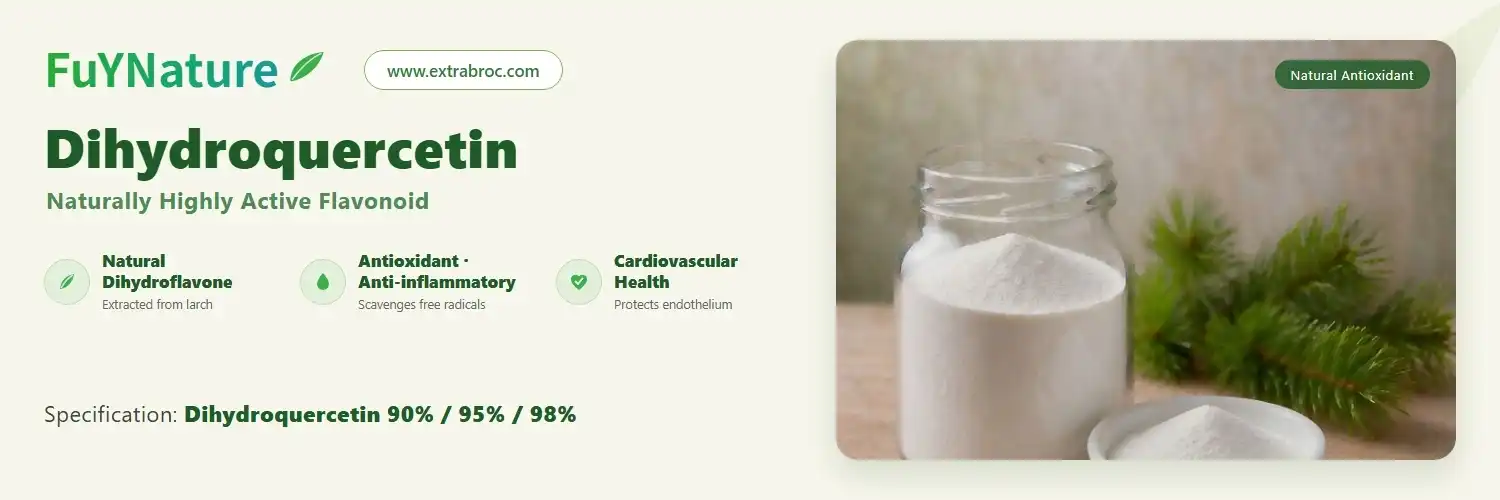
They are both names for the flavonoid Dihydroquercetin Powder, which is the same thing. Chemists also call it 2,3-dihydroquercetin because it doesn't have the C2–C3 double bond that quercetin does. It works differently in water, heat, and food that has already been cooked because of this small change in shape. We found it in 2012 and other places, so we know it's a natural antioxidant. It comes from trees and plants. When you quote, write, report, or keep government records, you should always use the name of the drug. If the names don't match, you might buy the wrong thing. You won't, though, if you quickly look over the papers.
Specifications of FuYNature Dihydroquercetin Powder
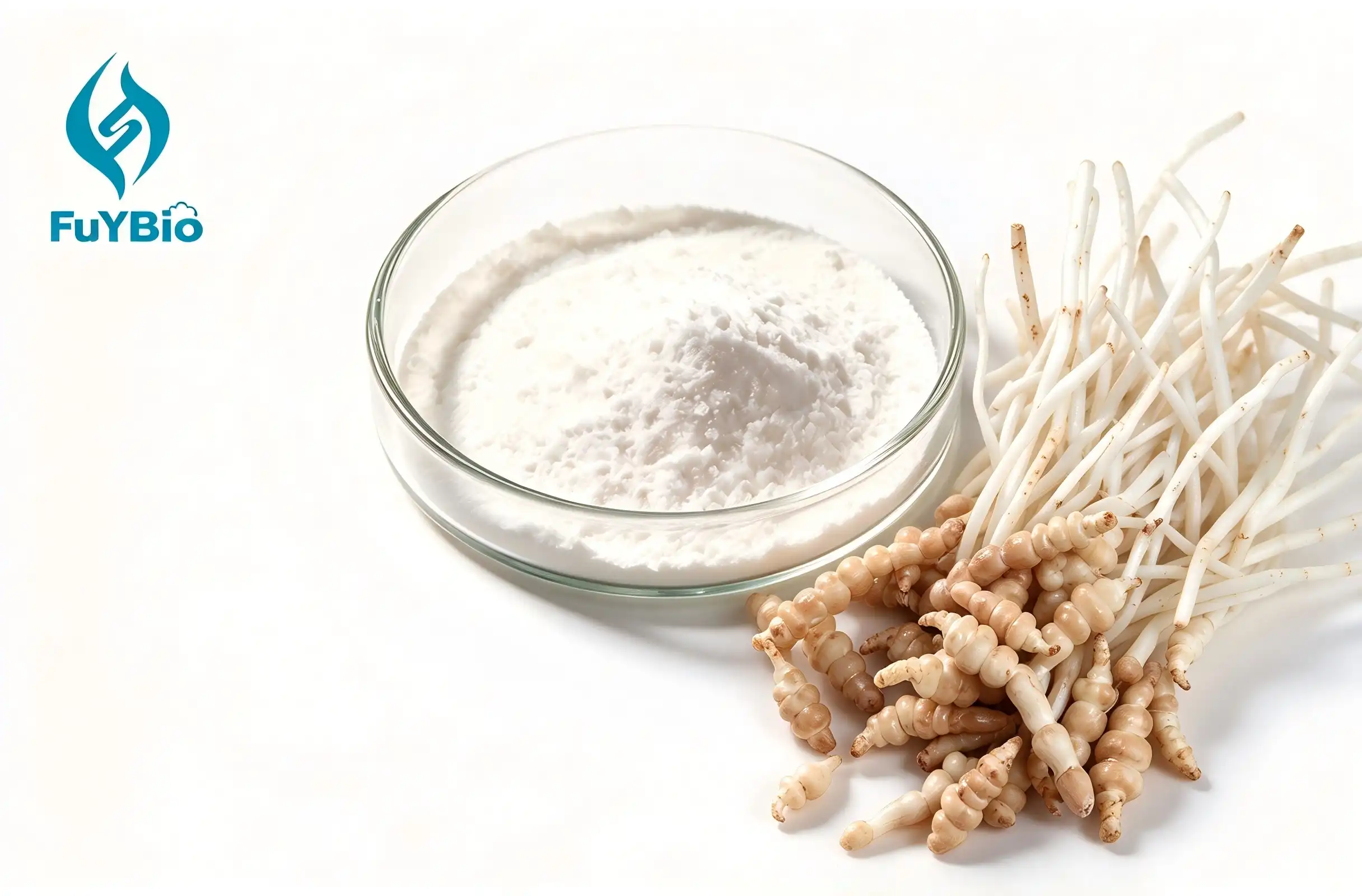
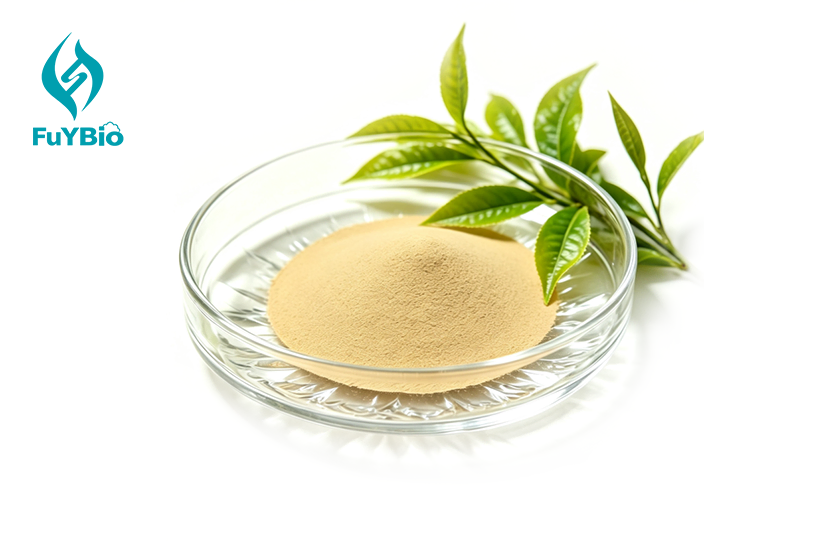
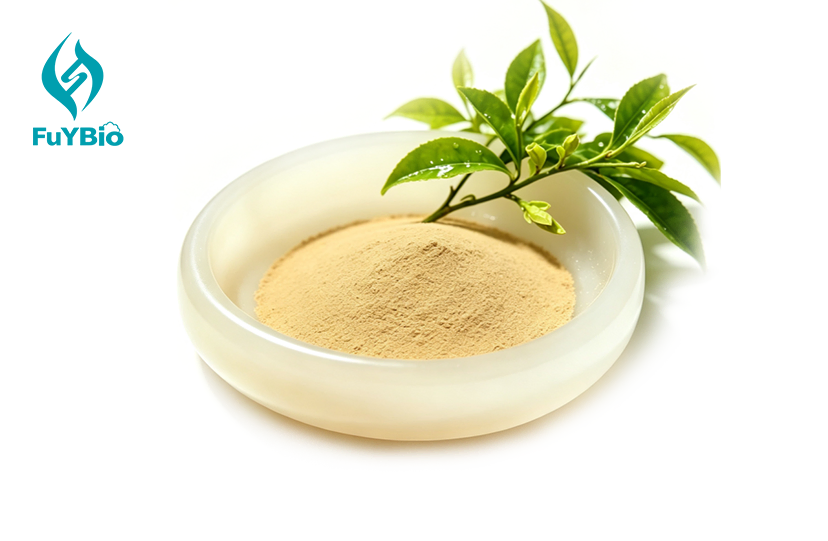
Some kinds of larch trees are used to make our Dihydroquercetin Powder. It stays away from the rest of the plant because of the water. It smells strong and is a light yellow or off-white colour. Thanks to HPLC, we know for sure that our purity grades are at least 90%, 92%, 95%, and 98%. It comes from China and will last two years if you take good care of it. There are now the right amounts of germs and heavy metals, and FDA, GMP, ISO22000, HACCP, and HALAL licenses have been granted. Since they were only removed with water, the solutions that were left over don't have much to say. We always have a lot to do, which lets us handle big jobs.
Solubility, Particle Size, and Sensory Traits
You should know that Dihydroquercetin Powder doesn't mix well with cold water. This could change how drinks and mixed drinks are made and served. Small changes to the structure of flavonoids can make them more or less solid or not soluble in water. This was shown in a study published in the Journal of Agricultural and Food Chemistry in 2014. In 2004, the American Journal of Clinical Nutrition published a review that said polyphenols can be taken in a number of different ways. It's also important how big the particles are. Also, getting better grades is simple, but it can be hard to see how they add up. Things that are plain or taste bad could be the source of the smell. I think you should learn about particle size and try a small amount in your own base before making a bigger batch.
Main Uses of Dihydroquercetin Powder in Food Ingredient Formulations
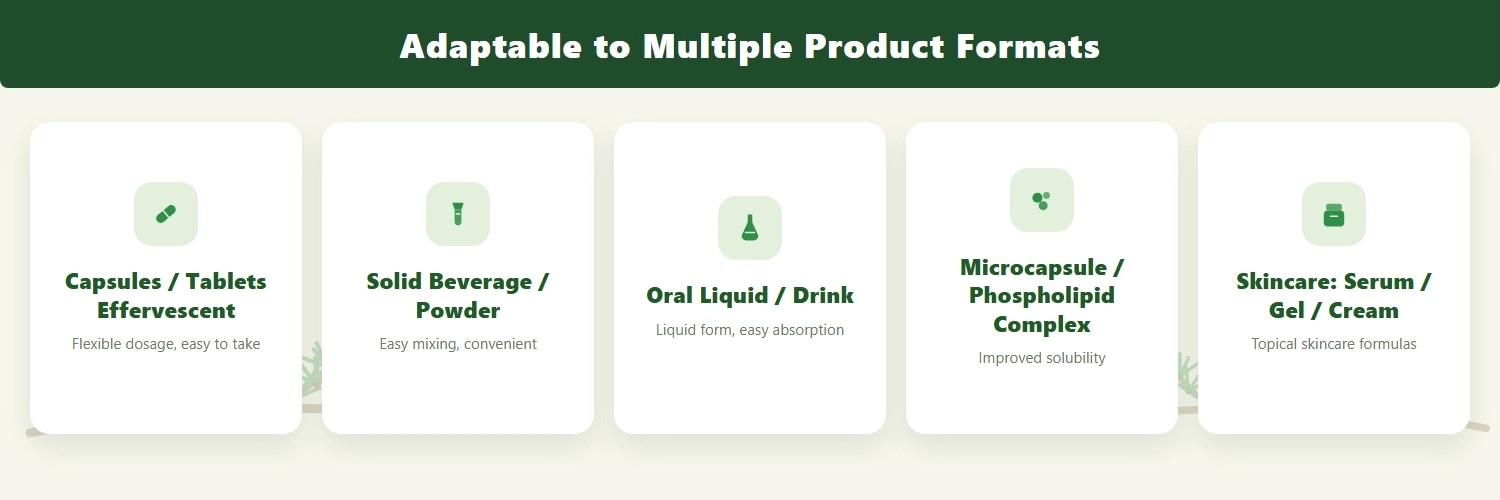
Dry Formats: Capsules, Tablets, Sachets, and Premixes
It works best when it's not wet. Don't use too much Dihydroquercetin Powder. Just mix it with some other dry things. Most people pick tablets, pills, sticks, or powders. It's important that the mix doesn't change. Before you mix it, make sure that each bit gives you the same amount. Test it and put it through a sieve. Powder doesn't need to be moved or shipped around as much as drops of liquid do. Plus, minerals, vitamins, and other plant-based things can be mixed with it to make something else. However, it needs to be checked to make sure it stays stable and works well with everything else. It's not necessary to weigh out the part first since it can be put all at once.
Beverages, Drink Powders, and Nutrition Products
You can mix the Dihydroquercetin Powder with power bars, protein shakes, breakfast foods, and sweets. They make you think differently. Some parts of ready-to-drink drinks may separate if they don't mix well with water. Because of this, builders test emulsions, carrier systems, and micronised grades all the time. Before you cook or dry bars and sweets, make sure the heat doesn't get too hot or too cold. The pH level of something can also change how it tastes and looks. It's easy enough that people who have never made powdered drink mixes before can do it. They only need water. Write down the colour, taste, and spread before and after you put it away. I think you should start with small amounts.
Formulation Benefits and Compliant Positioning
Dihydroquercetin Powder is mostly sold as an antioxidant by most brands. The 2016 issue of Medicinal Chemistry had a study that found a link between the structure of taxifolin and its power to get rid of free radicals. Phytochemistry published a review in 2019 that summed up more lab results. Science does not make good claims for the public, though. People in the US use different words for the same thing depending on whether it's a food or a tablet. That's why I always tell people to wait for the government to test something first. The EU Food Safety Authority looked at larch extract with a lot of taxifolin in it in 2017. The EU agreed that larch-based taxifolin could be used as a new food ingredient. In Russia, people add it to food and use it to make it taste better. They teach us about safety, but they're not the same as the US review.
How Should Dihydroquercetin Powder Be Incorporated Into a Food Formula?
Define the Format and Specification First
Start with what's already been done. Write down what kind of dish it is, how big it is, how often it will be used, how it will be packed, and how long you want it to last. Make a list of the things you need based on your choices. This list should include test results, leftovers, particle size, microbial limits, heavy metals, liquids that are still present, plant source, allergen and GMO status, and certificates. With our grades, which run from 90% to 98% by HPLC, you can get the grade you need and stay within your budget. It's not always cheaper or better to get an average grade. Our team doesn't have to spend as much time on models when the specs are clear.
Processing Methods and Pilot Trials
A lot of the time, things are processed with emulsification, agglomeration, direct blending, and granulation. Choose the route that fits your plan and situation the best. Tests should be done in more than one spot. They need to be done in real life too. First, make sure that the blend will fit with the rest of the plan. After that, smell, taste, spread, and feel it. Keep track of how long the sample was kept and make sure it is well packed. Last but not least, check the safety right away and in real time. When these results are set down as conditions for release, they become the norm for that work. You can use them over and over. We'll show you some tests that use HPLC to help you with this step. You won't have to spend a lot of money to do the process again when you grow.
Factors That Affect Performance
Things like bite size, pH, temperature, how wet the food is, air, light, processing shear, and how it is stored can all change how it turns out. A little dust, on the other hand, can slow down the flow. You can't tell how a chemical will react in a full food matrix just by looking at it in its pure form. To find out, you have to test its stability in certain ways during heat steps like grinding, baking, or pasteurization. Flavonoids can change because of minerals, vitamins, lipoic acids, fats, and tastes. It may be necessary to change the taste if the flavonoid is bitter or acidic. Just because something is pure does not mean it will work well. First, try it out in your own base with Dihydroquercetin Powder.
Comparing Ingredients and Choosing a Dihydroquercetin Powder Supplier
Dihydroquercetin Compared With Quercetin and Rutin
Flavonoids come in various forms. There is no C2–C3 double bond in Dihydroquercetin Powder, but there is one in quercetin. When you add sugar to quercetin glycoside, you get rutin. I also don't think it's smart to switch between them without first trying them and following the rules. Check the same things side by side: price, identity, test, particle size, heavy metals, microbial limits, life, and liquids that are still there. Look for words like "natural" and "plant-derived" in the product's history to see where it came from. It's better to have models next to each other in your own base than a brochure.
How to Evaluate a Supplier
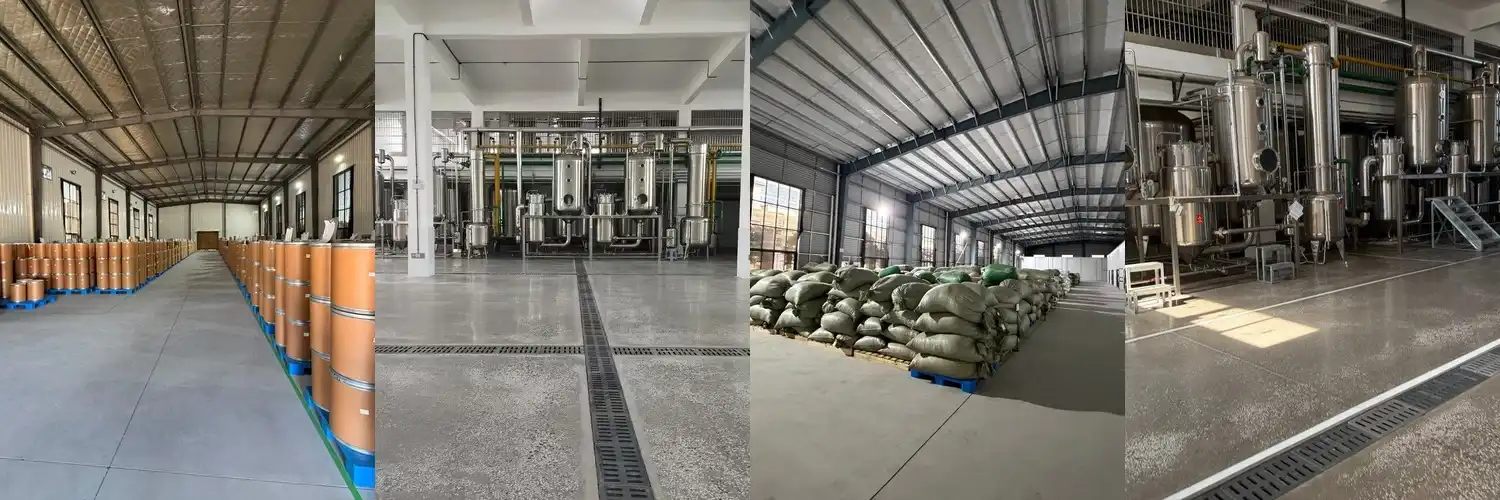
Take a look at the paperwork first. At the end of that run, there should be a COA, a specification sheet, an SDS, analysis methods, stable data, an origin statement, and tracking records. Check out the next way, which is value. The businesses that make our goods are certified by GMP, ISO22000, HACCP, and HALAL. FuYNature is the manufacturer of this product. We have in-depth expertise in functional nutrition. We offer both sea and air shipping options, and custom formulation is available to meet your personalized requirements.
Common Risks to Avoid
People who buy things sometimes get taxifolin and quercetin mixed up, think something is pure before testing it, sign blank papers, or go big without a pilot. In a different market, some words might not be right. Another thing that can go wrong with health claims is this. That's why the qualification file should include a review of how to store powder. Ozone, heat, light, and water can all damage powder that has been kept. Make sure you follow the right steps and that each batch of tests gives you a different answer. You can lower both technical and business risk by using a controlled approval path that checks for stability, compatibility, and legal review before moving to the next level of growth.
Storage, Handling, and Procurement Planning for Dihydroquercetin Powder
Storage Conditions and Shelf Life
Store the Dihydroquercetin Powder somewhere cool, dry, and airy, and make sure the lids are tight. Keep it out of direct sunlight and hot places. It should be kept dry and away from strong chemicals that cause oxidation. It shouldn't get warmer than 25°C either. But it works best when it's still 18 months old. It will last for two years if you store it right. You can move stock by following the "first-in, first-out" rule. There are always instructions and stability data that come with batch files that tell you how to store them. Make sure it fits in your office and can be shipped that way when you package it.
Handling in Production
It turns into dust when a fine powder is used. Remember to wear the right safety gear and keep the dust under control so you don't breathe in small particles. When people weigh, sieve, or de-lump in a way that has been checked and managed, they are safe, and everyone gets the same amount of medicine. Keeping track of batch numbers, production dates, storage conditions, and handling steps can help any study into quality go faster. Quickly open a bottle again before putting it back shut to keep air and water out. If you use more than one powder, clean the line well between uses so the powders don't touch. Make a plan for what you'll do with the mail that people send you. If you do these simple things, the item will keep working the way the COA says it should.
A Practical Procurement Checklist
Before you buy something from a seller, make sure that everyone on your buying, technical, quality, and regulatory teams agrees on these three sets of needs:
- Product requirements: Give specifics about how the product will be used, its end shape, the test you want to run, the particle size, how well it disperses, the botanical source, any licenses, how long it will last, and how it should be kept. Write them down so that every sample, price, and batch can be compared to the same thing from the first request to the last acceptance.
- Supplier requirements: If you are a supplier, you need to know about the quality system, testing methods, tracking records, sample availability, how to get help from experts, and the rules for keeping changes under control. Someone who makes things should be able to answer your science questions quickly and clearly about things like heavy metals, bacteria, and HPLC data.
- Commercial requirements: Before you buy, you should look at the minimum order quantity (MOQ), the price per unit, the lead time, the packaging, the shipping terms, and the company's history of exporting. You want to make something with your own name on it. Do you need help with a special recipe? Choose the best way to send your package based on price, time, and order number.
Final approval should follow document review, sample testing, pilot production, and stability assessment.
Conclusion
Another name for Dihydroquercetin Powder is Taxifolin. It is an antioxidant that is found in plants. It can be put in sweets, drinks, bars, pills, tablets, packs, and ready-to-use mixes. It doesn't matter how pure it is if it doesn't work well in food. The results may be different based on the object's size, pH, heat, light, air, and how it feels. The real base and tests in the air must both be used to make sure everything is stable. Because it is not the same as quercetin or rutin, the government has to test it and give the go-ahead before it can be used instead. It was picked because their papers are always different, they have certificates, and the quality of their work is always the same. The powder will stay safe for two years if you store and handle it the right way. When you write about health, you have to follow the rules in your area because study data can't be used to make claims. The ones that work are the ones that have been carefully planned, tested, and written down.
FAQ
Is dihydroquercetin the same as taxifolin?
Yes. This flavonoid has two names, but they both mean the same thing. Make sure the name and chemical identity are correct on all COAs, labels, and quotes.
Does it dissolve easily in water?
This stuff is really tough to break down in water when it's cold. Do some of your own work with micronization, emulsions, and carrier systems to see if they can help.
What dosage should I use?
Not all numbers are good for all situations. The format, the audience, and the rules all affect the level of use. Without a doubt, you need to work on the formulation and review the rules once more for Dihydroquercetin Powder.
What are the shelf life and storage conditions?
Wait two years before you open the powder. Keep it somewhere cool and dry, away from heat and light. This thing works best 18 months after it was made.
Can the specification be customized?
Yes. We have grades of at least 90% by HPLC, as well as grades of 92%, 95%, and 98%. We can also talk about making things that you need for your own use.
Request a Dihydroquercetin Powder Supplier Quote and Sample from FuYNature
Want to get Dihydroquercetin Powder for a job that has to do with vitamins or food? How much do you want to order? What are you going to use it for? What format do you want? How pure is it? Where are you going to sell it in the end? Please let us know what you need, when you need it, how much you need, and how long you are able to wait. Following the rules set by the FDA, GMP, ISO22000, HACCP, and HALAL, the taxifolin we make from water is always the same. Plus, you have to study nutrition for 13 years. Take a look around extrabroc.com to learn more.
References
1. European Journal of Pharmacology, 2012 – Weidmann, "Dihydroquercetin: More than just an impurity?"
2. Phytochemistry, 2019 – Sunil and Xu, review of the health-promoting effects of taxifolin (dihydroquercetin)
3. EFSA Journal, 2017 – Scientific opinion on the safety of taxifolin-rich extract from Dahurian larch (Larix gmelinii) as a novel food ingredient
4. Journal of Agricultural and Food Chemistry, 2014 – Plaza et al., "Substituent effects on in vitro antioxidizing properties, stability, and solubility in flavonoids"
5. The American Journal of Clinical Nutrition, 2004 – Manach et al., "Polyphenols: food sources and bioavailability"
6. Journal of Enzyme Inhibition and Medicinal Chemistry, 2016 – Topal et al., "Antioxidant activity of taxifolin: an activity–structure relationship"