How Is Natural Beta Carotene Used in Beverage Color Formulation?
Natural Beta Carotene colors beverages by adding a yellow-to-orange carotenoid pigment in a form that disperses in water-based drinks. Beta carotene dissolves in fat, not water, so formulators convert it into an oil suspension, emulsion, or microcapsule powder and dose it to reach a target shade. They match the format to the beverage's pH, opacity, and heat treatment, mix it in a controlled premix, and test color retention through pasteurization and storage. I wrote this guide for beverage developers and buyers in the United States who want a clear path from pigment selection to a validated, supply-ready formula.
Why Is Natural Beta Carotene Used in Beverage Color Formulation?
Color and Provitamin A Function
Natural Beta Carotene is a type of carotene that has a long chain of double bonds that link to each other. The building takes in light at 450 to 480 nm, which makes it yellow to orange. In drink brands, it doesn't use any chemicals to make it look like orange, mango, peach, or other tropical fruits. Vitamin A is also in the color. Some foods have 12 micrograms of Natural Beta Carotene, which is the same amount of retinol that your body needs. This means that a color dose and a food dose don't always match up. Formulators deal with color claims and nutrition claims in different ways because of this. After that, they compare both to the rules for marketing that market.
Where Natural Beta Carotene Comes From?
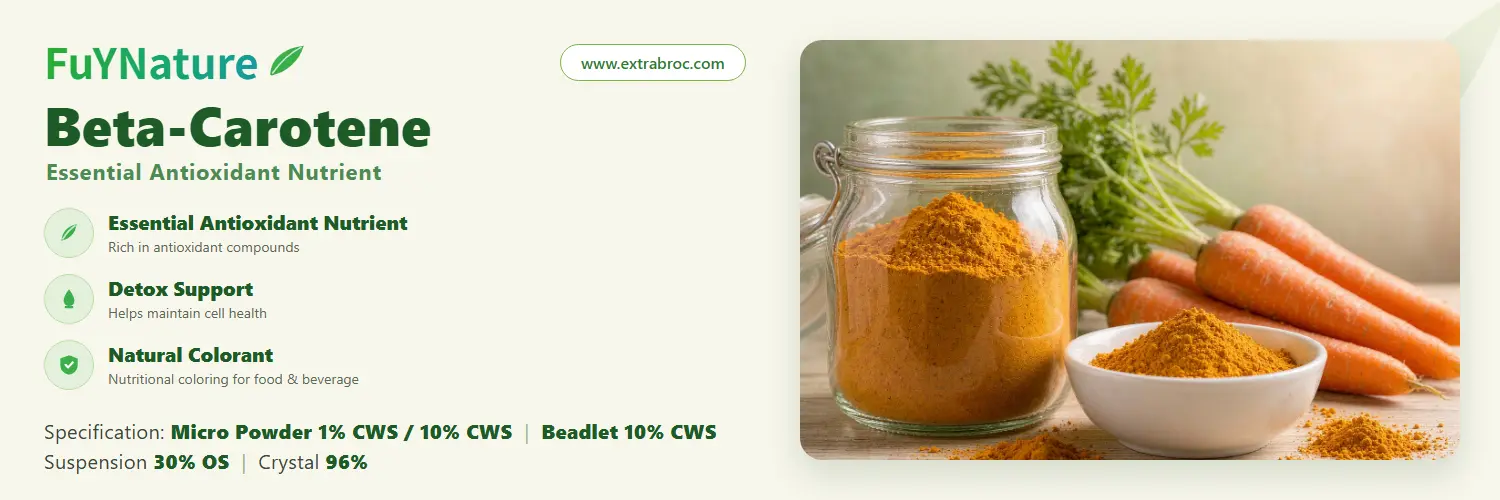
Ashes, carrots, materials made from palm trees, and microbial fermentation are some sources that are used in business. The source can change the color, amount, and makeup of carotenoids, as well as what a brand can say. Our ingredient is fermented in China. The rock that it comes in is dark red to brownish red, and an HPLC test showed that it is 96% pure. It's not something that companies that make drinks do. Their first step is to turn it into powders, emulsions, or oil suspensions that can fit inside microcapsules. Since Natural Beta Carotene is already a color, the U.S. Food and Drug Administration (FDA) does not have to approve it. In the EU, it is called E160a. If something has a sticker that says "natural origin," the person buying it should know what that term means to them and ask for proof.
Natural Versus Synthetic Options
There is no doubt that you should compare the two types of Natural Beta Carotene in the same drink. With the help of HPLC isomer analysis, buyers can tell the difference between man-made and natural goods. Natural things have a mix of isomers, but most man-made things are only all-trans. The color is natural, but that doesn't mean it will last longer or be stronger. It only helps with putting labels in a clean way. What makes it work well is how it's moved, the bits' size, and how they are handled. When someone wants to buy something, they should think about how strong the tincture is, how reliable the supply is, and how much it costs altogether. The details of our product talk about a balanced mix of isomers that happen naturally. Buyers are told to see if this fits with what they need.
How Does Natural Beta Carotene Work in Beverage Color Formulation?
Solving the Solubility Problem
When Natural Beta Carotene mixes with water, it can't stay in one place. This is called lipophilia. There are emulsifiers, modified starches, gums, and encapsulation materials that hold it together. These all break up the color into small pieces. The drink looks different when the drops are different sizes. A fine emulsion looks clear and bright, while bigger drops can rise and form a ring around the neck of the bottle. A popular way to make drops smaller is to press down on them and mix them together. The type of carrier oil in nanoemulsions changes how easy it is to get Natural Beta Carotene, as found by Qian and others in 2012. The study they did shows that the type of movement affects how a color moves through a liquid.
Choosing a Format
There are various formats that can be used when creating something with Natural Beta Carotene. It is easy for oil solutions to mix with cloudy drinks and watery premixes. When powdered drink mixes and sports nutrition come in microcapsules, it is easy to mix the dry ingredients. They are put right into milk- or yogurt-based drinks and juices. What we have to offer is 30% oil solutions and 10% microcapsule powders. We can change how much of the powerful Natural Beta Carotene ingredient you get if you ask. Each color has its own amount, concentration, density, and pH, so there isn't just one best style. The best way to get the right shade with the least amount of paint is shown by a test batch.
Step-by-Step Application Process
Color, clarity, portion size, shelf life, method, and market are all parts of a clear written goal. This is the first step in a routine that you can count on. Pick a style first. Then, make a controlled premix that has the right amount of each Natural Beta Carotene ingredient and has had time to soak up the water. After adding the premix, mix the ingredients together until they are all spread out. If the test says to heat the mold or fill it, do that. Go over the rules for aseptic filling, hot filling, UHT, and processing one more time before you go big. Color, foaming, settling, oxidation, taste interaction, and preservation should all be looked at in the lab, on test tools, and in real life. Things that were not found in the last step are looked for in the next one.
Natural Beta Carotene Stability and Beverage Applications
What Causes Color Fading?
Light, oxygen, heat, and being stored for a long time are all things that can happen to Natural Beta Carotene. The drink looks paler and duller because it has less pigment in it. Boon and his coworkers looked into how stable carotenoids were in foods back in 2010. Because of these problems and changes in the structure of the food, they found that they mostly fell apart. Wine that is shipped over long distances, has clear bottles, a lot of heat, and air in the headspace is more likely to go bad. When added to a drink, powders, oils, and emulsions don't work the same way they do when used by themselves. This information only tells you about the raw material. It doesn't tell you how long something will last either.
Practical Ways to Protect Color
When formulators try to cut down on Natural Beta Carotene losses, they mix, fill with low-oxygen air, seal, fine-emulsify, and pack in a way that blocks light. When the law allows it, taking vitamins that work together can help. It stays safe because high temperatures don't keep the color for long. People who buy from us are told to look at the package quickly and in real time before they keep it and ship it. Our 96% crystal will last for 24 months if you store it the right way. This is a good place for development teams to begin. Something stable still needs to be done for the drink after it's done.
Matching Format to Beverage Type
Food tastes better and is more acidic when fruit juices and drinks are added to it. The color should have the shape of a tropical fruit like an orange, mango, peach, or other stone fruit. Visual color and Natural Beta Carotene claims on different health drinks need to be looked at. Adding minerals, fats, and proteins to plant and dairy drinks can change how rings form and settle. For energy drinks, sports drinks, and cereal mixes to work well, they need to have the right amount of electrolytes, sweeteners, tastes, and moisture. Each grid works in its own way, so app-specific tests are still the only good way to check speed.
How to Evaluate a Natural Beta Carotene Supplier?
Documents and Specifications to Request
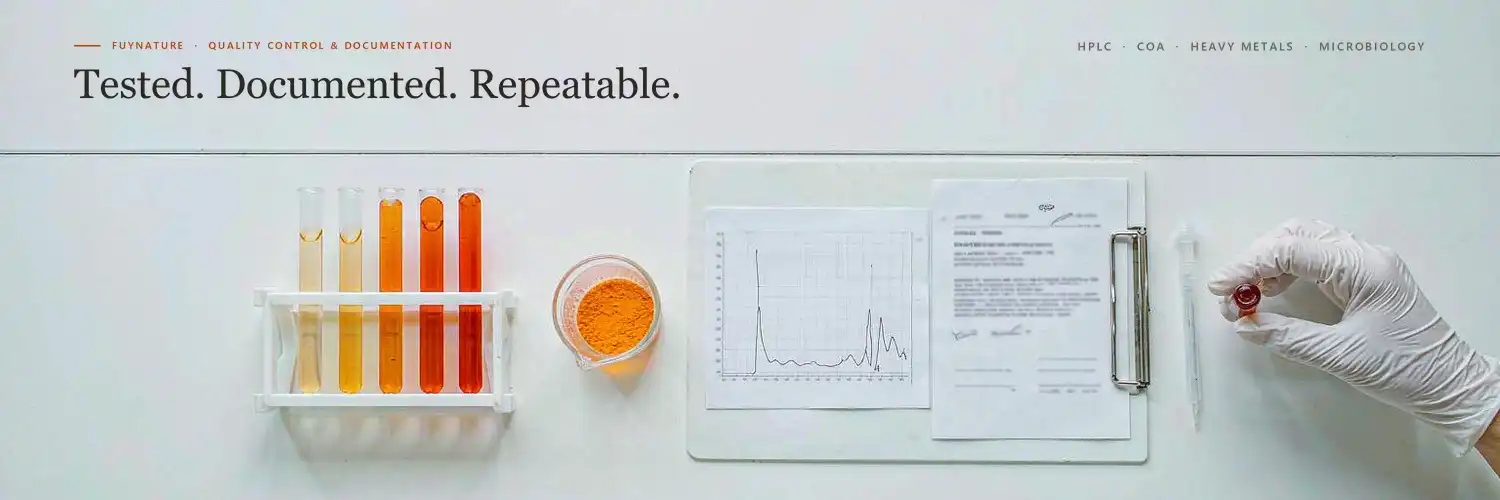
Natural Beta Carotene price alone doesn't tell you everything you need to know about color. The teams that buy things need to check each batch's source, concentration, carotenoid profile, physical format, carrier ingredients, dispersibility, suggested amount, shelf life, storage, packaging, MOQ, and regularity. That is why they should ask for analysis certificates, heavy metal and microbiology results, allergen and GMO statements, data on residual solvents, stability data, and regulatory support that is tailored to their market. Tests for heavy metals, HPLC analysis, and microbial screening are often used to make sure that the quality of carotenoids is good. If a supplier answers these questions quickly and completely, it usually means they are very good at what they do when it comes to technical things.
What FuYNature Beta Carotene Offers
FuYNature Beta Carotene is a 96% crystal that is made in China by boiling it. It's good for 24 months after HPLC checked it out. Heavy metals and microbiology are up to par. They are ISCC Plus, BRC, Kosher, Halal, ISO9001:2015, and VeganSu certified, among others. We don't mind when we have a lot of sales because our production level stays the same, and we can ship by air or sea. The shipping and response times for Natural Beta Carotene are between 3 and 7 days, which helps buyers stick to their plans for making things.
Backing From FuYNature
FuYNature specializes in the supply of natural raw materials. Backed by an R&D team led by four PhDs, we have filed 54 invention patent applications, of which more than 30 have been granted. Our production system is certified to GMP, ISO22000, HACCP and HALAL standards. We offer regulatory compliance support, formulation development consultation and scientific validation services for natural beta-carotene. In short, we supply raw materials together with supporting technical solutions to beverage R&D teams.
Common Mistakes and a Practical Decision Guide
Mistakes That Raise Cost
You can't use different ingredients to make Natural Beta Carotene. The color's strength, how far it spreads, and how long it lasts can be changed by the source, the amount, the particle size, the way it moves, and the way it's made. You might get a bigger dose, more changes to the process, or a finished product that doesn't stay the same if you only look at source or price per unit. It could cost more per batch if you use a less expensive color that needs twice as much. They don't think about what will happen to the color while it's being moved and kept in air, light, and heat. This could happen before the item is even made.
Dosage and Scale-Up Errors
Teams sometimes think that a good dose will make them the color they want. The color doesn't always work because it depends on how much, how thick, and the pH level, not on how much provitamin A is there. Also, you shouldn't trust test findings for Natural Beta Carotene. The process changes when it is scaled up because lab mixers and industrial homogenizers are not the same. The droplet size, the flow of air, and the history of heat all change. After being tried out with real tools, packaging, and storage conditions, the product should be ready to sell. Teams can also figure out what changed the color by keeping track of what they did at each step.
A Step-by-Step Decision Guide
First, make sure that the format fits the pH, thickness, protein and fat amounts, processing temperature, and shelf life you want for the drink. Second, make sure that the seller can help you in the way that you want to buy. Most of the time, distributors start by taking care of the goods and paperwork. Manufacturers as well as OEM clients need help with private labels and customization, and large manufacturers need help keeping supplies going and going strong. Third, make sure you follow these steps in the right order: read the papers, look over the samples, do pilot tests and stability tests, agree to the specs, and check the quality of the new Natural Beta Carotene. The pigment can be used in a recipe as long as it works, is regulated, is supplied, and is placed correctly.
Conclusion
Natural Beta Carotene turns drinks yellow to orange, and the color doesn't wash away when it mixes with water. Before it can be used, it needs to be turned into an emulsion, an oil suspension, or a microcapsule powder. You should use a certain style based on the pH, thickness, processing, and type of drink. Whether the color stays the same or not is based on the carrier systems, the premix control, and how well the color is mixed. Things can fade in light, air, heat, and time spent in storage, so we still need safer packaging, encapsulation, and more realistic studies of stability. The dose for color is not the same as the dose for nutrition. Also, what works in the lab doesn't always work in production. Not only price should you choose a supplier, but other things should too. You should also check out the technical support, documentation, and specs. To make a good color formula, you have to do a lot of things. It's possible to go over documents, make samples, run pilot tests, and run stability tests.
FAQ
Can Natural Beta Carotene color clear beverages?
Natural Beta Carotene: Can it change the color of clear drinks? Normal pigment breaks down in oil, so clear drinks need something that either does the same thing in water or melts into it. Make sure the drink is steady and clear.
Is there a fixed dose for beverage color?
No, the amount is different for every flavor, color, and type of drink. The least amount that still worked was chosen through tests with small groups of people.
Which documents should I request from a supplier?
You need test results, specs, microbiological and heavy metal results, allergen and GMO statements, reliable data, and regulatory statements.
Which FuYNature formats are available?
There are 96% crystals, 30% oil solutions, and 10% microcapsule powders for you to pick from. You can also change the ingredients that work to fit your needs. Ask for samples of the ingredients to make sure they will mix well in your drink.
Request FuYNature Natural Beta Carotene for Your Beverage Project
Want to buy Natural Beta Carotene from a business that makes drink colors? Email info@extrabroc.com with the drink's name, color, pH level, how it's made, how it's packaged, how long it lasts, and how much you want to make every year. What do you need? Let's talk about the formats, samples, specs, and papers that will help you reach your goals. FuYNature has done nutrition research for 13 years and has a response system that works 3–7 days a week. This means that your pilot plans will get done. Please go to extrabroc.com to find out more.
References
1. Institute of Medicine, Dietary Reference Intakes for Vitamin A, Vitamin K, Arsenic, Boron, Chromium, Copper, Iodine, Iron, Manganese, Molybdenum, Nickel, Silicon, Vanadium, and Zinc, 2001
2. EFSA Journal, Scientific Opinion on the re-evaluation of mixed carotenes (E 160a(i)) and beta-carotene (E 160a(ii)) as a food additive, 2012
3. Critical Reviews in Food Science and Nutrition, Natural Pigments: Carotenoids, Anthocyanins, and Betalains – Characteristics, Biosynthesis, Processing, and Stability, 2000
4. Critical Reviews in Food Science and Nutrition, Factors Influencing the Chemical Stability of Carotenoids in Foods, 2010
5. Food Chemistry, Nanoemulsion Delivery Systems: Influence of Carrier Oil on β-Carotene Bioaccessibility, 2012
6. Wiley, Food Carotenoids: Chemistry, Biology and Technology, 2016