Astaxanthin Oleoresin for Natural Pigmentation in Aquaculture Feed
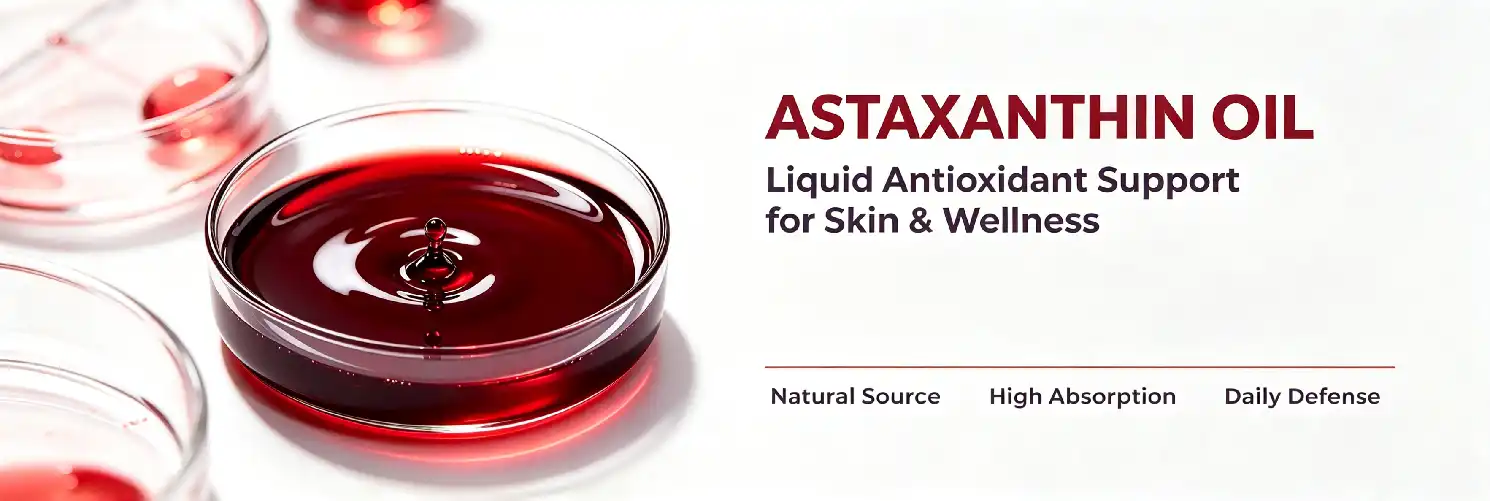
Astaxanthin oleoresin is a dark red, lipid-soluble pigment extract derived from Haematococcus pluvialis microalgae. In aquaculture feed, it functions as the primary natural colorant responsible for the characteristic pink-to-red flesh coloration in salmon, trout, and shrimp. Beyond aesthetics, it carries potent antioxidant activity that directly supports fish health and growth. For B2B procurement professionals, sourcing a certified, high-purity astaxanthin oleoresin is not a luxury—it is a market necessity that determines whether your product commands premium shelf positioning or gets passed over entirely.
Understanding Astaxanthin Oleoresin and Its Role in Aquaculture Feed
What Exactly Is Astaxanthin Oleoresin?
The amount of astaxanthin in Astaxanthin Oleoresin is usually between 5 and 20 percent. It is a highly concentrated oil-based extract. This type of astaxanthin comes from Haematococcus pluvialis, which is the best natural source of it. It mostly shows up as mono- and diesters, which are chemically more stable than produced forms that are free-form. It goes right into fish tissue because it is lipophilic, giving it a consistent, deep color that looks like it came from the fish.
Natural vs. Synthetic: Why It Matters to Buyers
A lot of the astaxanthin in wild salmon is the (3S, 3'S) isomer. This is also true for natural astaxanthin from H. pluvialis. It is a racemic mixture with a 1:2:1 isomer ratio that is much less likely to deposit in tissue. It is also called synthetic canthaxanthin or synthetic astaxanthin. Studies in the journal Aquaculture show that adding the same amount of natural astaxanthin to fish feed makes the meat look better than adding artificial astaxanthin.
Oleoresin vs. Powder Form for Feed Applications
It's better to use oleoresins instead of powders because powders don't always work well on a large scale. The oil in the mixture naturally keeps the color safe while it is pelletized and extruded, which are both processes that happen at temperatures above 80°C. The oleoresin blends better into lipid-based aquaculture feed structures and keeps the color fixed during the whole process of making the feed. Microencapsulated powder forms work well for water-soluble delivery systems.
Extraction, Stability, and Quality Factors
How Extraction Method Shapes Product Quality?
The way things were made determines everything that comes after. Our Astaxanthin Oleoresin is made from dried H. pluvialis powder that was grown in systems with clean water and glass pipes that prevent the cells from forming. Nothing new is added to the process of separation. The clean, controlled process of making oil makes a very pure, dark red oil that flows very well and doesn't leave behind much solvent.
Stability During Bulk Supply Cycles
When you buy a lot of Astaxanthin Oleoresin, one of the most important things to think about is how stable the color is. It will stay fresh for 24 months if you keep it in its original, sealed box below 4°C and away from oxygen and light. A peroxide level of less than 0.1 percent is maintained, and HPLC testing is used to make sure that the stability is maintained between runs. This stable profile means that the color will work reliably as soon as it hits your formulation line. This is helpful if you make aquafeed and have to deal with long lead times.
Certifications That Matter in International Trade
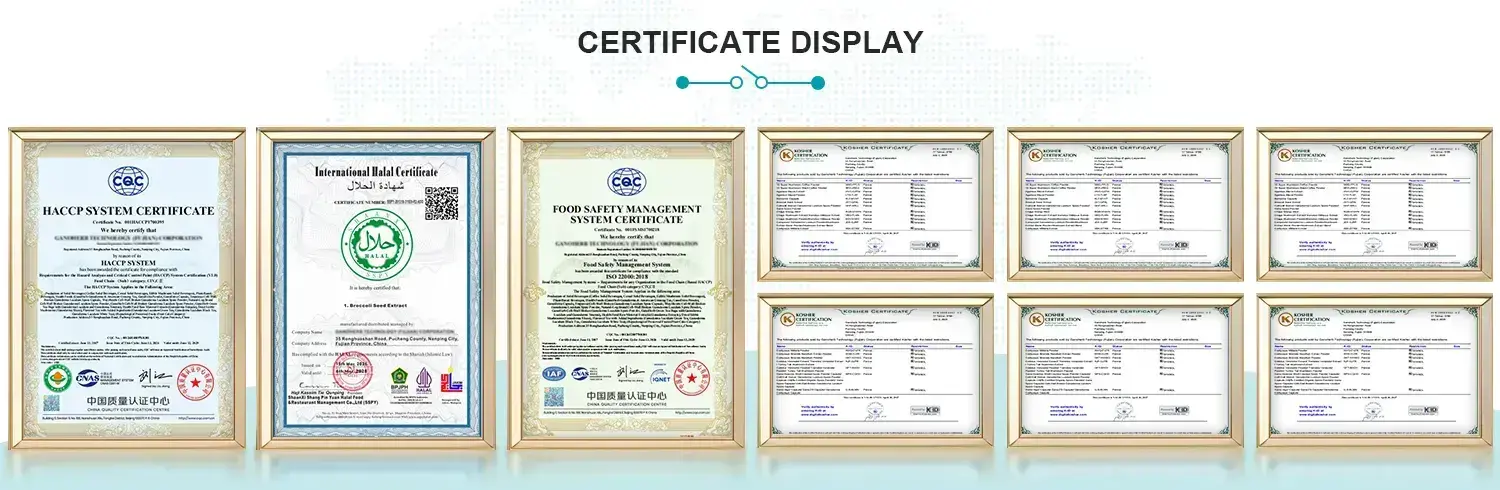
You must have good skills to buy things across borders. All of these groups have approved our H. pluvialis extract: FSSC22000, HACCP, HALAL, and Kosher. These aren't just for looks; they show that the ways food safety is managed are the same as those used in the US, EU, and Middle Eastern markets. From growing the seeds to selling the finished product, the whole process can be tracked. All steps of quality control are included in this.
Benefits and Applications in Aquaculture Feed
Pigmentation Performance Across Species
People raise salmon, shrimp, and decorative fish, and the main thing they do with it is color the meat and skin of these fish. It's not possible for fish to make their own carotenoids, so they have to get astaxanthin from the food they eat. When 20 to 80 mg/kg of natural Astaxanthin Oleoresin is added to the full feed, based on the target species and SalmoFanTM score, the food always has a color that is good enough for the market. Businesses that raise salmon see a clear rise in their return on investment (ROI) when they switch from using synthetic sources to natural ones. This is because pigments from natural sources settle more quickly and cost less per unit of flesh coloring.
Antioxidant and Immune Benefits That Go Beyond Color
The fact that astaxanthin is an antioxidant is not a mistake. A study in the journal Fish & Shellfish Immunology says that adding astaxanthin to fish food lowers markers of oxidative stress, boosts the fish's natural immune system, and increases feed conversion ratios. Healthy fish reach market weight faster with less feed, which has a direct effect on the prices of production. This is why the biological benefits are important for business.
Many people who work on aquafeed say that adding natural Astaxanthin Oleoresin improves performance in these ways:
- Improved flesh pigmentation scores: Higher tissue deposition efficiency compared to synthetic alternatives, achieving target SalmoFan™ values at competitive inclusion rates.
- Reduced oxidative stress in fish tissue: Lower malondialdehyde levels in muscle tissue have been documented in peer-reviewed trials, correlating with longer shelf life of processed fish products.
- Enhanced immune response: Fish fed natural astaxanthin show stronger resistance to bacterial challenges, reducing mortality rates during grow-out cycles.
"Better scores for flesh color" means that the tissue deposition is better than with synthetic options, meeting SalmoFanTM values at acceptable inclusion rates. Researchers who have looked over many papers have found that fish tissue with lower levels of malondialdehyde has less oxidative stress. This has to do with the fact that processed fish last longer.If you feed fish natural astaxanthin, they have a better immune system and can fight off bacteria better. This means that fewer fish die during their growth cycles.
Procurement Considerations
Evaluating Supplier Credentials
There are four things you should look for in an Astaxanthin Oleoresin provider: HPLC-verified pigment content (not just label claims), low solvent residue paperwork, proven microbiology compliance, and heavy metal screening data. A lot of big aquafeed makers in North America and Europe use our product, so it should be good. It meets international standards for microbiology and comes with a full certificate that can be tracked. The astaxanthin amounts are at least 5% or 10% by HPLC.
Cost Structure: Natural vs. Synthetic
Natural Astaxanthin Oleoresin costs more per unit than canthaxanthin that is made in a lab. The total landing cost study, on the other hand, changes everything. The real cost difference is smaller because less synthetic pigment is needed to get the same color. Also, fish are dying because the immune system benefits are too great, and more export markets are putting limits on synthetic pigments. The FDA and EU are taking a closer look at how synthetic pigments are approved. This means that companies that still use synthetic options may have trouble getting supplies in the future.
Logistics and Order Management
We support large-volume orders and offer both air and sea shipment options. Multiple specifications are available, including astaxanthin ≥5%, ≥10%, ≥15% and ≥20%, allowing customers to select the grade best suited to their formulation requirements and optimize cost efficiency, instead of being limited to a single fixed concentration.
Future Trends in Natural Pigmentation for Aquaculture
The Shift Toward Traceable, Clean-Label Ingredients
People in North American fish markets want things to be clearer more and more. Because of this, farmed salmon that is advertized as "naturally pigmented" costs more. Aquafeed companies are now looking for suppliers who can give them full traceability paperwork, from where the algae came from to what it was used for, instead of just a proof of analysis.
Encapsulation and Bioavailability Technologies
New ways of making things are making it easier to deliver astaxanthin in the form of molded pellets. Technologies like microencapsulation and nanoemulsion are used to keep the pigment's purity while it is being heated up and worked on. You can use our water-soluble astaxanthin microencapsulated powder (1% and 2% specs) in different ways besides just oil-based addition. It meets the needs of certain feed forms.
Regulatory and Market Trajectory
As of now, regulatory bodies in both the EU and the US are making it harder for animal feed to contain man-made colors. Astaxanthin from H. pluvialis is native and can be protected by the law as it stands now. The people in charge of buying things who set up reliable supply chains with approved natural sources are already ahead of any limits that could be put on synthetic pigments.
Conclusion
Natural Astaxanthin Oleoresin from Haematococcus pluvialis is the best colorant that can be used right now in aquafeed. It keeps the color of the flesh the same, is good for your immune system and antioxidants, and has a regulatory profile that synthetic alternatives can't match in the long run. Business-to-business buyers should only buy from sellers who have confirmed HPLC testing, full traceability, recognized food safety certifications, and the production capacity to support your working scale reliably.
FAQ
Why is natural astaxanthin preferred over synthetic in aquaculture feed?
It comes from the plant H. pluvialis and is naturally esterified (3S, 3'S) isomers that settle better in fish flesh than the manmade racemic form. The natural form is both a colorant and a real antioxidant. Synthetic forms, on the other hand, are mostly used as colorants.
What storage conditions are required for astaxanthin oleoresin at bulk scale?
Keep it in their original, sealed boxes below 4°C, away from air and light. When storing things for a long time, it's best to fill the containers with nitrogen. If these things happen, the product will continue to work right and meet standards for another 24 months.
How does astaxanthin benefit fish health beyond coloration?
In aquaculture trials that were reviewed by experts, astaxanthin in food has been linked to higher feed conversion rates. It also lowers oxidative stress markers in fish muscle tissue and boosts the body's natural defenses. You can measure these effects as production gains. They are not secondary claims.
What concentration of astaxanthin oleoresin is appropriate for salmon feed?
In the industry, the goal is to get between 20 and 80 mg of total astaxanthin per kg of complete feed. Whether you use 5% or 10% oleoresin depends on how much you want to use and how big your preparation batch is. If you ask for them, you can get ratios that are just right for you.
How do I verify the authenticity of natural astaxanthin oleoresin?
To be sure of the amount of astaxanthin and its isomer makeup, ask for an HPLC study. There are three types of esterified astaxanthin in nature: 3S, 3'S, and 3S. A government-approved certificate of analysis from a third-party lab and FSSC22000 or HACCP approval from the seller are the best proofs.
Source Your Astaxanthin Oleoresin Supplier Through FuYNature
Haematococcus pluvialis Astaxanthin Oleoresin from FuYNature has amounts of at least 5% and up to 10%, which have been tested and shown to be true by HPLC. It is also certified as FSSC22000, HACCP, HALAL, and Kosher. We provide large aquafeed companies with a steady, certified supply and full traceability from the seed to the finished product.You can get samples and specs that are made just for you. Send us an email at info@extrabroc.com or visit extrabroc.com right now to get a quote.
References
1. Torrissen, O. J., Hardy, R. W., & Shearer, K. D. (1989). Pigmentation of salmonids — Carotenoid deposition and metabolism. Reviews in Aquatic Sciences, 1(2), 209–225.
2. Ytrestøyl, T., Struksnæs, G., Rørvik, K. A., & Bjerkeng, B. (2005). Astaxanthin digestibility and tissue distribution in Atlantic salmon fed different dietary inclusions. Aquaculture, 245(1–4), 153–167.
3. Guerin, M., Huntley, M. E., & Olaizola, M. (2003). Haematococcus astaxanthin: Applications for human health and nutrition. Trends in Biotechnology, 21(5), 210–216.
4. Nakano, T., Tosa, M., & Takeuchi, M. (1995). Improvement of biochemical features in fish health by red yeast and synthetic astaxanthin. Comparative Biochemistry and Physiology, 111(2), 213–217.
5. Christiansen, R., Lie, Ø., & Torrissen, O. J. (1995). Growth and survival of Atlantic salmon, Salmo salar L., fed different dietary levels of astaxanthin. Aquaculture Nutrition, 1(3), 189–198.
6. Bjerkeng, B. (2008). Carotenoids in aquaculture: Fish and crustaceans. In G. Britton, S. Liaaen-Jensen, & H. Pfander (Eds.), Carotenoids: Natural Functions, Vol. 4. Birkhäuser Basel.