How Astaxanthin Oleoresin Supports Color Development in Salmon Feed
When aquafeed formulators and fish farms are asked to name the most important colourant in their mixes, astaxanthin oleoresin is always the first thing that comes up. This dark red, lipid-soluble extract comes from Haematococcus pluvialis microalgae and delivers concentrated carotene pigment directly to salmon muscle tissue. Natural oleoresin is better for the body than dried or manufactured forms because it is more bioavailable and less likely to break down over time. This means that the colour of the flesh stays the same across production cycles. For B2B buyers, knowing how this ingredient works and what makes a good source different from a bad one is what makes the difference between a high-quality product and one that doesn't do well in stores.
Understanding Astaxanthin Oleoresin and Its Role in Salmon Color Development
Why Can't Salmon Produce Their Own Pigment?
It is not possible for farmed salmon to make carotenoids on their own. They eat krill and other crustaceans in the wild to get astaxanthin. This colour must come from the food that is grown in aquaculture. Instead of being dark red, bred salmon meat stays a pale grey colour. This makes it less appealing to buyers and lowers its market value.
How Pigment Deposits in Muscle Tissue?
Astaxanthin is taken in by the body through the intestinal wall. Then lipoprotein transporters take it to muscle tissue. It can go right into cell membranes and bind to proteins there, where it builds up over time because it is lipophilic. The colour of skin is based on how well the pigment is absorbed by cells. When it comes to bioavailability, the esterified, oil-based oleoresin form is much better than the free-form manufactured forms.
The Dual Role: Color and Fish Health
Astaxanthin is a strong antioxidant that helps the fish stay healthy and make it look good. Reactive oxygen species are made when the system works and when the body is stressed. Oxidative stress can't hurt cell walls because of this. A study published in Aquaculture says that adding more astaxanthin to Atlantic salmon food makes their immune system stronger, helps them deal with stress better, and lets them have more babies. All of these benefits help farms make money.
The Production and Quality Parameters of Astaxanthin Oleoresin for Aquafeed
Extraction Method and Purity
The separation step is where the quality of the Astaxanthin Oleoresin production starts. Our Haematococcus pluvialis extract is made from dried algae powder that was grown in sealed, clean glass pipes filled with water. It goes through a special process that breaks down the cell walls of the algae. During extraction, no other substances are added. This makes an oil that is very pure, flows easily, and has a low solvent content. The esterified astaxanthin molecules that are most active in biological systems are kept whole by this method.
Key Specifications to Evaluate
Before deciding on a provider of Astaxanthin Oleoresin, people who make feed should look at a number of technical factors. The specifications for the product are a good place to start that evaluation. Here are the most important factors that buyers should check through paperwork:
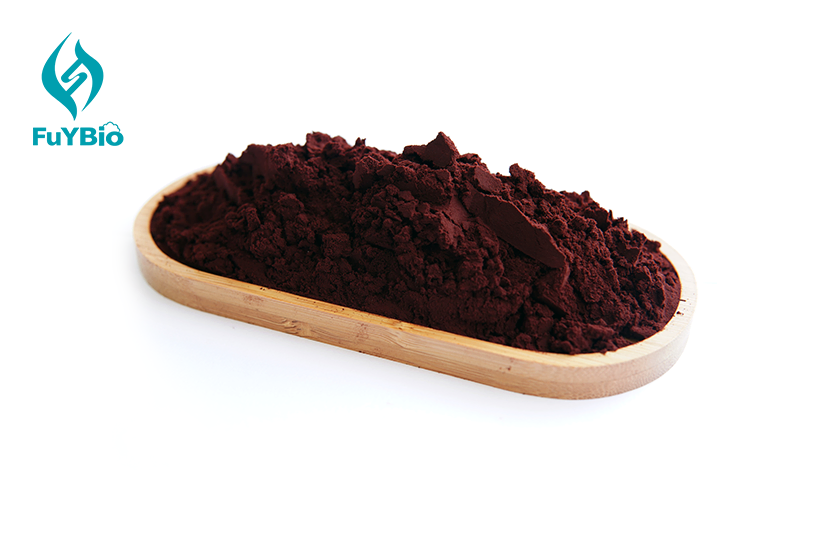
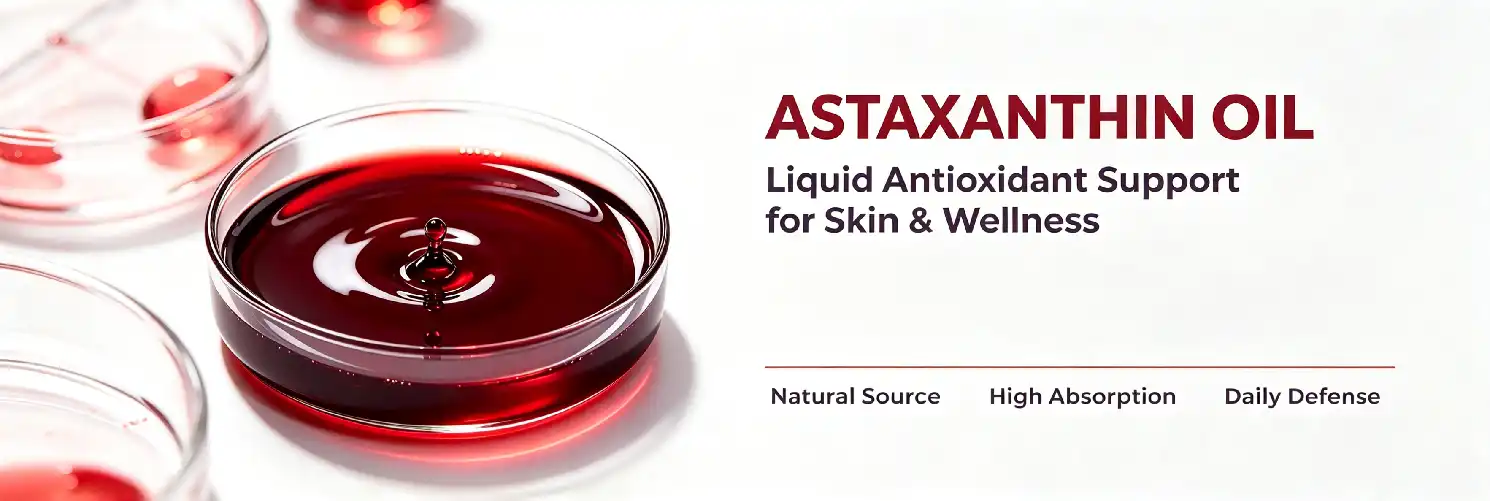
- Appearance: Dark red oil, translucent and free of sediment or phase separation—visually resembling liquid ruby, which indicates high concentration and freshness.
- Astaxanthin concentration: Available at ≥5% and ≥10% for aquafeed applications; customized concentrations of ≥15% and ≥20% are also available on request.
- Testing method: HPLC (High-Performance Liquid Chromatography), the industry standard for confirming actual versus labeled astaxanthin content.
- Shelf life: 24 months under sealed, light-protected storage below 4°C, with microbiology complying with food safety standards.
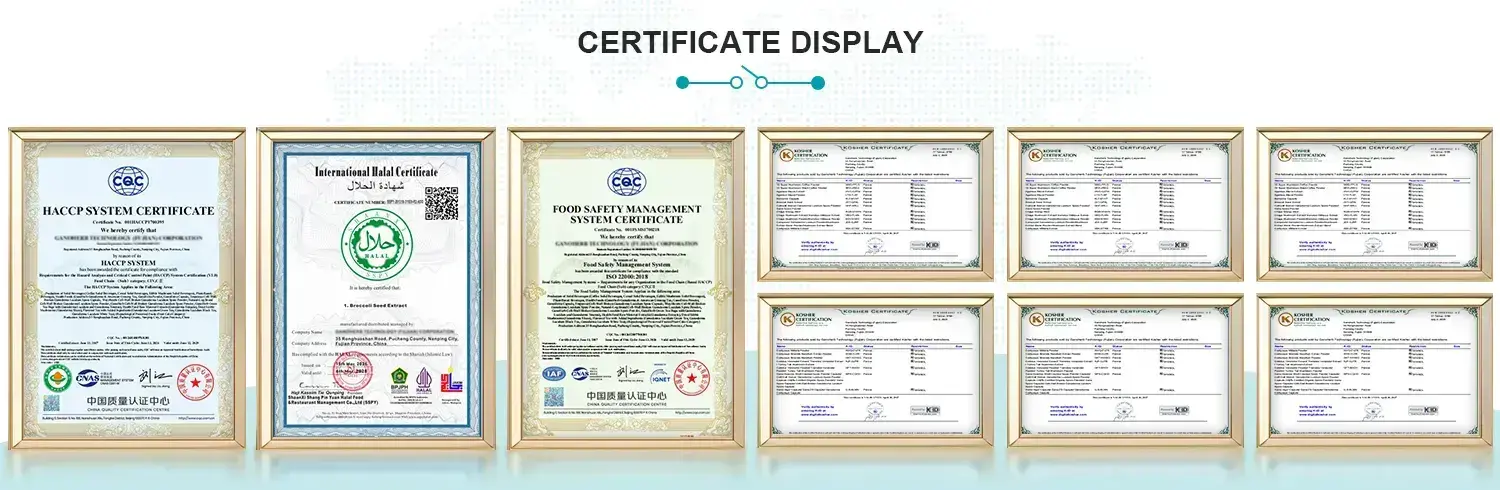
- Certifications: FSSC22000, HACCP, HALAL, and Kosher—demonstrating compliance across major global markets.
Together, these parameters show that the oleoresin will work as expected in feed extrusion and storage settings.
Natural vs. Synthetic Astaxanthin
The naturally occurring astaxanthin from Haematococcus pluvialis is mostly found in the esterified (3S, 3'S) isomer form, which research shows is more bioavailable than the racemic mixture found in synthetic versions. A study from 2021 that was published in Fisheries Science found that giving Atlantic salmon natural astaxanthin supplements led to much better pigmentation results than giving them the same amount of synthetic astaxanthin. Natural oleoresin is the best choice for high-end aquaculture products that are aimed at quality-conscious customers.
Optimal Use of Astaxanthin Oleoresin in Salmon Feed Formulation
Recommended Dosage and Timing
Astaxanthin is usually added to salmon feed at rates between 40 and 80 mg/kg of finished feed, but this can change based on the target SalmoFan score and the stage of growth. In the last 8 to 12 weeks before harvest, higher rates are usually used to build up the color concentration in muscle tissue. When a life form is young, it needs lower inclusion rates that focus on helping the defense system and growth rather than color depth.
Synergistic Ingredients That Improve Pigment Stability
When light, heat, and oxygen come in contact with astaxanthin, it can break down. This risk can be lowered by mixing it with natural antioxidants like tocopherol (vitamin E) and rosemary extract, which work together to keep the substance stable. Medium-chain triglyceride (MCT) oil and flaxseed oil are two types of carrier oils that help make the pellet matrix more uniform and help the body absorb the lipid phase. These mixes make the colors more consistent and lower the amount of pigment that is lost when the feed is processed.
Real-World Formulation Insights
A Norwegian commercial salmon farm that added 10% Astaxanthin Oleoresin at a dose of 60 mg/kg saw their SalmoFan score rise to 28–30 after 10 weeks of continuous supplementation. The pellet coating method was the most important factor. Post-extrusion vacuum coating kept a lot more of the active color than pre-extrusion mixing. This piece of information can help purchasing managers ask their oleoresin supplier for technical help.
Procurement Considerations for Astaxanthin Oleoresin in Bulk
Supplier Certification and Traceability
For B2B buyers from other countries, certification is the first thing they look at. Our Haematococcus pluvialis extract is certified by FSSC22000, HACCP, HALAL, and Kosher. You can track the whole supply chain from the seeds that are grown to the finished extract. This quality control at every step makes sure that every batch follows the rules for importing in the US, EU, and other important markets.
Production Capacity and Order Logistics
For feed manufacturers who make a lot of feed, a reliable supply is a must. Our steady production capacity is 100 metric tons per year, which means that we can keep up with large-scale and long-term purchase deals without having to stop production. We can handle both air freight and sea freight to meet the needs of customers with different lead times and budgets.
Price, MOQ, and Quality Verification
The price of Astaxanthin Oleoresin in bulk depends on the order volume and the specifications (concentration and isomer ratio). For each batch, buyers should ask for an HPLC proof of analysis and peroxide value data to make sure the product is stable against oxidation at the time of shipping. You can check directly with our procurement team about minimum order quantities and custom specification availability, such as all-trans isomer ratios that can be changed from ≥70% to ≥85%.
Future Trends and Innovations in Astaxanthin Oleoresin for Aquaculture
Green Extraction and Sustainability
More and more people are pushing the aquaculture industry to leave less of an impact on the environment. Our process already includes cell wall-breaking extraction from closed-system algae cultivation, which directly addresses this issue by getting rid of chemical solvents and reducing waste. As government agencies in the US and EU make it harder for solvents to stay in feed ingredients, this clean extraction method stops being a way to stand out and becomes a requirement.
Nanoemulsion and Bioavailability Technologies
A new study on nanoemulsion delivery systems shows that making astaxanthin particles much smaller, down to the nanoscale, increases the rate at which they are absorbed and the efficiency with which they deposit pigment. It will be easiest for feed formulators to use these technologies early on if they stay in touch with suppliers who are actively doing research and development. This is because the technologies are still being scaled up for commercial aquafeed production.
Regulatory and Market Dynamics
In high-end aquaculture markets, the need for natural, non-GMO feed additives is steadily rising. As compliance requirements rise, buyers who lock in supply agreements with recognized, traceable sources now will not have to deal with problems in their supply chains in the future.
Conclusion
Natural Astaxanthin Oleoresin from Haematococcus pluvialis is the best thing that can be used to give farmed salmon a deep colour that stays that way. It is better than synthetic alternatives because it is bioavailable, doesn't oxidise, and can be used as both a colourant and an antioxidant. To make sure your aquafeed program works, you need to start by picking a provider whose quality standards have been approved and whose output capacity stays stable. This is what people who are in charge of buying things and making feed do. The science makes it clear that the business needs more. Now is the time to make sure you always have enough.
FAQ
Is natural astaxanthin oleoresin better than synthetic for salmon feed?
Yes. The natural oleoresin from Haematococcus pluvialis is mostly in the esterified (3S, 3'S) isomer form, which, according to research, is more bioavailable and better at putting pigment into salmon muscle than the racemic synthetic version. When aquaculture companies are trying to sell to high-end retail customers, the natural form always does better than the fake on both colour scores and measures of fish health.
How long does it take to see visible color improvement in salmon?
After taking astaxanthin supplements regularly for 4 to 6 weeks, the colour usually starts to show. Most industrial companies aim for a finishing time of 8 to 12 weeks to get the best SalmoFan scores (28–34) before harvest. How fast the colour changes depends on how much the fish eats, how fast the inclusions happen, and how well its metabolism is working.
What are the correct storage conditions for astaxanthin oleoresin?
Keep the item in its original, sealed packaging at temperatures below 4°C and away from light and air. Flushing storage containers with nitrogen helps stop oxidative degradation. When kept this way, it will last for 24 months. Don't do the same freeze-thaw cycles over and over again. Over time, this can hurt the fluidity and active concentration.
Can the oleoresin specification be customized for specific feed formulations?
Yes. The amount of astaxanthin can be changed to ≥5%, ≥10%, ≥15%, or ≥20%, and the all-trans isomer ratio can be set between ≥70% and ≥85%, depending on the needs of the formulation and the colour results that are wanted.
Partner with FuYNature for Certified Astaxanthin Oleoresin Supply
Aquafeed makers can useFuYNature to find a reliable Astaxanthin Oleoresin provider with FSSC22000, HACCP, HALAL, and Kosher certifications, the ability to produce 100 tons of Astaxanthin Oleoresin every year, and full batch tracking. Our team helps foreign buyers with custom design orders, technical paperwork, and shipping in bulk. Get in touch with us right away to ask for a sample or talk about your formulation needs.
Email: info@extrabroc.com Website: extrabroc.com
References
1. Torrissen, O. J., Hardy, R. W., & Shearer, K. D. (1989). Pigmentation of salmonids—carotenoid deposition and metabolism. Reviews in Aquaculture, 1(3), 209–225.
2. Ytrestøyl, T., & Bjerkeng, B. (2007). Tissue distribution of astaxanthin in Atlantic salmon fed diets with graded levels of astaxanthin. Aquaculture, 270(1–4), 242–249.
3. Christiansen, R., Glette, J., Lie, Ø., Torrissen, O. J., & Waagbø, R. (1995). Antioxidant status and immunity in Atlantic salmon fed semi-purified diets with and without astaxanthin supplementation. Journal of Fish Diseases, 18(4), 317–328.
4. Ambati, R. R., Phang, S. M., Ravi, S., & Aswathanarayana, R. G. (2014). Astaxanthin: Sources, extraction, stability, biological activities and its commercial applications—A review. Marine Drugs, 12(1), 128–152.
5. Nakano, T., Kanmuri, T., Sato, M., & Takeuchi, M. (1999). Effect of astaxanthin-rich red yeast (Phaffia rhodozyma) on oxidative stress in rainbow trout. Biochimica et Biophysica Acta, 1426(1), 119–125.
6. Bjerkeng, B. (2008). Carotenoids in aquaculture: Fish and crustaceans. In G. Britton, S. Liaaen-Jensen, & H. Pfander (Eds.), Carotenoids: Natural Functions (Vol. 4, pp. 237–254). Birkhäuser Basel.