Astaxanthin Oleoresin for Cosmetic Oils and Emulsion Formulations
When formulators search for a reliable antioxidant ingredient for premium skincare, astaxanthin oleoresin consistently rises to the top. Derived from Haematococcus pluvialis microalgae, this dark red oil delivers concentrated carotenoid activity that fits naturally into lipid-based cosmetic systems. Its lipophilic molecular structure makes it directly compatible with facial oils, serums, and emulsion bases. For B2B procurement teams developing anti-aging or photoprotective products, understanding how to source, formulate, and specify this ingredient correctly is what separates a good product from a great one.
Understanding Astaxanthin Oleoresin and Its Role in Cosmetics
What Sets Oleoresin Apart from Powder Forms?
Resin made from oil is not a dry powder. It's an extract that is very strong and dissolves in oil. To get it out, it doesn't need to be broken down first because it keeps its lipid structure. It can be added right away to base oils and emollients because of this. Powder types have to work harder to get the same spread in fatty steps. It's less likely that the colors won't be spread out properly when formulators work with creams or serums that are oil-in-water but don't contain water. This is because the oleoresin form takes away one variable.
Proven Skin Benefits Backed by Research
There is a type of lutein called astaxanthin that can lower ROS levels across membranes. Nutrients released a study in 2018 that showed that putting astaxanthin on the skin for eight weeks made it more bendable and kept it moist. Tocopherol and beta-carotene are not as good as this as an antioxidant. This makes it a great active ingredient for protecting the skin barrier from UV stress and photoaging.
Stability and Storage Parameters
Air, heat, and light can easily hurt astaxanthin. Because natural ester links protect the chromophore, it is more stable in its natural state than astaxanthin that is not bound to anything else. Closed pills that are kept below 4°C, out of the light, and sealed will still work for up to 24 months. When it is added to a recipe, it stays more stable when tocopherol or rosemary extract is mixed in.
Formulating Cosmetic Oils and Emulsions with Astaxanthin Oleoresin
Solubility, Compatibility, and Dosage
Jojoba, squalane, MCT, and rosehip carrier oils mix easily with the oleoresin when they are all at room temperature. But the flow gets better as you slowly heat it up to about 40°C. The rate of cosmetic inclusion is usually between 0.01% and 0.1% by weight. When the product is this bright red, it doesn't change how it feels on the skin. It's not often that more than 0.2% adds the same amount of value, and it costs more to prepare.
Techniques to Improve Skin Absorption
To make delivery to the skin better, formulation scientists do the following:
- Nano-emulsification: Reducing droplet size below 200 nm increases surface area and improves penetration through the stratum corneum, a technique supported by research in the Journal of Controlled Release (2020).
- Phospholipid complexation: Combining oleoresin with lecithin or phosphatidylcholine creates a lipid vesicle system that mimics cell membrane composition, aiding transdermal transport.
- Synergistic co-actives: Pairing with vitamin E, niacinamide, or retinol ester can broaden the antioxidant coverage and support collagen synthesis pathways simultaneously.
When droplets of Astaxanthin Oleoresin are less than 200 nm in size, the surface area grows. This makes it easier for the substance to go through the stratum corneum. This method is supported by a study that was published in the Journal of Controlled Release in 2020.
When you mix oleoresin with phosphatidylcholine or lecithin, you get a lipid vesicle system. This system works like a cell membrane and lets the substance pass through the skin.
If you take this supplement with vitamin E, niacinamide, or retinol ester, it can protect your skin better and help your body make collagen at the same time.
Real-World Formulation Applications
These ways help the formulator figure out how strong the raw materials are, which is important when trying to explain why the prices are so high.
Comparing Astaxanthin Oleoresin with Other Astaxanthin Forms for Cosmetics
Oleoresin vs. Microencapsulated Powder
Microencapsulated astaxanthin powder can be mixed with water and used to make toners or hydrogels. If it's in powder form, extra quality checks need to be done to make sure the carrier is still intact. The shell around it can slow down release. Oleoresin does its job without a carrier getting in the way. This makes it simple for QC teams to look over the CoA and make things for the oil phase.
Natural vs. Synthetic Variants
It is made by the plant H. pluvialis, and most of the time it is found in its natural state as the (3S, 3'S) stereoisomer in esterified form. Researchers have looked into the man-made form of astaxanthin and found that it is a racemic mix of (3R, 3'R) and meso isomers, which are less biologically active. People in the US are 22% more likely to buy skin care products that say they come from "natural" sources, according to the Euromonitor Personal Care Database from 2023. Pure oleoresin is the best way for a brand to reach people who like clean looks or getting professional help.
Organic and Certified Grades
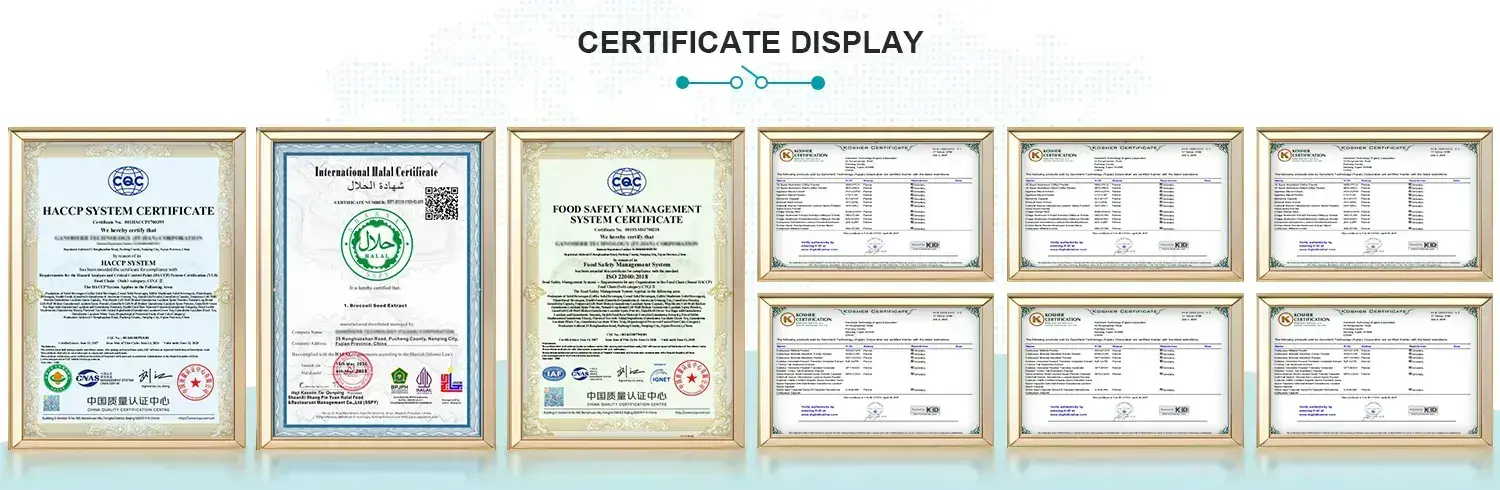
This kind of certification lets buying teams keep track of paperwork that is ready for an audit. The paperwork can be FSSC22000, HACCP, HALAL, or Kosher. More work needs to be done for brands that want to sell in natural stores in the EU or North America. This is called "organic approval." If cosmetics are going to be sold in regulated cosmetics markets, they need to have batch-specific COA data that includes microbiology results and HPLC-verified astaxanthin content.
Procurement Considerations for Astaxanthin Oleoresin in Cosmetics
Evaluating Suppliers: Certifications and Traceability
The company that wants to sell Astaxanthin Oleoresin should have FSSC22000 or a similar food safety certification, be able to do HPLC testing in-house, and be able to show that the products can be tracked from seeds to finished goods. How the oil is taken out is important. Solutes are not added when the cell walls of dried algae powder are broken down in a glass pipe that is turned off. This creates oleoresin that is very pure, easily movable, and doesn't leave behind much liquid. These steps should be in the technical dossier from the source.
MOQ, Pricing, and Logistics
You can handle both small sales and big supply deals of Astaxanthin Oleoresin since you can make 100 tons of goods every year. People often ask for tiered pricing plans when they call a service for the first time. This is because prices change depending on the amount of astaxanthin (5% vs. 10%) and the size of the order. A sealed, light-proof package can be shipped by air or sea freight. It's best to check the weather before going by sea to tropical places.
Sample Testing and Quality Assurance
Before you buy a lot of something, you should ask for a 100–500g sample to be checked by HPLC in-house. The total amount of astaxanthin, the percentage of all-trans isomers, the peroxide value (which should be less than 5 meq/kg), and the bacterial compatibility should all be checked. Don't even think about buying from someone who won't give you a COA with these terms and the batch number.
Future Trends and Market Insights for Astaxanthin Oleoresin in Cosmetic Formulations
Novel Delivery Systems and Formulation Types
The next generation of astaxanthin products will have biocellulose patches, oil serum hybrids, and cases that don't let air in. This is to protect the ingredients from oxygen damage. Nanoemulsions and liposomes are being used more and more in medical skin care. A number of published stability studies have shown that these systems can work at room temperature for a year as long as they are stable.
Sustainability and Ethical Sourcing
In a closed-loop photobioreactor, H. pluvialis can grow with a lot less water than in an open pond, and there is no danger. Buyers want more proof about how the crops were grown, the carbon footprint, and whether the crops are non-GMO as a way to make sure the sellers are qualified. Businesses that want to stay competitive must now fully track the whole process, from algae seeds to finished oleoresin.
Regulatory Updates Across Key Markets
INCI rules say that cosmetic ingredient labels in the US must say that the ingredient is Haematococcus pluvialis extract. It is not against the EU Cosmetics Regulation (EC No 1223/2009) to use as much as you want of astaxanthin. It's in products that you rinse off and products that you leave on. The "quasi-drug" group in Japan might add more rules to the file for claims of function. What are the rules right now? That's what buying teams should ask their compliance counsel before they sign off on the label copy.
Conclusion
Astaxanthin Oleoresin from Haematococcus pluvialis is a natural antioxidant that has been shown to work by scientists. It can be used in both oil and liquid makeup. It has many uses, such as fighting aging and keeping skin safe from UV rays. This is true according to scientists, and more and more people want to use natural materials. It is safer to buy from someone who has HPLC tests, full tracking, and certifications that are known to be valid. Getting into the market is also faster now. It can make a big difference between a product that always works and one that needs to be reformulated, which costs a lot of money. Each year, they should be able to make the same amount of goods and have open needs.
FAQ
What is the recommended dosage for astaxanthin oleoresin in cosmetic formulations?
For most topical applications, the functional range is 0.01% to 0.1% by weight in the finished formula. Facial oils and serums typically use 0.03%–0.05%, while richer emulsions may go up to 0.1%. Exceeding this range delivers diminishing returns and increases formula cost without proportional activity gain.
How does natural astaxanthin oleoresin differ from synthetic in cosmetic performance?
Natural oleoresin is predominantly the (3S, 3'S) esterified isomer, which shows higher biological activity and better stability than the synthetic racemic mixture. For brands making antioxidant or anti-aging claims, natural-origin oleoresin provides both stronger efficacy data and a cleaner ingredient story for label-conscious consumers.
What are the best storage conditions to preserve oleoresin potency?
Store in sealed, nitrogen-flushed containers below 4°C, away from direct light and moisture. Under these conditions, the product maintains verified activity for 24 months. Once opened, minimize air exposure by resealing immediately and using the contents within a reasonable production cycle to prevent peroxide value increase.
Is a Certificate of Analysis (CoA) mandatory for cosmetic procurement?
Yes. A batch-specific CoA should include HPLC-verified astaxanthin content, all-trans isomer ratio, peroxide value, heavy metal results, and microbiology compliance data. This documentation is required for finished-product safety assessments in both the US and EU regulatory frameworks.

Source Astaxanthin Oleoresin for Your Next Formulation with EXTRABROC®
EXTRABROC® sells Astaxanthin Oleoresin from Haematococcus pluvialis that is FSSC22000, HACCP, HALAL, and Kosher certified. HPLC tests have been done on our product; it can be fully tracked, and 100 tons can be made every year. You can get it in strengths of ≥5% and ≥10%, and you can pick any all-trans isomer ratio you want. Since we are a reliable company that makes Astaxanthin Oleoresin, we can give you samples, batch COA paperwork, and help. To find out more, email us at info@extrabroc.com or go to extrabroc.com.
References
1. Davinelli, S., Nielsen, M. E., & Scapagnini, G. — Nutrients, 2018.
2. Lorenz, R. T., & Cysewski, G. R. — Trends in Biotechnology, 2000.
3. Ambati, R. R., Phang, S. M., Ravi, S., & Aswathanarayana, R. G. — Marine Drugs, 2014.
4. Seki, T., Nagase, R., & Torimitsu, M. — Journal of Clinical Biochemistry and Nutrition, 2001.
5. Koller, M. — Bioengineering, 2019.
6. Kidd, P. — Alternative Medicine Review, 2011.