Using Broccoli Seed Extract 13% Glucoraphanin in Capsule Blends
Using Broccoli Seed Extract 13% Glucoraphanin in capsule blends works best when you start with the target glucoraphanin amount per capsule, divide it by the verified assay, and then test the powder for flow, fill weight, and stability. A 13% specification means 100 mg of extract supplies about 13 mg of glucoraphanin, so capsule size and excipient choice follow from simple arithmetic. Dry storage, light protection, and batch-specific HPLC data keep that number dependable through shelf life. This guide covers formulation, quality checks, supplier selection, and sourcing, based on the specifications of EXTRABROC® broccoli seed extract.
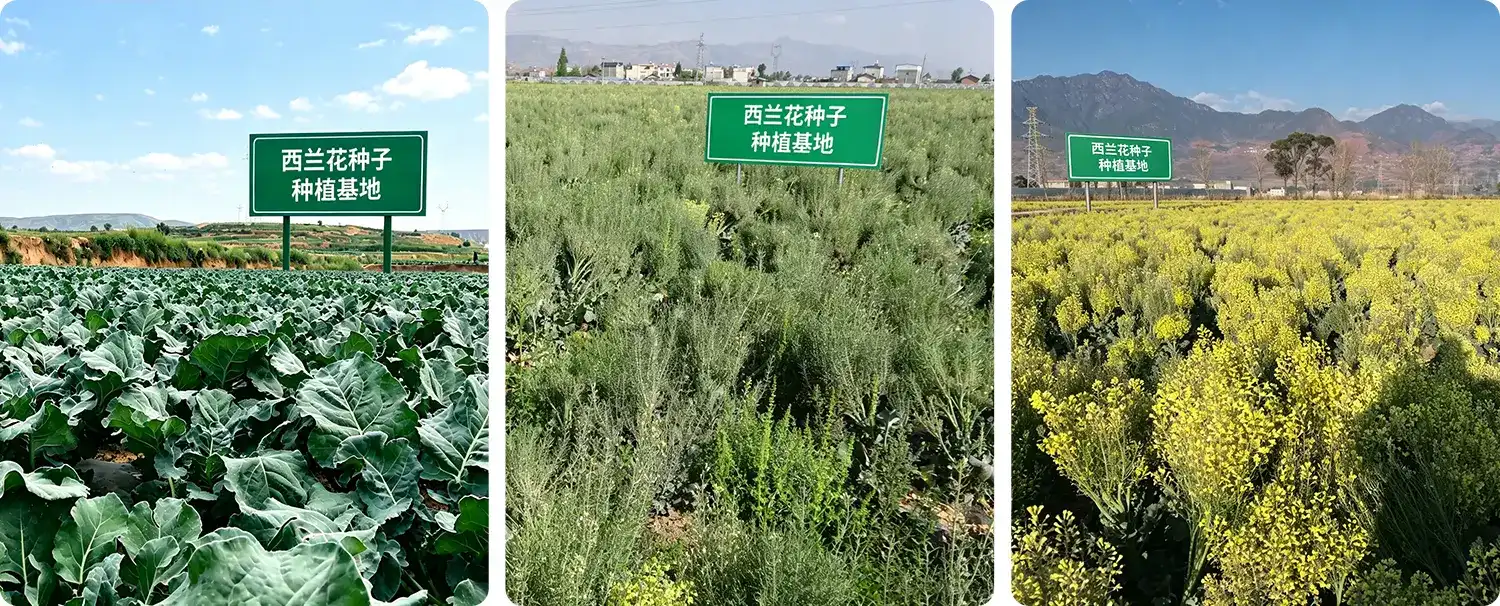
What Is Broccoli Seed Extract 13% Glucoraphanin?
Product Profile and Specification
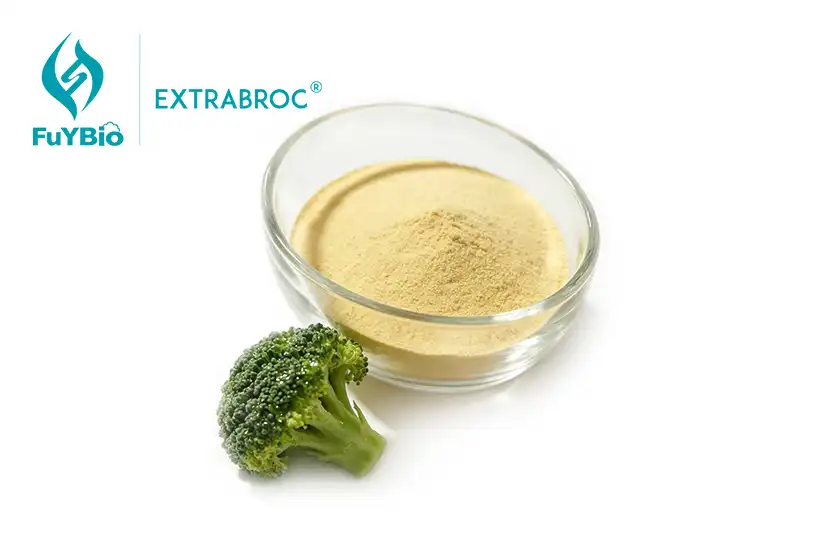
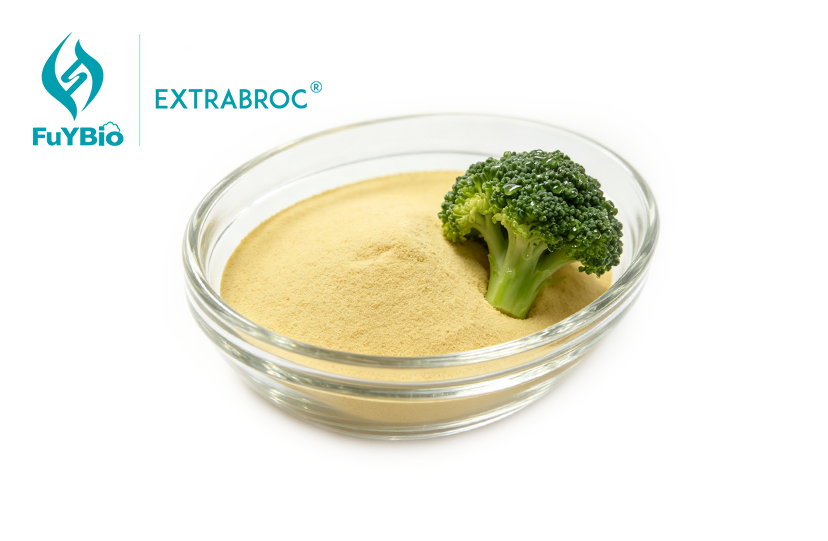
Chard oleracea var. It comes from China. We only use water to extract it, so there are no chemical liquids left over. What you end up with is a fine, light yellow powder that smells different. By using an internal HPLC method, the glucoraphanin level must be at least 13%, and the particles must be at least 90% of the given 180 μm size. It has a bulk density of 0.40 to 0.60 g/mL, and less than 5% of it is water and ash mix. It also says that there are 0.052 mg/kg of inorganic arsenic and 280 cfu/g of aerobic bacteria. They should be written next to each batch certificate.
Why a Standardized Precursor Suits Capsules
The Nrf2 pathway is closely associated with sulforaphane, a compound that can be formed when glucoraphanin is converted through enzymatic activity. Broccoli Seed Extract 13% Glucoraphanin provides a standardized source of glucoraphanin, a precursor that is generally more stable than sulforaphane under appropriate storage conditions. Because sulforaphane can be sensitive to heat, oxygen, and other environmental factors, many formulators prefer to work with the precursor and manage its conversion during formulation or digestion. The enzyme myrosinase plays an important role in this process, and conversion may depend on whether the enzyme comes from the plant material, intestinal microorganisms, or another source. Research published in 1997 reported that young broccoli sprouts could contain substantially higher glucosinolate levels than mature broccoli plants, helping establish sprouts and seeds as promising sources of these compounds. For manufacturers, Broccoli Seed Extract 13% Glucoraphanin offers a defined glucoraphanin concentration that can simplify ingredient specifications, quality checks, and supplier comparisons. A standardized assay also makes it easier to calculate ingredient quantities and maintain consistency between production batches. When comparing suppliers of Broccoli Seed Extract 13% Glucoraphanin, buyers should review the analytical method, batch-specific certificate of analysis, stability data, and recommended storage conditions rather than relying on the stated percentage alone. This guide focuses on practical ingredient selection and formulation considerations, helping manufacturers evaluate Broccoli Seed Extract 13% Glucoraphanin based on documented quality, consistent specifications, and suitability for their intended applications.
Seed Extract, Sprout Extract, and Isolated Glucoraphanin
There are various kinds of glucoraphanin. What's the difference between seed extract and sprout extract? Sprout extract is made from seeds, and sprout extract is made from sprouts. It costs more and is harder to work with because isolated glucoraphanin is a very pure chemical. Glucoraphanin-enriched material, on the other hand, is a part that has been cleaned up a bit. To make sulforaphane, myrosinase is in charge of where and how it is made. It may also be present in different samples in different amounts. That way, you can pair up things that are the same. Learn what part of the plant was used, what kind of liquid was used to get it out, how it was tested, and what kind of state the myrosinase was in. The plant seed and water make up our extract.
How to Use 13% Glucoraphanin Extract in Capsule Blends
Calculating the Required Extract Weight
To start, get the needed extract weight by dividing the amount of glucoraphanin that needs to be found by how accurate the test was. To find 50 mg at 13%, do the math: 50 mg ÷ 0.13 = 385 mg of extract. To be clear, this is a math problem, not a question about money. A size 0 capsule (about 0.68 mL) can only hold about 340 mg of loose powder, so this goal needs either a size 00 capsule (about 0.91 mL) or a denser fill. Anything extra that is allowed by your quality policy should be able to be added. If you need to do the math again, don't use the best guess, but use the number that is written on the certificate for each lot.
Powder Flow, Excipients, and Blend Uniformity
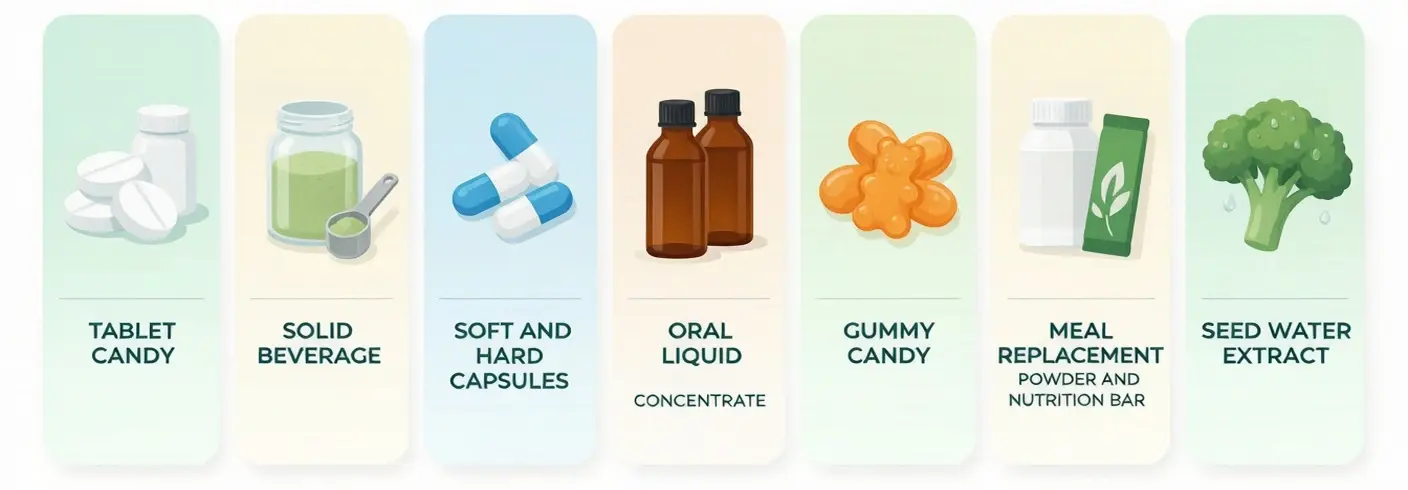
Heavy powder and fine powder may stick together or separate if they are mixed. There is a range of sizes of powder particles, in terms of how dense the mass is and how much water is in it. A lot of the time, adding small amounts of flow aids like silicon dioxide or magnesium stearate can make the fill-weight consistency better. But test runs should be done first to make sure they work together. If your idea has a myrosinase source, check to see how much water it adds. It's possible for water to make enzymes and glucosinolates more or less stable. Very different carriers may not separate if they are mixed or ground ahead of time. This product can also be used to make drinks, tablets, and pills that work well. Hard tablets can be used to store powders.
Packaging and Finished-Product Testing
The main things that make food go bad faster are water, oxygen, and light. HDPE bottles with desiccants, blister packs with foil that keeps moisture out, and caps that are sealed with an induction coil are all common options. That depends on how wet the people you want to reach are. 21 CFR Part 111 is what the FDA's rules say about food supplements. Producers need to make sure that each ingredient is what it says it is and set standards for the last batches. When you get the powder or finished pills, you should check their microbiological quality, how well they break down, how much moisture they have, how much glucoraphanin they have, and how evenly the dose units are distributed. After that, studies of safety are carried out to back up the data at the time of writing. The raw extract should be kept somewhere cool and dry that doesn't get direct heat or sunlight.
Key Quality Factors and a Practical Checklist for Buyers
Reading Beyond the 13% Headline
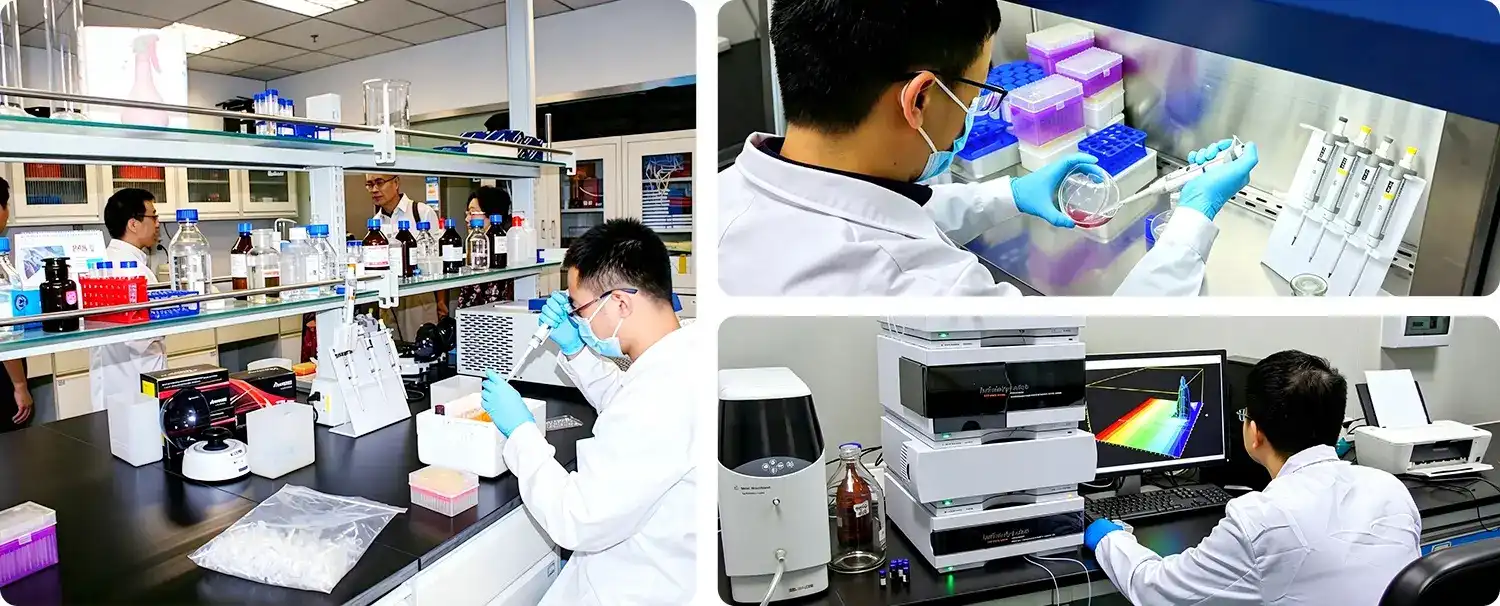
When evaluating Broccoli Seed Extract 13% Glucoraphanin, do not rely on marketing claims alone; verify how the stated glucoraphanin content was measured and reported. Glucosinolates are commonly analyzed using HPLC or LC-MS, so the supplier should identify the analytical method and clarify whether the results are reported on an as-is or dry-weight basis. This distinction is important because moisture content can affect the reported concentration of Broccoli Seed Extract 13% Glucoraphanin and make comparisons between suppliers misleading. Buyers should also review physical properties that influence manufacturing consistency, including dispersibility, particle size, bulk density, and powder flow. For reliable storage and handling, request stability data covering temperature, oxygen exposure, light, humidity, packaging conditions, and the recommended shelf life. According to the stated product specifications, Broccoli Seed Extract 13% Glucoraphanin has a shelf life of up to 24 months when stored under the recommended conditions; however, buyers should confirm the exact storage requirements and supporting stability documentation with the supplier. Proper packaging and controlled storage can help preserve product quality throughout this period. Before approving a shipment of Broccoli Seed Extract 13% Glucoraphanin, compare the batch-specific certificate of analysis with the agreed specification and verify that the reported assay results meet the required standard. Suppliers may also support customers with HPLC testing or analytical reviews to help assess product consistency. By checking the test method, physical characteristics, and stability evidence for Broccoli Seed Extract 13% Glucoraphanin, manufacturers can make better-informed purchasing decisions and maintain more consistent formulation results.
Contaminant Controls and Certifications
Just as important as the test itself is what you know about safety. You should look at the names of the plants, the microbiology, the heavy metals, the pesticides, the residual solvents, the aflatoxins, and the added substances. After pure water extraction, there are no more organic solvents left over. Also, allyl isothiocyanate and other harmful impurities are removed in a special step before treatment. The food doesn't have any GMOs and meets standards for over 500 things, such as germs, heavy metals, and chemical residues. The US Food and Drug Administration (FDA), China's New Food Raw Materials statement, and the USP-NF all say that the raw materials are safe to use. There are also partner sites that are accepted by HALAL, GMP, ISO22000, and HPC. Always check that the certificate's reach and the place where it was made match your order.
Documents to Request Before Approval
Here are the three document groups I request first when I review a glucoraphanin supplier.
- Batch-specific certificate of analysis: It should list the glucoraphanin assay, the method, the lot number, the test date, moisture, microbiology, and heavy metals. Compare the lot number on the certificate with the number on the drum, and reject generic or undated documents, because they cannot support a commercial release decision for your capsules.
- Specification and safety documents: Ask for the current product specification, safety data sheet, allergen and GMO statements, residual solvent information, and botanical identity records. These papers let your quality team write an incoming-material specification and answer retailer questionnaires without waiting for supplier replies later in the project or during a customer audit.
- Traceability and stability records: Request lot traceability from seed to finished powder, plus stability or retest-period data that supports the shelf-life claim. The EXTRABROC® specification lists a two-year shelf life under proper storage, and full-process traceability from seed to finished product lets buyers follow any single lot back to its origin.
These three groups answer most approval questions early and prevent rejected lots later.
How to Compare 13% Glucoraphanin Extract with Other Options
Versus Sprout Extract and Direct Sulforaphane
There are times when sprout products and direct sulforaphane ingredients don't work well together. Because sprout material comes from seeds that have grown, the price and glucosinolate makeup may be different. It is the gaseous isothiocyanate that is made when straight sulforaphane ingredients are added. More care needs to be taken to keep and protect this. Because they are different chemicals, you can't put sulforaphane or glucoraphanin on the label instead of the other one. In 2011, Egner and his coworkers looked at two broccoli sprout drinks in Qidong, China. The people who drank the drink high in sulforaphane had more chemicals related to sulforaphane in their urine than the people who drank the drink high in glucoraphanin. That means the pill should have the same shape as the shape on the bag.
Versus 10% Glucoraphanin and Highly Purified Material
With a 13% test, inclusion happens faster than with a 10% product. It takes about 385 mg of a 13% extract to give you 50 mg of glucoraphanin. You need 500 mg for a 10% extract. This pill has about 115 mg less than the last one. The gap changes the size of the capsules, the amount of fillers used, and the weight of the package on a big scale. Alternatives that are synthetic or very pure can be used in better tests, but they generally cost more per active amount and are managed in a different way. That you understand, agree on the research, have a stable myrosinase approach, and have a steady supply are all good things. There is no need to look at how much glucoraphanin costs per kilogram. Take a look at how much it costs per pill instead.
Evidence, Documentation, and Supply Continuity
Although two products of Broccoli Seed Extract 13% Glucoraphanin may have the same glucoraphanin assay result, their supporting documentation, research evidence, and overall quality profiles can differ significantly. EXTRABROC® reports a sulforaphane conversion rate of at least 55.8% under its specified test conditions, providing additional information for manufacturers evaluating the ingredient's potential performance. The company also reports that its broccoli seed extract has been investigated in more than 10 human studies conducted in clinical and other research settings. In addition, the ingredient has received relevant regulatory clearances or approvals in the United States, China, and Japan, although buyers should verify the exact status and scope applicable to their intended product and market. With an annual production capacity of 50 tons, the manufacturer can support substantial purchasing requirements for Broccoli Seed Extract 13% Glucoraphanin. Its R&D activities are supported by a core team led by four PhD-level researchers, helping provide technical expertise for product development and quality evaluation. When comparing suppliers of Broccoli Seed Extract 13% Glucoraphanin, buyers should assess these claims against their target glucoraphanin concentration, intended application, customer requirements, and the level of scientific evidence needed to support product claims. Request batch-specific certificates of analysis, relevant study documentation, and regulatory records before making a final decision. By evaluating Broccoli Seed Extract 13% Glucoraphanin beyond its headline assay value, manufacturers can make more informed sourcing decisions, assess supplier capabilities, and select an ingredient that better fits their technical and commercial objectives.
How to Choose a Dependable 13% Glucoraphanin Extract Supplier
Matching the Supplier to Your Business Model
Tests, professional help, and a small, cheap start-up order size are all things that a small development job needs. Making things for a business needs to be able to keep up with demand, follow specs, and keep lead times the same. Spreaders need export paperwork and boxes that can be bent. People who buy OEM or private-label goods might need help finishing them or getting them ready to sell.FuYNature can handle both air and sea freight, mix and match formulas and goods, help with patent licensing (based on order volume), allow teams to work together on creation, testing, and process, and help with patent licensing. Before you buy something from China, find out about the export papers, order wait times, and freight routes. You should look at the total landing cost instead of the ex-works price. This includes testing, shipping, customs, and the chance that there will be a delay.
A Step-by-Step Decision Process
Start by writing down all the information you need about the finished product. This includes how much glucoraphanin you need, whether it should be in pill form, the market, the annual demand, the certificates, and where the claims should go. Next, make a technical standard that lists how to identify it, the types of tests that can be done, the amount of moisture, the particle size, the ability to flow, contaminants, how it is packed, and how long it can be kept. Next, compare the service providers you chose based on their skills, papers, samples, ways of testing, and how well they talk to you. Before getting the go-ahead, it's important to test small amounts for stability, mixing, sealing, and regularity. Finally, write down the steps for stopping work, changing things, and not meeting standards. This way, any changes to the process in the future will be looked over. Once the test batches are done and you know how much you will need each year, you should sign a long-term supply deal.
Common Mistakes to Avoid
Most people get it wrong when they think that the 13% test shows quality in general. People also mess up glucoraphanin and sulforaphane, use a general certificate for a commercial lot, and don't check the myrosinase status, powder flow, moisture sensitivity, or capsule fill limits. You might spend more in the long run if you pick the cheapest choice without reading the directions and talking to technical support. This is because batches that don't work, packages that are late, and having to redo the formula could all add up. Changes to something that only had glucosinolate were not the same as changes to something that had active myrosinase, which is found in sprouts. This was shown by Clarke and his coworkers in 2011. That's why the enzyme question should be in the definition. Test each batch and make sure the needs are reasonable.
Conclusion
There is a tried-and-true way to make pills with Broccoli Seed Extract 13% Glucoraphanin. You will also need to know how glucoraphanin is different from sulforaphane and how to do simple fill or weight math. That powder made from water is up to a certain level. The capsules' size and shape are based on the powder's solid mass, particle size, and dry matter. There's more to a good rating than just the top number. Some other things they look at are the analytical method, the reporting base, the data on contaminants, and papers that are unique to each run. It's more likely that sprout extracts, direct sulforaphane, and 10% products will be used than a 13% extract. To check if it's right, however, purity, myrosinase strategy, and supply consistency are still used. When there are pilot runs, tests of the final product, and a written approval process, it is easier to plan production and avoid mistakes that cost a lot of money.
FAQ
How do I calculate how much extract a capsule needs?
Divide the target glucoraphanin amount by the confirmed assay. At 13%, a 50 mg target needs about 385 mg of extract. Recalculate whenever a new lot certificate arrives, then check bulk density, capsule size, and excipient load before you finalize the fill weight.
Is glucoraphanin the same as sulforaphane?
No. Glucoraphanin is the precursor, and the enzyme myrosinase converts it to sulforaphane. Whether your formula needs an added enzyme source depends on your strategy, so confirm myrosinase status in writing with the supplier.
Which documents should I request from a supplier?
Request the current specification, batch-specific certificate of analysis, HPLC report, safety data sheet, contaminant results, allergen and GMO statements, traceability records, and stability data. Confirm that lot numbers and test dates match your shipment.
Can the extract support private-label or OEM capsule projects?
Yes. A standardized extract suits private-label and OEM capsule projects, and EXTRABROC® offers customizable specifications, formula customization, and HPLC testing support. Each destination market still needs its own regulatory and claims review before launch.
Request a Sample of EXTRABROC® Broccoli Seed Extract 13% Glucoraphanin
Want to find a business that sells Broccoli Seed Extract 13% Glucoraphanin, which is used to make capsules? Tell info@extrabroc.com how much glucoraphanin you want, what size pills you want, how much you want to sell each year, and who you want to sell to. When we get back to you, our team will send you samples, a scientific data sheet, COA information for each batch, MOQ information, and prices. We can get rid of up to 50 tons a year, change the specs to fit your needs, and take care of the water. Please go to extrabroc.com to learn more.
References
1. Proceedings of the National Academy of Sciences, 1997. Broccoli sprouts: an exceptionally rich source of inducers of enzymes that protect against chemical carcinogens.
2. Pharmacological Research, 2011. Bioavailability and inter-conversion of sulforaphane and erucin in human subjects consuming broccoli sprouts or broccoli supplement in a cross-over study design.
3. Cancer Prevention Research, 2011. Bioavailability of sulforaphane from two broccoli sprout beverages: results of a short-term, cross-over clinical trial in Qidong, China.
4. Nutrition and Cancer, 2011. Sulforaphane absorption and excretion following ingestion of a semi-purified broccoli powder rich in glucoraphanin and broccoli sprouts in healthy men.
5. Journal of Medicinal Food, 2019. Isothiocyanate from broccoli, sulforaphane, and its properties.
6. Federal Register, 2007. Current good manufacturing practice in manufacturing, packaging, labeling, or holding operations for dietary supplements (21 CFR Part 111).