Dihydroquercetin Powder for Cosmetic and Personal Care Manufacturers
Dihydroquercetin Powder, also called taxifolin powder, is a plant-derived flavonoid that cosmetic and personal care manufacturers use as an antioxidant ingredient in skincare, hair care, and scalp care formulas. Its value depends on confirmed identity, HPLC purity, solubility behavior, batch documents, and steady supply. This guide speaks to purchasing managers, R&D teams, distributors, OEM companies, and private-label brands. I explain how the ingredient works, where it fits, how to evaluate it, and how to buy it. I also describe what FuYNature supplies: water-extracted larch root taxifolin, standardized to 90% to 98% purity by HPLC.
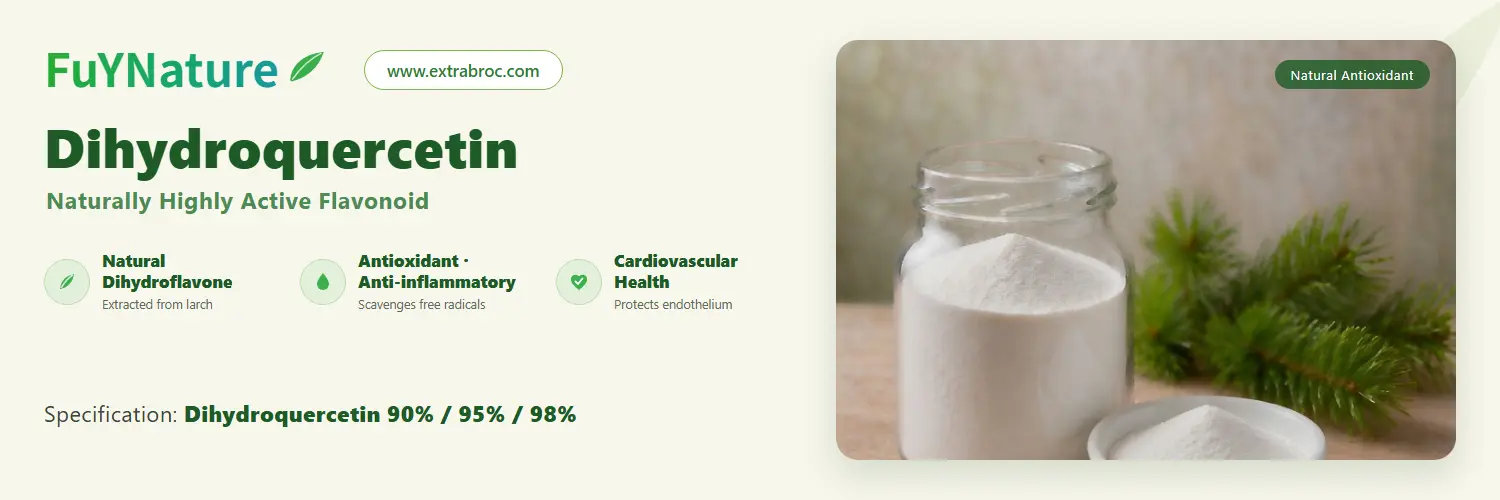
What Is Dihydroquercetin Powder and How Does It Work in Cosmetics?
Identity and Naming
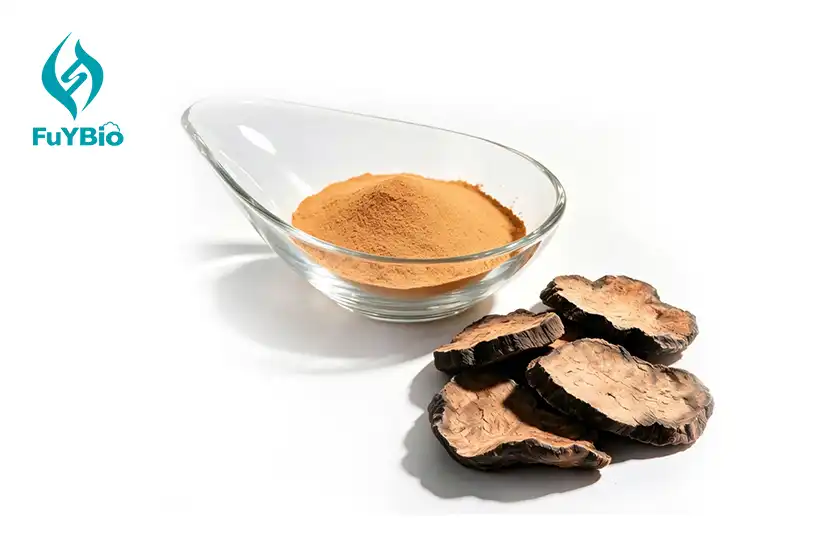
Its CAS number is 480-18-2, and its formula is C15H12O7. It's also known as Dihydroquercetin Powder. The labeling file, the note, and the certificate of analysis should all have the same name, CAS number, and method of analysis. This is because it could be sold under either name. The powder we sell smells very strong and is a light yellow or off-white color. We check the grade with HPLC and offer 90%, 92%, 95%, and 98% grades. Before getting approval, make sure of these things. This will make it easy for the project to go from one market or regulatory team to another.
Antioxidant Role Versus Consumer Claims
Antioxidants help make cosmetics safe, and they might also help skin that is stressed out from the outside world. In 2003, Pinnell wrote about this in the Journal of the American Academy of Dermatology. Reactive oxygen species are made when UV light hits skin. That's why people who study this are interested in face vitamins. But just because radical-scavenging worked in the lab doesn't mean it will help real people. What you say must be true based on the information you have and U.S. law. Under the Federal Food, Drug, and Cosmetic Act, you may be making a drug claim if you say that a product stops or cures a disease. Think about how the words always keep you safe.
Larch Source and Water Extraction
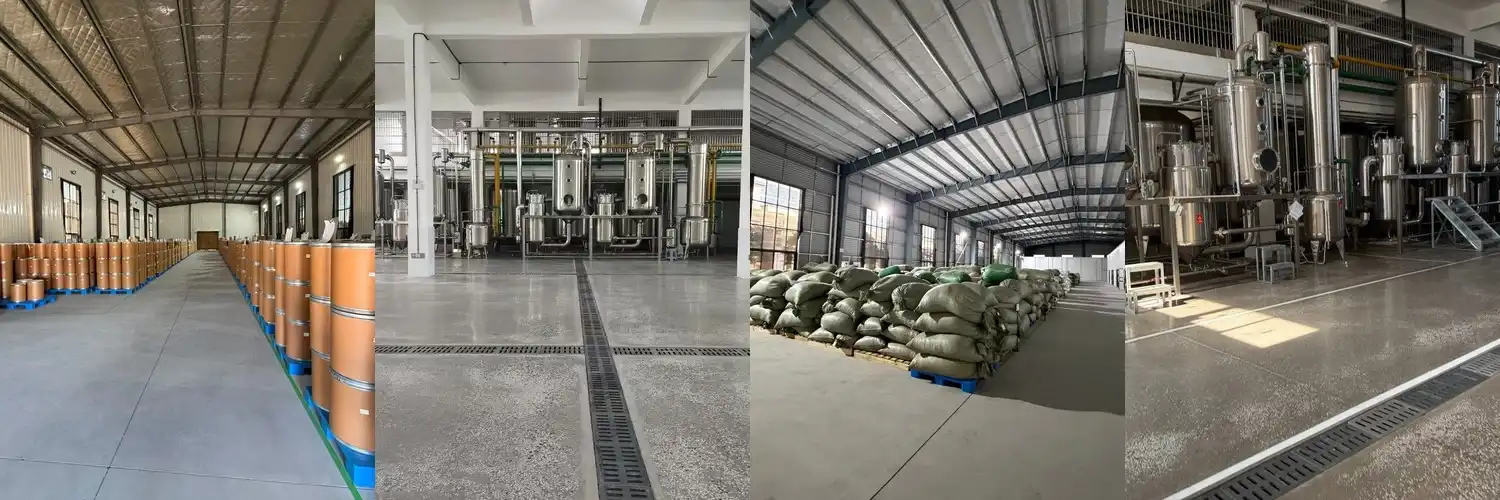
It is found in many trees, but larch is the one that is most often used in business. We use larch root (Larix species) grown in China and water to make our Dihydroquercetin Powder. Things like how pure the extract is, how accurate the amounts are, and how much fluid is left over depend on how it was made. It's easy to do this kind of study since water is used as the fluid. The businesses we work with have GMP, ISO22000, HACCP, and HALAL certifications. We can take care of both big orders and regular items. When someone sells you Dihydroquercetin Powder, ask them to write down where it came from and how it was made. There are several ways and places that two powders with the same name could have been made.
Dihydroquercetin Powder Uses in Cosmetic and Personal Care Products
Skincare Formats
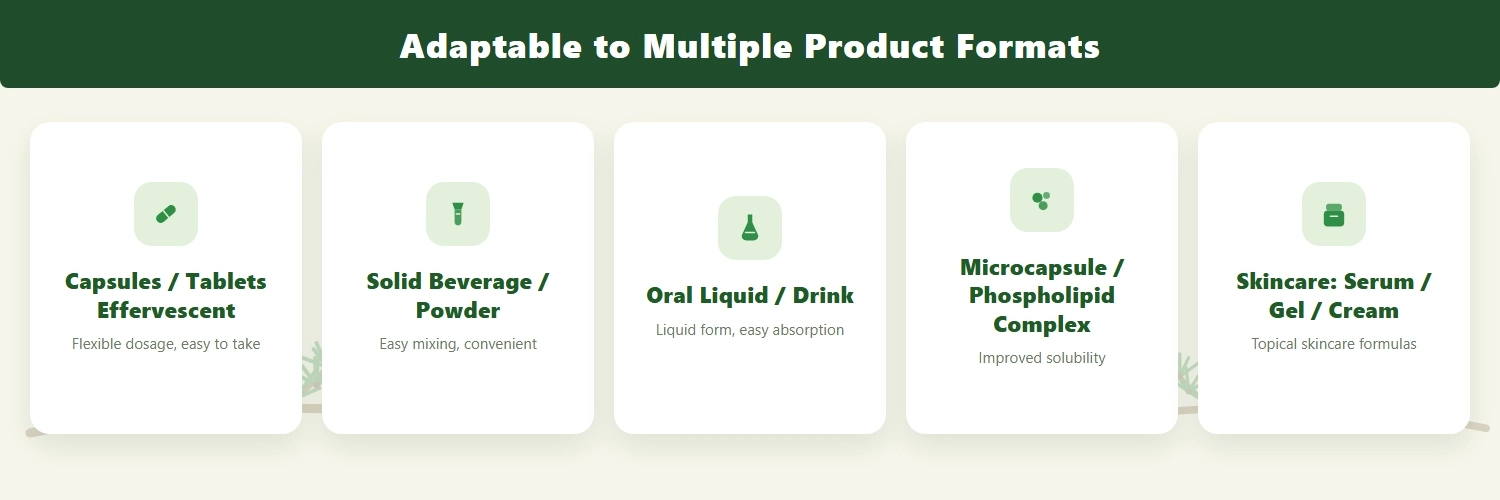
This is Dihydroquercetin Powder. Because of this, it works well in ampoules, masks, toners, serums, eye creams, face creams, and toners that you leave on your skin. People buy these things mostly to find ingredients that can help them deal with stress from the outside world. Day after day, there are lines for tired skin and safety. People like Zillich wrote in the International Journal of Cosmetic Science in 2015 that polyphenols are being looked into a lot as beauty product ingredients. The label also says that it can be used to treat skin problems since it is an antioxidant. But it will still depend on the test, the dose, and the base formula.
Hair, Scalp, and Body Care
You can get more done if you wash your hair and take care of it. Dihydroquercetin Powder is used in shampoos, conditioners, hair treatments, and body care items. It might also be in sunblock as an antioxidant, but never instead of UV filters. The call time is important. Because it stays on hair longer, leave-on skin cream is often a better test case than shampoo. Surfactants can change how powder spreads, so start with small amounts. Say things every day that make you feel good, clean, or cared for.
What Controls Performance?
It depends on how much Dihydroquercetin Powder is used, what pH it is at, how it is moved, and how it is packed. It's also important that they get along. To begin, make sure the powder works by mixing it with your dyes, plant extracts, stabilizers, and other actives. Flavonoids can mix with metal ions or change color. A lot of people find that making a ladder of small practice steps is the first thing they do. They make changes once they know the formula is stable. Light and air can't get through a pack that is opaque or doesn't let air in. Write down every change in how it looks, feels, and moves at each step. This will help your group fix what went wrong.
Formulation Considerations: Solubility, Stability, and How to Use Dihydroquercetin Powder
Dissolution Versus Dispersion
The particle size, clarity, temperature, pH, and type of liquid are just some of the things that can change how well Dihydroquercetin Powder dissolves. The grains are fully mixed with the liquid when they break apart. Little bits that stay in the liquid may cause it to cloud over or settle over time. Most of the time, Dihydroquercetin Powder dissolves better in warm water or systems that also have alcohol than in cold water. Thus, ask your provider to carry out the tests and give you the results. This is because people often mix these two words up. If the grade says "water-soluble," you should ask for proof of the temperature, concentration, and clarity.
A Practical Testing Workflow
First, test the Dihydroquercetin Powder in your phase or liquid by putting it on a bench. If you don't want it to get too hot after the hottest step, make sure you add it at the right time. On the first day, check the color, smell, look, and pH. Check the item again after it has been stored at room temperature, high temperatures, and freeze-thaw cycles. They are already breaking apart, as shown by a test in a centrifuge. To learn what the Dihydroquercetin Powder did, it's best to look at a lot that didn't have it.
Storage and Shelf Life
The Dihydroquercetin Powder will last for two years if you store it correctly, but it works best when it is less than 18 months old. Don't leave boxes out in the sun or somewhere else that's too hot. Keep them somewhere cool, dry, and with good airflow that is below 25°C. Stay away from water and strong chemicals that could break down the Dihydroquercetin Powder. Things that are new should go in first, and things that are old should go out first. Don't stop moving the stock. Also, make sure you're wearing the right safety gear so that you don't breathe in any dust. Test the food before putting the lids back on the jars. What's inside will be safe with this.
How to Evaluate High-Purity Dihydroquercetin Powder for Cosmetic Manufacturing
Reading the Certificate of Analysis
What should be on a certificate of analysis? The batch number, the date it was made, how to repeat or how long it is good for, the test method, the actual result, and their signature. Test the area to see if any heavy metals, germs, water, ash, or liquids are still there. Also do an HPLC test. The HPLC grades must be 90%, 92%, 95%, and 98% pure, and the amount of heavy metals and microbes must be less than what the law allows. When you get a batch, you have to match each COA to it. A general sheet can't show that many of them are good. Find out the steps that were taken to get each result.
Physical Properties That Affect Production
The story isn't just about chemistry in one part. The Dihydroquercetin Powder's color, smell, particle size, ability to move around, and water activity all affect what it does in your plant, how it mixes, and how much it weighs. If the Dihydroquercetin Powder is off-white to pale yellow and smells like something, you might want to check that smell out again in recipes that aren't very strong. Even if the flow is bad, drugs can be given slowly. Also, clear gels can have spots that look like particles of different sizes. Find out how much of these traits is good, and then compare each new batch to a group that was already good.
Understanding Natural Claims
Things that are natural, organic, plant-based, and grown naturally are not all the same. Someone else has to sign off on the fact that the food is organic. What does it mean for makeup to be "natural"? "Plant-derived" means "from plants." Since the FDA doesn't have a single definition, brands should make their own and provide proof. If someone sells you Dihydroquercetin Powder from larch root, make sure they can show you proof of where it came from before you give them your money. If you use the same words on your website, in your files, and on your package, no one will get your brand mixed up.
Dihydroquercetin Powder Supplier Selection for Global B2B Buyers
Comparing Supplier Types
What kind of company can help you with Dihydroquercetin Powder? Plant extracts are made by a lot of different types of businesses. As well as private-label suppliers and contract manufacturers, there are also direct manufacturers and distributors. These days, direct sources let you handle the specifics and the supply chain better. On the other hand, distributors may have smaller lots and stock that is close to you. Putting things next to each other lets you compare them. You can look at price, MOQ, expert help, changes, wait time, and paperwork side by side. Before you buy from a company, find out how they handle changes and complaints and whether they are ISO certified, use HACCP or a similar system, or follow good manufacturing practices (GMP). Check out how they deal with changes as well. You can change the specs for FuYNature and get help with tests and processes like HPLC analysis. It can also be shipped by sea or air.
Total Landed Cost
It's not just the kg price. How much it costs to land depends on how pure the Dihydroquercetin Powder is, where it was gathered, how it is handled, certified, packed, tested, and sent. A grade with more active material might cost more per kilogram, but it might also have more active material. It's cleaner; that's why. The price will go up because of taxes, test fees, and freight costs. Also, look to see if there is extra room because losing a package can cost more than the difference in price. We don't change how much we make so that we can meet big orders.
Support From a Qualified Partner
If you have a good partner, the first sample and the growth of the business are less risky. You should learn how to pick the right grade, deal with it, try it, see how well it works, and put things right. You should also get information about safety, analysis certificates, and progress reports for the government. More than 30 patents have been granted to FuYNature's core team of four PhDs. Since 2003, functional food has been a part of their job. To launch in more than one country, work with resellers, or work on OEM projects, it's important to get technical answers quickly and clearly.
A Step-by-Step Buying Guide for Dihydroquercetin Powder
Define, Sample, and Test
You should first choose the Dihydroquercetin Powder's format, color, particle size, microbial limits, certifications, and packaging. Make it clear that the product must be pure. Second, ask for samples that are typical of the whole batch, as well as a statement of origin, a certificate of authenticity (COA), and technical and safety data files. Third, check how it freezes and thaws, how fast it stays stable, how it spreads, and so on. Last, make sure everyone agrees on the lead time, the MOQ, how to keep track of the order, and how to let people know when things change. After that, you'll need to sign a quality agreement before you can start selling more. Your group can do it again for the next grade if you write down each step.
Comparing With Other Antioxidants
Dihydroquercetin Powder is a flavanonol and doesn't have the same C2–C3 double bond as quercetin, but they are linked. It looks and works differently now. There is no clear winner between the parts. Vitamin E products and other plant-based antioxidants can be compared by how well they dissolve, what they look like, what they smell like, how stable they are, how much they cost, and where they stand in the market. There are different types, and each one has a different amount of the active ingredient. How they look, how much they cost, and how easy they are to work with are all things that these grades trade off. Pick a company based on what your formula needs, not on how well-known it is.
Mistakes to Avoid
Just because something costs a lot doesn't mean it's pure, tried, and based on paper. Instead, look at how much it costs to do something useful. It's not a fact that Dihydroquercetin Powder is "water-soluble" until you test it. Request COAs that are specific to a batch and can be saved properly. First, check out the label, color, smell, claims, and how well it works with other things. Make sure you know the rules for the people you want to reach before you start. Make sure your safety records are always up to date by checking them often. The Modernization of Cosmetics Regulation Act of 2022 added a list of ingredients, safety proof, and building registration to get the attention of the U.S. Food and Drug Administration (FDA).
Conclusion
This is a flavonoid that is found in larch trees and is also known as Dihydroquercetin Powder. It is thought to protect cells. It can be used for anything that takes care of your skin, hair, or head, as long as the claims aren't too unbelievable. It's important for a grade to have clear, soluble data, strong physical properties that don't change, and COAs that are unique to each batch. Also, you should be able to show that the grade is what it says it is. To make a formulation work well, you need to know the difference between dispersion and release, check for stability and compatibility, and make sure the formulation is packed tightly. The price alone shouldn't decide who you buy from. You should also look at things like licensing, customization, capability, and the total cost of delivery. Following the U.S. rules for cosmetics and having a structured way of testing, sampling, and quality agreements can lower both technical and business risk.
FAQ
Is dihydroquercetin the same as taxifolin?
Yes. Dihydroquercetin Powder with the CAS number 480-18-2 goes by both names. Whichever one you choose, make sure that the name, CAS number, and test method are written down in all of your Dihydroquercetin Powder's specs and papers.
Is Dihydroquercetin Powder water-soluble?
It gets easier to dissolve as the temperature rises, the particle size changes, and the pH changes. Take a test and look at the data before you believe someone who says Dihydroquercetin Powder is soluble when it's not.
What should a COA include?
An important part of a COA is the batch number, the date it was made, and any information about retests or expirations. Along with the specs, the test methods, the real results, and the quality control seal, it has everything you need to know. The batch you get has to be the same.
Can I use it in private-label or OEM products?
That's fine, as long as you test the recipe, look over the paperwork, and ask the right people in your group for permission. We help with HPLC testing for OEM and brand projects and give you specs that you can change.
Request a Dihydroquercetin Powder Sample or Commercial Quote
Where can I get Dihydroquercetin Powder for my next beauty project? Larch roots give FuYNature 90% to 98% pure Dihydroquercetin Powder when mixed with water. It's certified by FDA, GMP, ISO22000, HACCP, and HALAL, and it's simple to handle big orders. You can email info@extrabroc.com by clicking here to get a standard sheet, a sample, or a price quote for a large order. Extrabroc.com has more information.
References
1. Phytochemistry, 2019. Sunil C., Xu B. "An Insight into the Health-Promoting Effects of Taxifolin (Dihydroquercetin)."
2. European Journal of Pharmacology, 2012. Weidmann A.E. "Dihydroquercetin: More Than Just an Impurity?"
3. Journal of the American Academy of Dermatology, 2003. Pinnell S.R. "Cutaneous Photodamage, Oxidative Stress, and Topical Antioxidant Protection."
4. International Journal of Cosmetic Science, 2015. Zillich O.V. et al. "Polyphenols as Active Ingredients for Cosmetic Products."
5. Anais Brasileiros de Dermatologia, 2017. Addor F.A.S. "Antioxidants in Dermatology."
6. U.S. Food and Drug Administration, 2022. "Modernization of Cosmetics Regulation Act of 2022 (MoCRA)."