How to Formulate Broccoli Seed Extract 13% Glucoraphanin into Powders
You need to set a measurement requirement before you can make anything from Broccoli Seed Extract 13% Glucoraphanin. Then, divide the amount of glucoraphanin you need by 0.13 to get the extract's weight. Choose dry carriers that protect the flow and strength. Since glucoraphanin is not the same thing as sulforaphane but rather a building block for it, you need to decide if the formula needs a myrosinase source. In order to make sure that all of the ingredients are the same, keep the heat and moisture low and blend in small steps. Use stability data to make sure the powder will last a long time and store it in cases that won't get wet. That's how this book is put together.
Introduction: Why 13% Glucoraphanin Powder Requires More Than a High Assay
Seed Extract, Sprout Extract, Glucoraphanin, and Sulforaphane
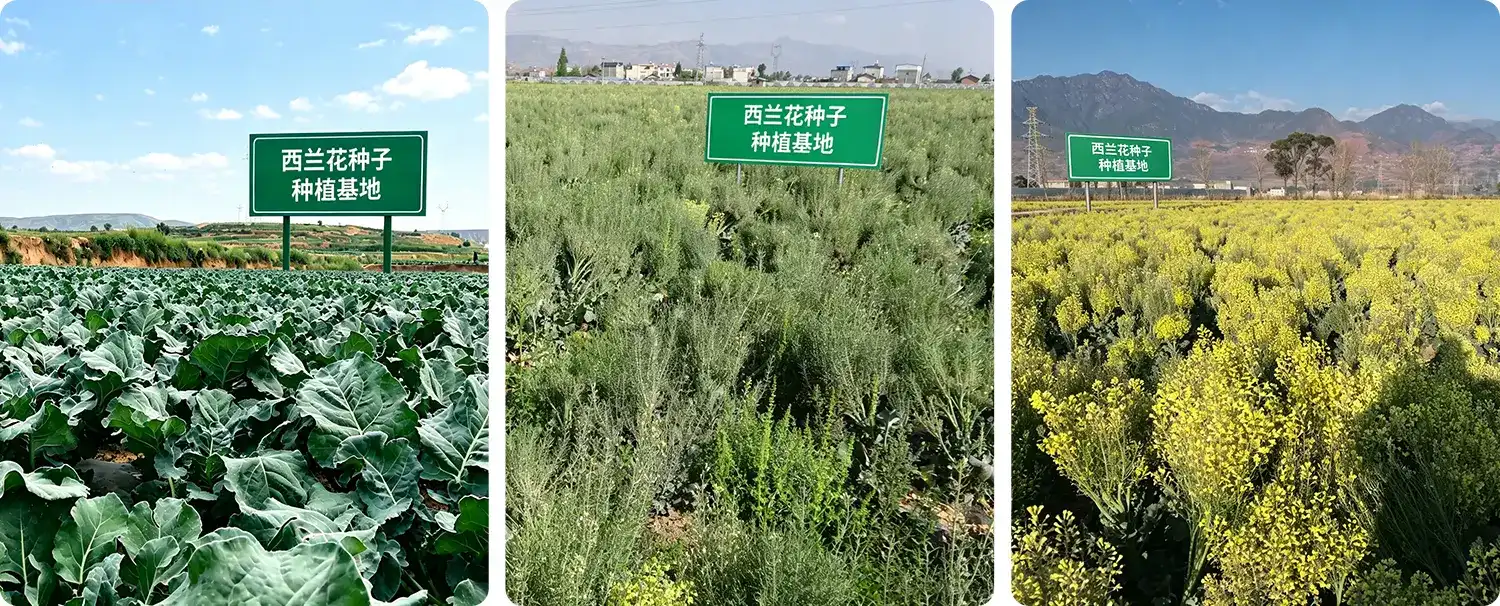
You can get seed extract or sprout extract. They're from various parts of the plant. The steady glucosinolate that plants store is called glucoraphanin. Glucoraphanin and the enzyme myrosinase work together to make the isothiocyanate sulforaphane. The 1997 study by Johns Hopkins University found that broccoli sprouts that were only three days old had 10 to 100 times more glucoraphanin than leaves that were fully grown. It's found in large amounts in both the seeds and the roots.
What a 13% Assay Tells You, and What It Does Not
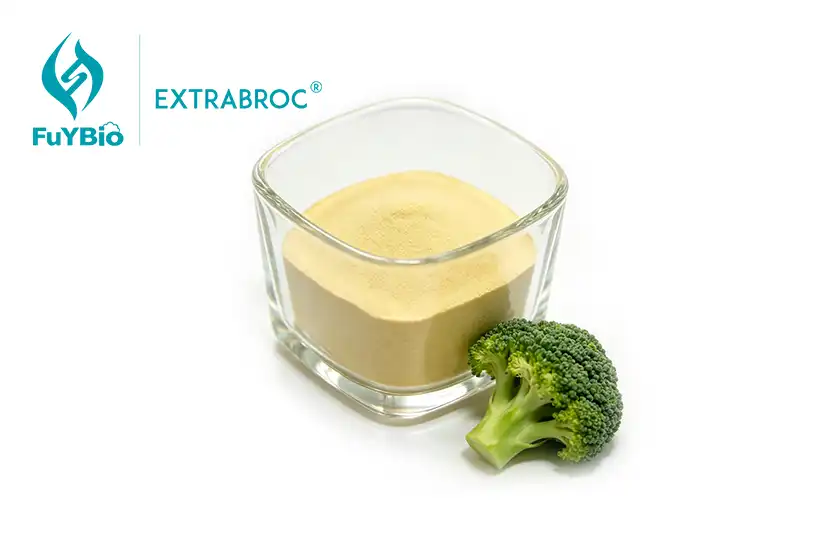
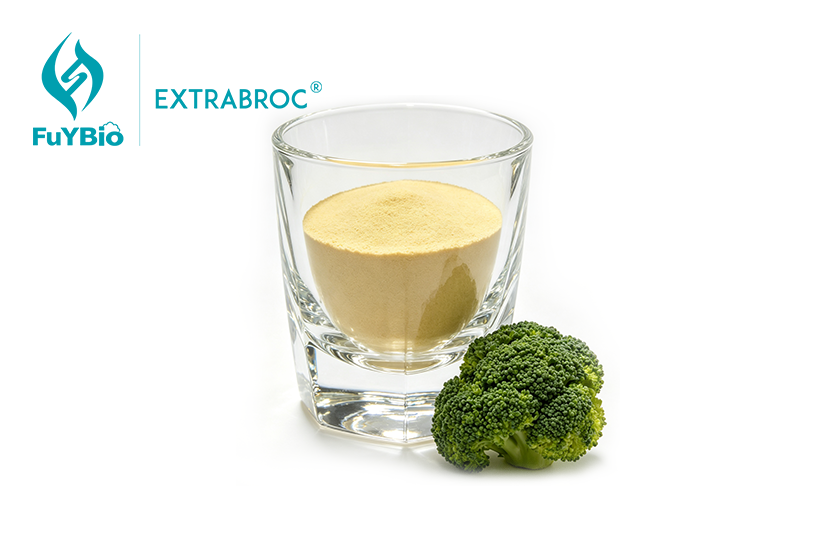
The laboratory detected 13 g glucoraphanin per 100 g powder in accordance with the specified test procedure. This value alone tells you nothing about the bulk material, blending records or batch history. EXTRABROC® is produced from Brassica oleracea var. italica (broccoli seed). HPLC testing verifies that glucoraphanin content meets the minimum specification of 13%.
Who Should Read This Guide
These changes will be good for people in the US who work in procurement, R&D, distribution, and OEM. Any choice you make in the lab leads to a choice about what to buy or how to make something. The same source can be used by people in quality and legal.
Step 1—Define the 13% Glucoraphanin Raw Material Specification
Identity and Origin
Not only should you write down the name of the plant part, but also where it came from. There are different kinds of broccoli seeds used in this 13% glucoraphanin extract. China is where they are grown. Put in the solvent for the extraction. Your file shows that the process does not use any organic liquids since ours is water.
Analytical Basis
Explain how the test will be done and how the lab will report the results. Based on our own HPLC test, the amount of glucoraphanin is at or above 13%. That number should be "dry" or "as-is" for every source. Ask for the COA that is unique to the lot instead of a general sheet.
Physical and Safety Parameters
It is important to set limits for particle size, microbes, metals, and other contaminants. It says on our specs sheet that at least 90% of the particles must be less than 180 μm. It says that there are 0.052 mg/kg of inorganic arsenic and 280 cfu/g of total oxygen count. The powder is fine and light yellow, and it smells different. Our special pre-treatment process gets rid of allyl isothiocyanate and other harmful impurities.
Step 2—Calculate the Required 13% Glucoraphanin Dosage in the Powder Formula
The Core Equation
If you divide the target glucoraphanin by 0.13, you get the weight of the extract you need. The amount of glucoraphanin in 100 mg is 13 mg, and the amount in 200 mg is 26 mg. To get 50 mg of glucoraphanin, you need about 385 mg of Broccoli Seed Extract 13% Glucoraphanin. Use the test on the lot COA because the standard says it must be at least that.
Serving Size Is a Separate Decision
You can only get the fill weight from the math. The amount of food you serve should be based on what you say and what the government looks at. It's also possible for the number to change if the moisture level changes, the test results vary, or there is a valid overage. There are rules in the US called 21 CFR Part 111 that say finished supplement batches need to meet certain conditions.
Dosage-Form Limits
Because of its size and weight, the capsule, tablet, or sachet can only hold a certain amount of extract. When the assay is higher, other ingredients can be added because there is less extract per dose. When you load the last batch, make sure the blend is even before you lock the formula.
Step 3—Select Carriers and Excipients for a Stable, Free-Flowing Powder
Choosing Carriers
Microcrystalline cellulose, tough dextrin, soluble fibers, maltodextrin, and rice flour are some of the things that work in different ways. Make sure you look at the particle size, mass density, moisture, water activity, and how likely it is to clump. Pick a choice that fits with how you want to market your label and what people in the U.S. expect, like labels that are clean.
Managing Taste and Odor
It's possible for broccoli powder to taste bitter or sulfurous. Because our Broccoli Seed Extract 13% Glucoraphanin has a special smell, you should come up with a way to flavor drinks and packages that use it. Make a little sensory panel and test it out before you use the big one.
Myrosinase: Verify, Do Not Assume
Write down what you want to know about myrosinase. Look at how any source of enzymes reacts to heat, water, pH, and being stored. A study by Egner and his colleagues in 2011 showed that a beverage high in glucoraphanin and a beverage high in sulforaphane delivered sulforaphane in very different ways.
Step 4—Control the Conversion Relationship Between Glucoraphanin and Sulforaphane
Two Related Compounds
Go with glucoraphanin as the first step. Sulforaphane is made when myrosinase breaks it down. The Nrf2 route is then set off. Broccoli Seed Extract 13% Glucoraphanin standardized to 13% glucoraphanin is not the same as 13% sulforaphane, and the label shouldn't say that it is.
What Drives Conversion
Things like enzyme activity, moisture, temperature, pH, the food matrix, and the bacteria in the gut can change the outcome. Bugs in the gut can change some glucoraphanin even when myrosinase is not working. The amount they can change is different for each person.
When Extra Testing Pays Off
With a straight HPLC test, you can be sure of the amount of glucoraphanin written on a label. You should include conversion studies, myrosinase tests, or simulated digestion in your marketing when you talk about sulforaphane release. Our sulforaphane was turned into live things at a rate of at least 55.8%. In clinical trials and real-life studies, the extract has also been tried on more than 10 people.
Step 5—Compare 13% Glucoraphanin Extract with Alternative Ingredients
Seed Extract Versus Sprout Extract
Samples from seeds and sprouts have different amounts of myrosinase, plant parts, and carriers. Not just the figure for the assay, but also the ability to track it, the way of extraction, the taste, the color, and the paperwork.
13% Versus 10%
You can check how much different kinds of active glucoraphanin cost per gram. One kilogram of Broccoli Seed Extract 13% Glucoraphanin is equal to 130 grams of glucoraphanin. One hundred grams of 10% powder is equal to one kilogram. It's possible that the less expensive one costs more per active gram. As the potency goes up, so does the formula loading. But make sure to check the flow, MOQ, and supply consistency.
Supply Continuity
With a steady production rate of 50 tons per year, big orders can be met. The powder will last for two years if you keep it somewhere cool and dry, away from light and heat. The action will last at room temperature for at least 24 months, based on our data on how stable it is.
Step 6—Refine the Manufacturing Process for 13% Glucoraphanin Powder
Incoming Release
You shouldn't send out a lot until you're sure of its name, COA, quality, color, smell, and moisture. Sieve the Broccoli Seed Extract 13% Glucoraphanin to get rid of any lumps before putting it in the blender.
Blending Sequence
First, some of the carrier should be mixed with the extract. Add this mix to the main batch one step at a time and blend for a set amount of time. It is best to stay away from too much heat, pressure, and long hold times when enzymes are present.
Packaging
HDPE bottles with desiccant, foil tubes, high-barrier stick packs, and bulk bags that don't let water in keep the powder safe. Based on the dosage form and the length of time you want the product to last, choose it. Then, keep it cool and dry.
Step 7—Build a Quality-Control and Verification Plan
Incoming Testing
Make sure that you check each batch of extract to see what it is, how much moisture it has, if it contains microbes, heavy metals, pesticides, or solvents that are still present, the size of the particles, and whether it can be tracked. Through our process, we keep track of each lot from the seed to the finished flower. Some of the things that the Broccoli Seed Extract 13% Glucoraphanin checks for are heavy metals, bacteria, and pesticide residues.
In-Process and Finished Checks
You should take samples based on the type of blender and the size of the batch so you can catch division early. Keep an eye on the labels of manufactured goods to make sure that the amounts of glucoraphanin are always the same.
Stability Studies
Over time, check the microbes, assay, look, smell, flowability, and how wet it is. In places where it makes sense, add activity for myrosinase. Long-term, accelerated, humidity, transport, and use conditions should all be taken into account.
How to Choose a Dependable 13% Glucoraphanin Supplier or Manufacturer
Technical Capability
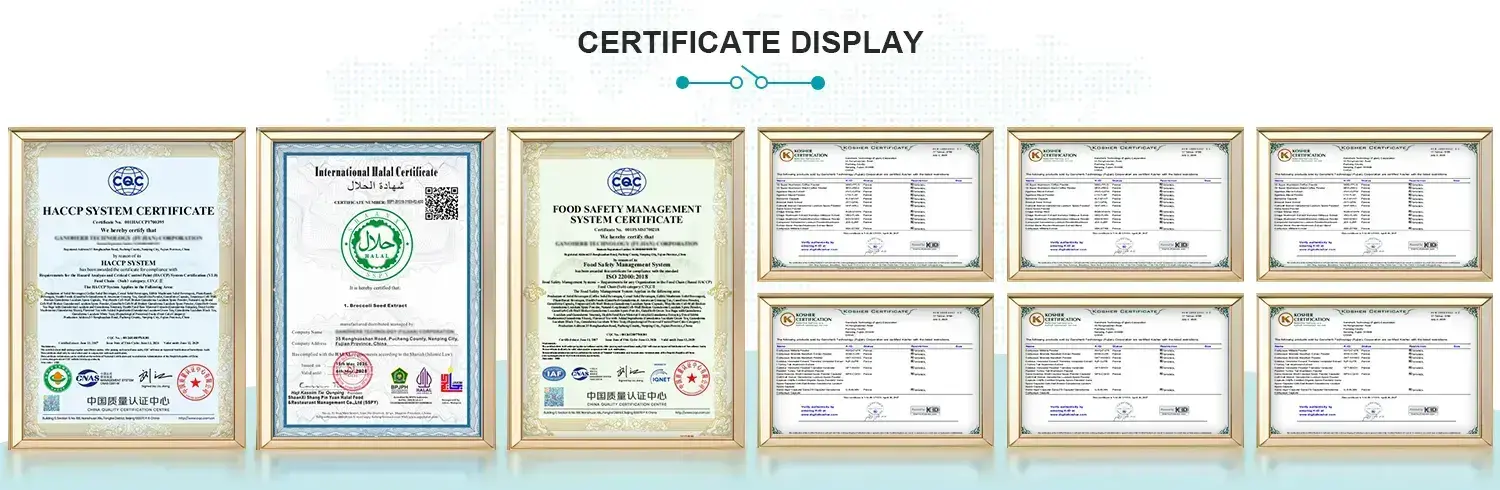
Consistent standardization, managed sourcing, output that can be tracked, and qualified analytical testing are all things you should look for. Our partner facilities have GMP, ISO22000, HACCP, and HALAL certifications, and our Broccoli Seed Extract 13% Glucoraphanin is FDA GRAS. Fushan Biotechnology has been working on Nrf2 nutrition since it was formed in 2012, which is 13 years. Its research and development team is made up of four PhDs, and the company has filed for 54 rights. Patents have been granted in China and Japan, while the corresponding patent application is under substantive examination in the United States.
Commercial Terms
You can look at active glucoraphanin prices in more than one way. Check out what the carrier offers, how much it costs to test, the minimum order size, the lead time, and the logistics. We can help with freight by air or sea.
OEM and Private-Label Support
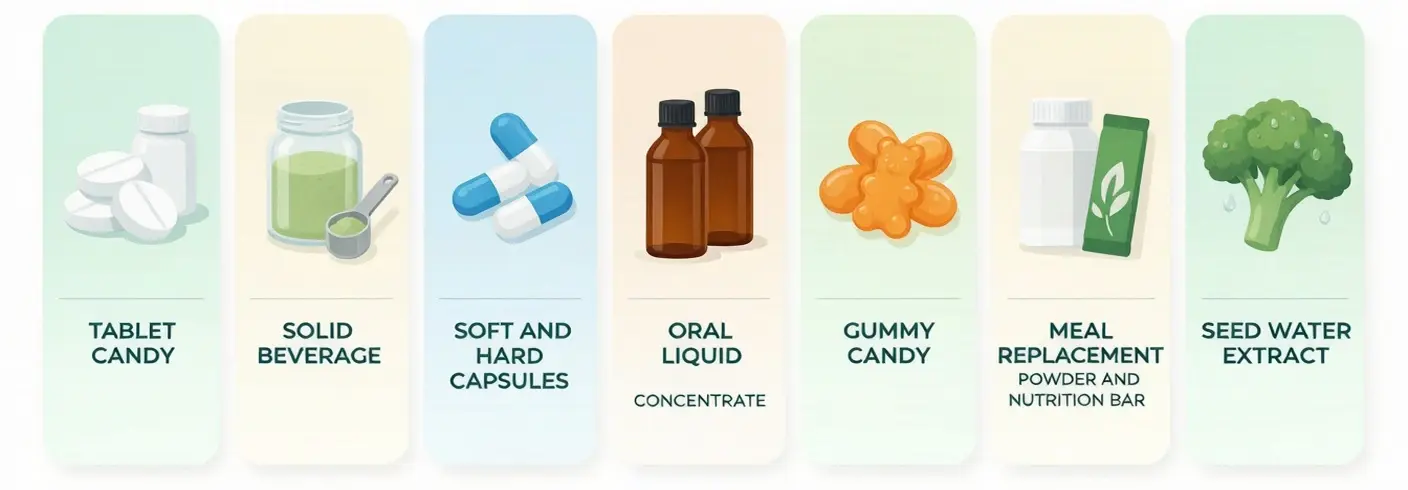
Hefei Fushan Yuansheng Biotechnology Co., Ltd. sells EXTRABROC® all over the world. We can change the amounts of ingredients, dosage forms, and combination recipes as part of the services we offer. We also help with HPLC tests and working together to make technology better. How much patent licensing help you get is based on how many orders you place.
Common Formulation Mistakes and How to Avoid Them
Confusing Glucoraphanin with Sulforaphane
This is the mistake that costs the most. It leads to wrong guesses and claims that can't be proven. Keep the two combinations separate in your math, recipes, and label writing.
Chasing Assay While Ignoring Documents
The best assay doesn't mean much if you don't have stability data and COAs for each lot. A strong test for Broccoli Seed Extract 13% Glucoraphanin can lose its effectiveness in just a few months due to moisture and the way it is packed.
Setting Doses Before Regulatory Review
Make a choice about serving size only after the government has looked it over. Structure-function claims on U.S. supplements need to be backed up by proof and the usual disclaimer from the FDA. It is also pointless to add myrosinase without making sure it can do its job. It is important to hire qualified technical and regulatory experts when you need to.
Practical Formulation Scenarios for 13% Glucoraphanin Powder
Capsules
When you fill capsules, you need to pay attention to how much the material weighs, how dense it is, how well it flows, and how even it is. About 385 mg of Broccoli Seed Extract 13% Glucoraphanin is what you need to get to 50 mg of glucoraphanin. You should only add a flow helper if tests show you need one.
Sachets, Stick Packs, and Beverages
The right amount of taste needs to be in these formats, and they need to be easy to spread and keep moisture in. It was made with water, so see how well it dissolves in your own base and at your own pH.
Tablets and Multi-Ingredient Formulas
It's important to check tablets for damage like breaking, being squished, and being held hot. It is important to try vitamins, minerals, probiotics, botanicals, and pH-sensitive ingredients in formulas with other ingredients to make sure they work well together. Make test batches before putting them on the market to make sure they taste, flow, test, package, and stay stable.
Final Checklist for Buying and Formulating 13% Glucoraphanin Powder
Raw Material Review
For each lot, look at the plant source, the 13% test, the analytical method, and the COA. Read about the myrosinase, moisture, microbiology, contaminants, allergens, origin, and whether the food is GMO. This Broccoli Seed Extract 13% Glucoraphanin does not contain any GMOs.
Formulation Review
Check the numbers for the active ingredient, the carriers, how well it flows, how it tastes, how much heat and moisture it can handle, and how it is packaged. Before you accept the recipe, make sure you look at the test results for the finished product and the shelf life.
Supplier Review
Check the MOQ, lead time, production capabilities, and prices for active content. Learn about technical support, pilot production, OEM services, and how to make sure you can keep getting supplies over time. Note down what each candidate said and then compare them.
Conclusion
You need to follow clear instructions, do the math, and pay close attention to what the claims of conversion say in order to turn Broccoli Seed Extract 13% Glucoraphanin into powders. Sulforaphane is not what the 13% test talks about; it talks about glucoraphanin, which is the stable precursor. In other words, the two chemicals need to be kept independent on the labels and in the math. What you get when you split the target amount of glucoraphanin by 0.13 is the weight of the extract. This weight is then used to set the dosage limits, carriers, taste, and moisture. Controlled mixing, the right way to package it, making sure the content is the same, and stable tests are all things that help keep the assay safe while it is being stored. Price per kilogram is not the best way to compare suppliers. What matters more is active glucoraphanin, lot-specific documents, and technical help. There is a link between the information about the raw materials and the powder that matches its label after all of these steps.
FAQ
Is 13% glucoraphanin the same as 13% sulforaphane?
Glucoraphanin comes before, not after. Before sulforaphane is made, it is changed by myrosinase or bacteria in the gut. The rate at which it changes is different. On the package, it should say what the test for Broccoli Seed Extract 13% Glucoraphanin should be called.
How much extract supplies 13 mg of glucoraphanin?
About 100 mg, before any changes are made to the analysis, moisture, or weight of the lot. This is the same as 26 mg, which is 200 mg.
Does the powder contain active myrosinase?
Don't believe it does. We have a standard that includes an HPLC test for glucoraphanin, so make sure you get written myrosinase data before you plan any enzyme co-formulation or conversion claims.
Which documents should I request?
Find out about the product, get a certificate of analysis (COA) for that lot, the method of analysis, how to store it, and how safe it is. Generic sheets can't be used instead of lot data.
Can I order private-label or customized powders?
Yes. You can change the formula's ingredients, dosage forms, and how they are mixed. MOQ depends on the size, packing, and changes that need to be made.
Request EXTRABROC® Broccoli Seed Extract 13% Glucoraphanin Samples and a Formulation Review
Planning a powder project? Contact FuYNature at info@extrabroc.com to request a sample, specification, lot-specific COA, and formulation review. As a Broccoli Seed Extract 13% Glucoraphanin supplier backed by Fushan Biotechnology, we offer 50 tons per year of stable capacity, HPLC testing support, and customizable specifications. Our team helps with dose calculations, carrier selection, and dosage-form development. Visit extrabroc.com for product details.
References
1. Proceedings of the National Academy of Sciences, 1997. Fahey JW, Zhang Y, Talalay P. "Broccoli sprouts: an exceptionally rich source of inducers of enzymes that protect against chemical carcinogens."
2. Cancer Prevention Research, 2011. Egner PA, et al. "Bioavailability of sulforaphane from two broccoli sprout beverages: results of a short-term, cross-over clinical trial in Qidong, China."
3. Molecules, 2019. Yagishita Y, Fahey JW, Dinkova-Kostova AT, Kensler TW. "Broccoli or sulforaphane: is it the source or dose that matters?"
4. Trends in Molecular Medicine, 2012. Dinkova-Kostova AT, Kostov RV. "Glucosinolates and isothiocyanates in health and disease."
5. Phytochemistry, 2001. Fahey JW, Zalcmann AT, Talalay P. "The chemical diversity and distribution of glucosinolates and isothiocyanates among plants."
6. Nutrition and Cancer, 2006. Shapiro TA, et al. "Safety, tolerance, and metabolism of broccoli sprout glucosinolates and isothiocyanates: a clinical phase I study."