Haematococcus Pluvialis Astaxanthin Powder for Premium Fish Feed Production
Haematococcus Pluvialis Astaxanthin Powder gives premium fish feed producers a natural, algae-based pigment source for salmon, trout, shrimp, and ornamental fish diets. Fish and shrimp cannot make carotenoids from scratch, so the feed must supply them. A good powder delivers a known astaxanthin level, mixes evenly, and keeps its color through processing and storage. Results depend on potency, stability, particle size, and species-specific trials. In this guide, I explain what the powder is, how to use it, how to compare suppliers, and how to plan pilot tests before a bulk order.
What Is Haematococcus Pluvialis Astaxanthin Powder?
Where Does the Powder Come From?
Haematococcus pluvialis is a tiny living thing that lives in fresh water. When it is under a lot of stress, scientists have found that it makes red cysts that store astaxanthin. A small amount of the cell's dry weight can come from the color. The tough cell wall is broken, the biomass is dried out, and the cells are ground into a powder. People who buy something may see ingredients that are microencapsulated, an extract that is concentrated, or a powder that is based on oleoresin. In a feed mill, each setup does something different. Before I look at prices, I always make sure I know the pH, the moisture, the particle size, the astaxanthin assay, and the microbiological limits. With the cell wall intact, the animal can only take in so much color. This is why the step with the wall is important.
FuYNature Product Specifications
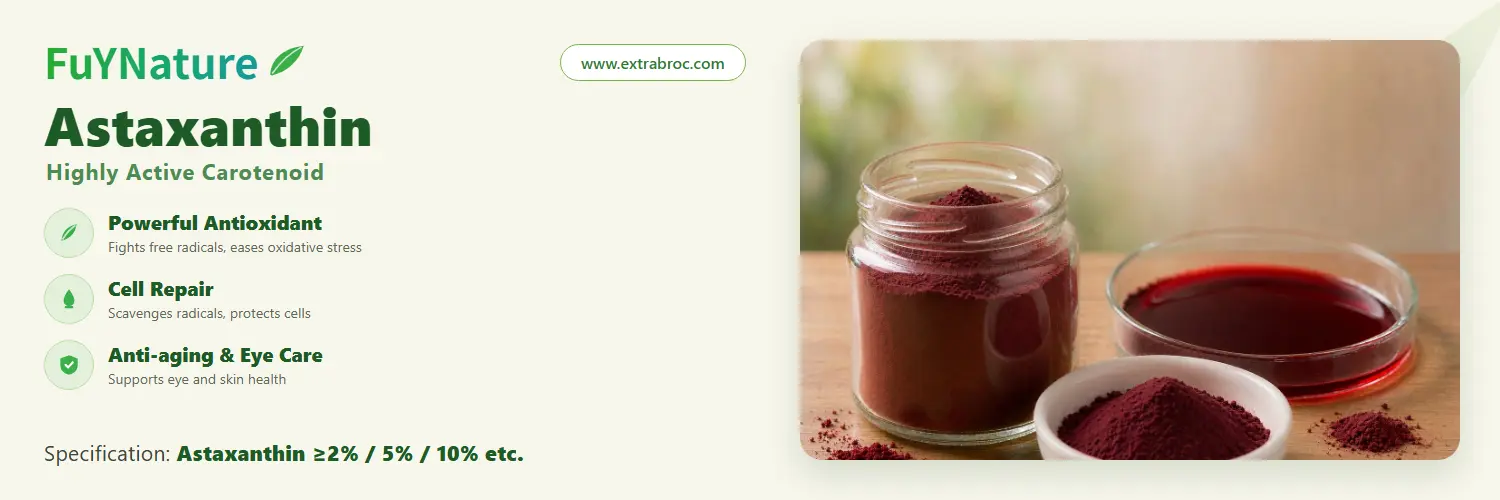
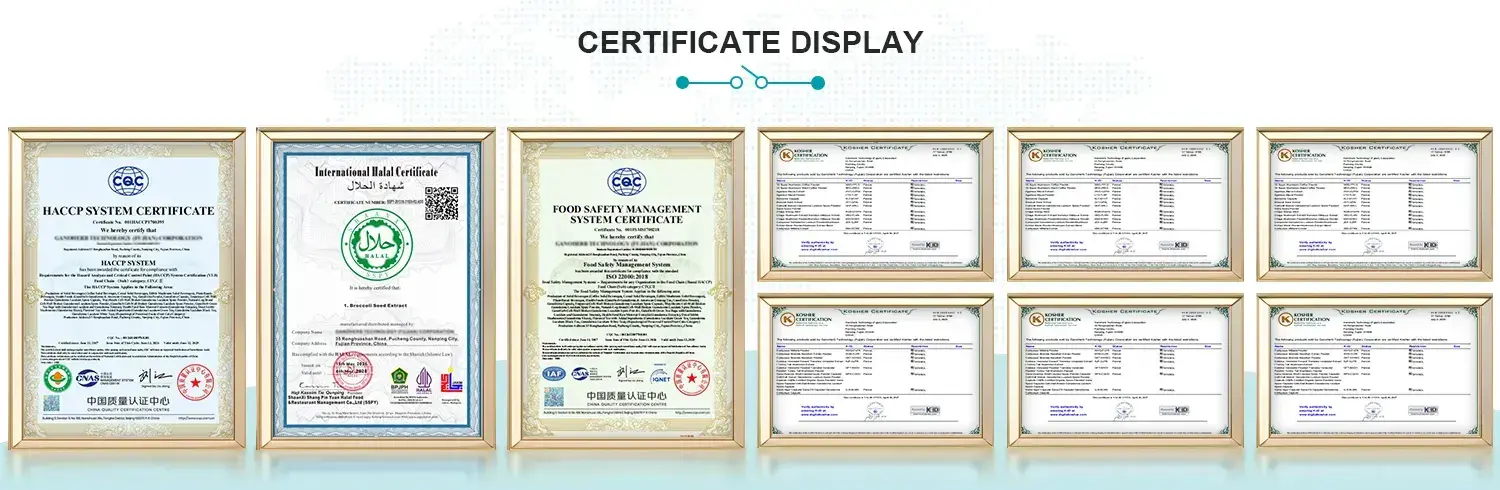
This is the Haematococcus pluvialis powder that we sell. It is fine and deep red. Astaxanthin is what makes it work. Our rates of ≥2%, ≥3%, ≥4%, ≥5%, and ≥6% can meet your needs. Each batch is checked with HPLC. The food can be kept for 24 months because the bacteria level is good enough. The item has stickers that say it comes from China and that it is FSSC22000, HACCP, HALAL, and Kosher. A steady 300 tons of goods are made every year, which is enough to fill big orders. There are ways to change the specs so that the customer gets what they want. Because the strengths are different, the formulator can match the rate of inclusion to the dosing equipment that is already in place. So, they don't have to change the process to fit the ingredient.
Purity and Full Traceability
There is a step at the beginning of the process that is only used to get ready for the next step. Plants grow in clean water that is pumped through glass lines that are tightly sealed. Up to 99% of the dried algae powder is just algae; nothing else has been added. Outside germs can't get into the sealed growth, which is important for food that animals eat. You can keep track of everything, from the seed to the finished product. Goodness is checked at every step. For the buying team, this record links any finished-feed question to a certain lot. For the purchasing team, this record enables traceability of any finished product issues to the corresponding batch. FuYNature specializes in functional plant extracts. Its R&D team is led by four PhDs. We can also conduct HPLC testing and provide technical support during audits.
Benefits and Use of Natural Astaxanthin in Premium Fish Feed
Pigmentation and Antioxidant Value
It is because of astaxanthin that people who buy salmon expect the meat to be a certain color. The color can be seen on the shells and skins of shrimp and certain fish. It also does a great job of fighting free radicals. From what I've read, this helps fish stay healthy. In business, color is still the most important thing. In order to be sure of performance, a controlled trial should be used. Results depend on the type of animal, its stage of life, the dose, how long it was fed, and what kind of food it was. Our powder is used to improve the color of the meat and body in salmon, house fish, and chicken feed. Brands that use algae from a known source can also say they care about the environment and have clean labels.
Choosing a Format for Your Process
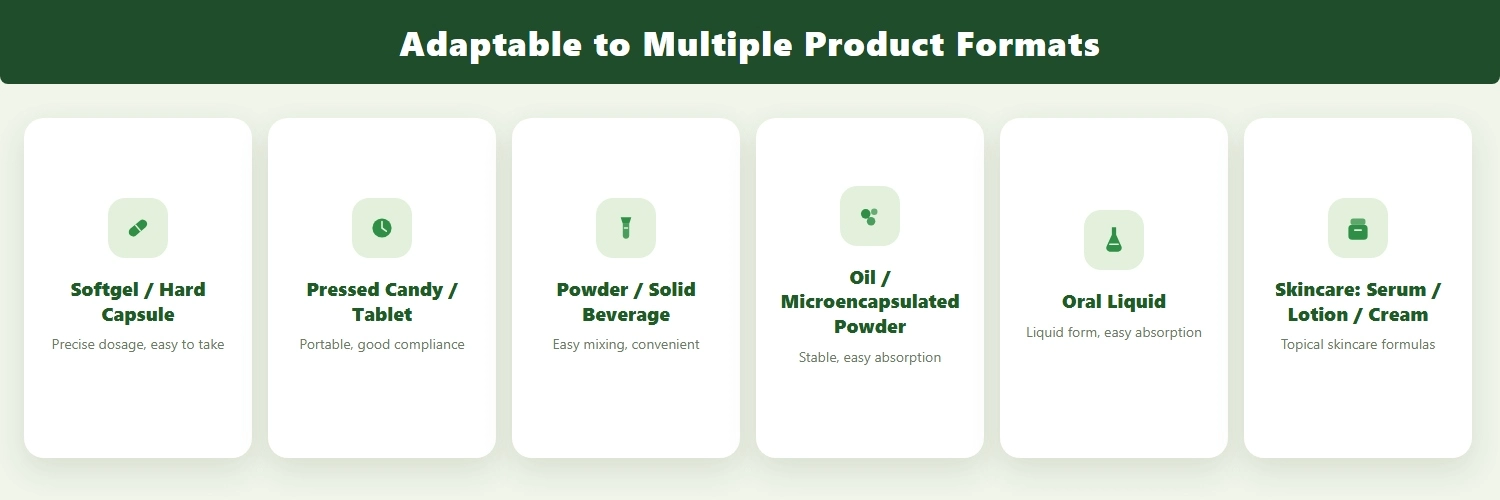
The style should match if you want to make a line. Plain powder can be mixed with a dry premix. Tools that coat or spray with oil and protect the color during tough steps might work well with shapes that dissolve in oil or are full of tiny bubbles. Since it is lipophilic, a product that says it is "water-soluble" should say more about what it really means, since it is more likely to be water-dispersible or mixed. Ask the service provider to show your company how to use the form. We can talk about how to use your tools and how much astaxanthin you want to use. It's also important how big the particles are. They don't have as many color spots when they're made because the fine particles mix better.
Dosage Math and Mixing
Number 3: It's easy to add things up for Haematococcus Pluvialis Astaxanthin Powder. Split the amount of astaxanthin that is needed in half to get the amount of powder that is needed. There is a 5% powder that adds 50 mg of astaxanthin to every kg of feed. To add this powder, you would need 1,000 mg, which is equal to 1 kg. This amount is just an example; it's not what you should use because it depends on the animal and the rules in the area. Think about how your tests make you lose mental strength. To make sure the mix is smooth, you should use a premix and HPLC. Also, make sure it works with other carotenoids, vitamins, minerals, binders, and oils. Test things out on a small scale first.
Stability, Solubility, and Storage Considerations
What Affects Astaxanthin Stability?
Heat, light, oxygen, water, time spent processing it, and room temperature are all things that break down astaxanthin. The color and strength of the pigment come from its long polyene chain, but it also makes it weak. If someone wants to buy feed, they should know the difference between stable raw materials and stable finished feed that has been rolled, pressed, dried, cleaned, and stored. Even if the powder goes through your line clean, the color doesn't always get through. Every time you do something, use HPLC to check the preservation and then compare it to the number you set. It tells you if you need to change the style, the order of the add-ins, or the step where you coat the mixture. It also tells you where you lose money.
Solubility vs. Dispersibility
Normal astaxanthin doesn't mix with water; it only disappears in fats. For things that break down in water, the small pieces need to be carried, emulsified, or encapsulated so they can mix with the liquid. There is a difference between that and solubility, and you can use it in different ways with water and spray types. Tell the seller if you want the materials to be dry mixed, oil-covered, or water-sprayed. Now put the sample into the real medium and check to see if the color changes, if there are rings, or if the sample settles. Don't believe a general statement because the outcome can be different depending on the particle size and carrier choice. You should instead ask for info that is specific to what you want to do. Often, a small test on a bench can stop a big problem in production before it costs too much to fix.
Storage and Shelf Life
Take the powder and put it in a jar with a lid. Keep it somewhere cool and dry, away from light and heat. For a long time, keep it below 4°C to keep the process going. So you can keep our product for 24 months, keep it in its original box with all of its parts. Inventory control based on "first-expired, first-out" (FEFO) and a light-proof box keep the items safe. Put the lid back on quickly once the package is open to keep air out. Test the older lots again before you use them. You should keep track of how long the raw materials are kept so that you know how long the colors stay in finished feed over their own shelf life.
Comparing Sources and Selecting a Supplier
Natural, Synthetic, and Krill Sources
Astaxanthin from Haematococcus pluvialis, or Haematococcus Pluvialis Astaxanthin Powder, is mostly the 3S,3'S stereoisomer, which is found as esters. Astaxanthin nanoparticles come in three different forms because they are made up of three different kinds of amino acids. Alaskan krill oil also has astaxanthin, but it's very small, and lipids cover it. When you compare them, it's not enough to just look at where they come from. It also checks how it smells, how it responds to different mixtures, how it affects the environment, how well officials accept it, and how stable its supply is. A lot of things are looked at. Do not try to figure out how much active astaxanthin costs per kilogram. Find the cost per unit instead. A dense Haematococcus Pluvialis Astaxanthin Powder has fewer carrier effects than a low-potency oil, which can help make feed that is more regular. This is because you only have to deal with small amounts.
Documents to Request from a Supplier
When you ask a good supplier who makes the goods, where they are made, how much they can make, how much experience they have exporting, and how long the lead times are, they won't lie. Don't just ask for the product specification, SDS, origin statement, allergy and non-GMO statements; also ask for a COA that is made just for that batch. Check that the licenses are real and that they are for the right product and site. Our powder has been signed off on by FSSC22000, HACCP, HALAL, and Kosher. When working on an OEM, ODM, or private-label project, make sure you ask about special labels, containers, and strengths. Business terms are also very important. Some of these are MOQ, Incoterms, freight, taxes, and payment terms. Folks who buy from us can choose the fastest way for their goods to get to them—by air or sea.
Quality-Control Checklist for Bulk Orders
When you buy a lot, the first thing you should do is look up the ingredient's name, see how well it works, and see how different batches can be. You can also include heavy metal limits, herbicide residues, moisture, bacteria, and heavy metals in your plan. Next, check the mixture in the lab and on a small scale to see how even it is, how well it keeps going after being handled, and how long it lasts. From making the drug to packing it up and sending it off at the end, the whole process should be able to be seen. Lastly, ask the company how they handle batches that don't meet standards, complaints, recalls, damaged packaging, shipping delays, and steps to fix the problem. In the US, the FDA is in charge of any color added to feed. Make sure you know what your species can do with them before you go big.
Development Plan, Common Mistakes, and Final Buying Guide
A Step-by-Step Development Plan
There is less technical and business danger when you have a well-thought-out plan. You must first choose the species you want to feed, the type of feed, the market segment, the claims you want to make about the product, and the annual volume. Next, choose what tools you have, how you want to use the powder, and how much you are willing to pay each time. After that, it is suggested to run tests on a small scale and in the lab to see how stable and active the coating or extrusion is. When the finished feed is being tested, its color, taste, physical quality, and ability to store can all be checked. Claims that have to follow the rules might need controlled studies. Set up tests, safety stock, requalification of the provider, and change control once the order has been accepted. The quantity will stay the same even if the amount goes up.
Common Buying and Usage Mistakes
Most people make the wrong choice when they only look at the price per kilogram. If the ingredient isn't stable or strong enough, the cost-in-use may go up. It may do this if it has a shorter shelf life, a higher rate of inclusion, or higher costs to handle. Something else that is wrong is thinking that natural birth means success. By looking at the raw material, you can't tell if the retention is still the same after it has been pressed, sealed, or stored. The last feed also needs to be checked. The COA, specs, tracking records, and contaminant data are just some of the things that people who buy need to see. Some people don't look at them, though. Finally, don't say that a feed ingredient will definitely heal you or make you healthy. Make sure that everything you say on feed follows the rules of that feed if you want to reach people there.
Final Buying Guide
Pick Haematococcus Pluvialis Astaxanthin Powder that fits your needs when it comes to rules, technology, business, and the supply chain. To dry blend, you need to think about the particles' size, how well they mix with the carrier, and how even the mix is. Lipids must be able to mix and stay steady after being pushed out in order to cover oil. Dispersion needs to be proven to work in water systems. You can rate each company on how well they do their job, how reliable their sources are, how stable their data is, how well they record their work, how much they can handle, how long you have to wait, how helpful their customer service is, and how easily you can change your order. You should always test samples first when you want to change carriers, providers, concentrations, or forms. Before you place a big order, you should be sure of something by getting pilot approval.
Conclusion
The color Haematococcus Pluvialis Astaxanthin Powder comes from nature and can be traced back to its source. However, the source of the color is not the only thing that changes the result. It doesn't matter what kind of particles are used or how they are mixed; they just need to be the right type, size, shape, and transport. To find out how much astaxanthin is left over after extrusion, covering, and storage, it is important to use HPLC. This is because heat, light, air, and water can all damage it. Keep the powder closed, cool, dry, and dark as well. A better way to compare natural, man-made, and krill sources of astaxanthin is to look at how much each contains. Because the molecules and concentrations in these sources are different, this is the case. It's safer to buy in bulk if there are supplier papers, batches that are always the same, and tests on samples with the species you want to buy.
FAQ
Can natural astaxanthin be used in salmon, trout, shrimp, and ornamental fish feed?
A lot of people hunt these animals. To find the right amount, start with tests that are unique to the species. This will depend on the animal, its stage of life, and the rules in the area.
What is the difference between 5% and 10% powder?
The amounts shown indicate how much astaxanthin is in it. For better results, use less powder per kilogram of feed. However, the best choice will depend on your mixing tools, how easy it is to transport, and how much it costs to use. Our standard range runs from ≥2% to ≥6%, and customized specifications are available.
Is astaxanthin powder water-soluble?
If it likes fat, it is lipophilic. There are some forms that don't stick to water, but you should test them in your own system first before you make them.
How should I store the powder?
Keep it somewhere cool, dry, and dark. It can be kept below 4°C for 24 months.
Request a Technical and Commercial Quote
Will you do a test run or a big order? FuYNature wants to know what species you want to target, how you want to feed them, how much you want to feed each year, how strong you want them to be, and where you want to sell their products. The email address for them is info@extrabroc.com. The thing we offer for sale is Haematococcus Pluvialis Astaxanthin Powder. We tell you about things, help you with HPLC, give you samples, prices with MOQ and lead time, and specs. Please go to extrabroc.com to learn more.
References
1. Frontiers in Plant Science, 2016 — "Astaxanthin-producing green microalga Haematococcus pluvialis: From single cell to high value commercial products" (Shah et al.)
2. Marine Drugs, 2014 — "Astaxanthin: Sources, Extraction, Stability, Biological Activities and Its Commercial Applications—A Review" (Ambati et al.)
3. Reviews in Aquaculture, 2018 — "Astaxanthin as feed supplement in aquatic animals" (Lim et al.)
4. Journal of Applied Ichthyology, 1995 — "Requirements for carotenoids in fish diets" (Torrissen and Christiansen)
5. National Academies Press, 2011 — "Nutrient Requirements of Fish and Shrimp" (National Research Council)
6. Fish Physiology and Biochemistry, 2024 — "Recent progress in practical applications of a potential carotenoid astaxanthin in aquaculture industry: a review" (Elbahnaswy and Elshopakey)