Sourcing Astaxanthin Powder for Aquafeed and Pet Food Manufacturers
The best way to source Haematococcus Pluvialis Astaxanthin Powder for aquafeed and pet food is to set a target astaxanthin percentage, confirm the HPLC assay on a batch COA, test samples in your own feed or food matrix, and verify certificates and production capacity before bulk orders. Compare cost per gram of active astaxanthin rather than price per kilogram. Check storage needs, shelf life, and traceability too. A supplier that shares clear specifications, supports pilot trials, and ships on a stable schedule helps you keep color and quality consistent from your first batch to your hundredth.
I wrote this guide for US feed mill buyers, premix producers, pet food factories, distributors, and OEM brands. It follows the order most procurement teams work in: understand the material, match it to your application, judge quality, vet suppliers, and run a structured approval.
What Is Haematococcus Pluvialis Astaxanthin Powder?
How Does the Microalga Make Natural Astaxanthin?
Haematococcus pluvialis is the name of a green microalga that lives in fresh water. When the body is under a lot of stress, like from too much light or not enough food, astaxanthin is kept in oil droplets. Its cells change from green ones that swim to red ones that rest. A lot of people who study this color say that this species is one of the best places to find it in nature. It means that fatty acids are connected to the astaxanthin molecule, which is what gives these cells their color. Most of the time, this type is found as the 3S, 3S pair. The cells are picked out and dried until they turn into a red powder. As the plants grow, you should keep an eye on them. Open ponds let dirt in, while closed systems let you see the finished product better.
Common Commercial Formats
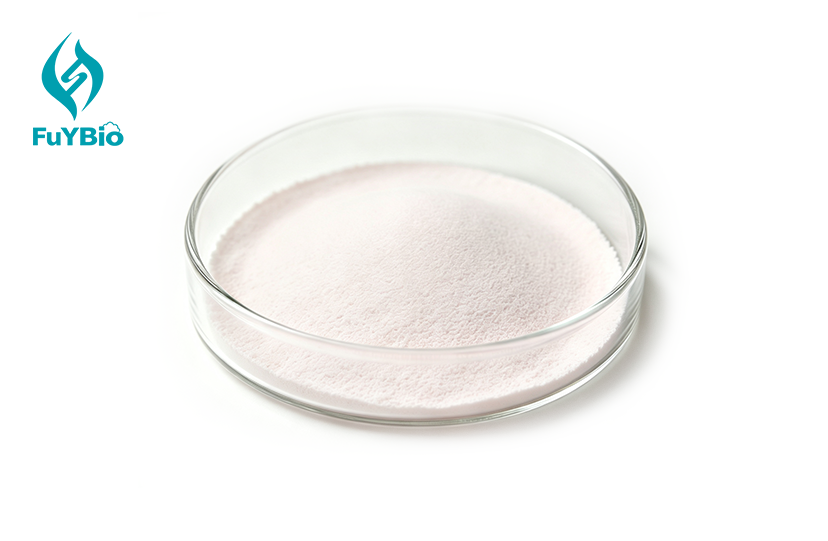
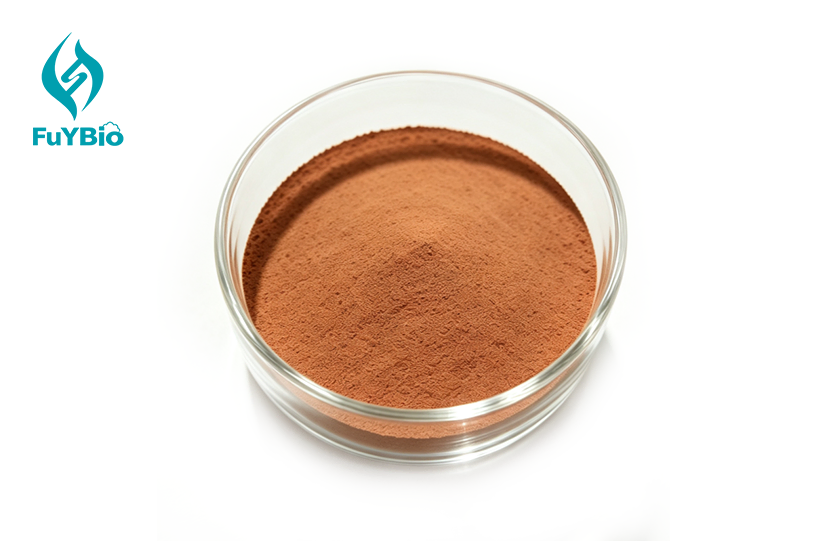
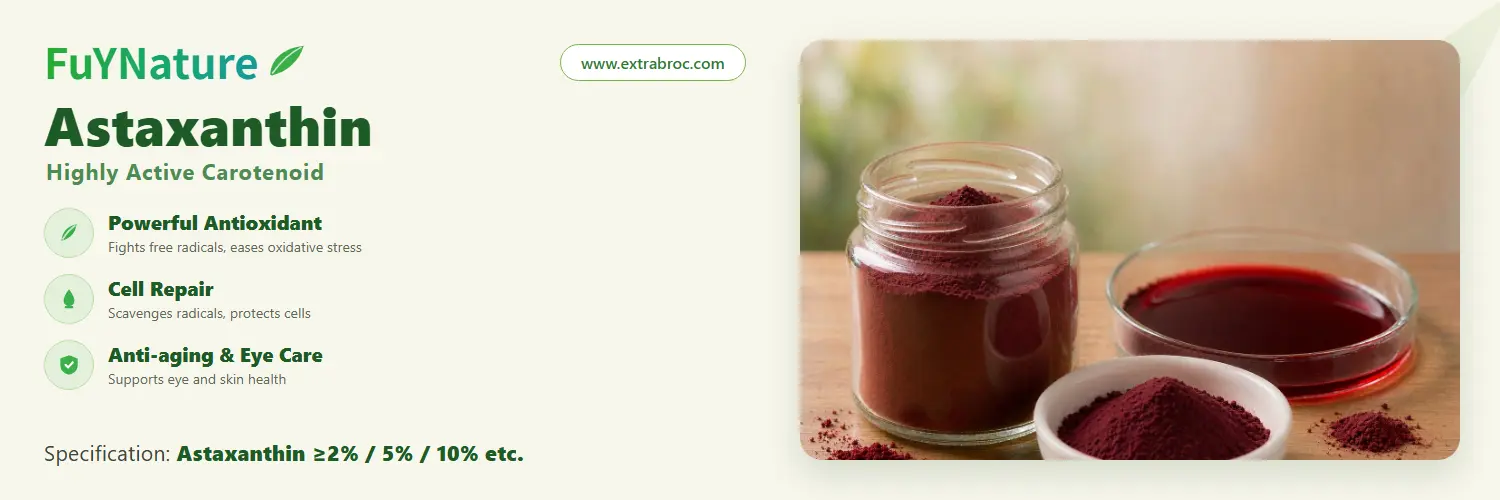
The best algae powder to use is the dried kind. There is a set amount of astaxanthin in each whole cell that has been dried and stacked. Oleoresin is made in a carrier oil that is good for coats made of fat; this oil breaks down the color. Powders and beads that are microencapsulated can be used with liquids to help protect the color in a matrix. Also important are systems that break down in water. Our fine red or dark red powder has at least 2%, 3%, 4%, 5%, or 6% astaxanthin. Astaxanthin comes in four different strengths: 2%, 3%, 5%, and 10%. The microencapsulated powder comes in two different strengths: 1% and 2%. You can check to see if these things are available. Once you know where the color will go, pick the style.
Natural Versus Synthetic Astaxanthin and Other Carotenoids
It comes from petroleum processes when it is made in a lab. There are three stereoisomers of it, and they are arranged about 1:2:1. Most of one kind of astaxanthin can be found in algae. As an antioxidant, astaxanthin from algae works better in the lab than what was found in a review that came out in 2013 in the journal Nutrafoods. Small amounts of astaxanthin are in krill oil, and it smells like the sea. It's not just lutein, canthaxanthin, and paprika oleoresin that give fish their color. They all change fish's color in different ways. But don't take their word for it. Find out what the active astaxanthin smells like, how stable it is, and how much a unit costs. It's also not always clear from the labels what natural and man-made sources are.
Key Applications in Aquafeed and Pet Food Manufacturing
Aquafeed for Salmon, Trout, Shrimp, and Ornamental Fish
Salmonids can't make astaxanthin on their own, so they have to get it from the food they eat. This is why people expect their meat to be pink-red. One study from 2018 in the journal Reviews in Aquaculture says that fish and crustaceans use astaxanthin. It changes color and, in some species, how well the animal can grow and handle stress. Astaxanthin makes fish and shrimp look better by making their bodies lighter. Based on what we know about the item, it can be fed to chickens, salmon, and ornamental fish. It's possible to mix the powder with something else, push it out as a pellet, or cover it after this. Make sure you know the rules where the things are going before you send them. In contrast, 21 CFR Part 73 of the US Code talks about astaxanthin color ingredients for salmonid feed, but each use is limited.
Dry and Wet Pet Food, Chews, and Supplements
Teams that make cat food add Haematococcus Pluvialis Astaxanthin Powder to kibble, wet food, soft chews, powders, and pills to make them higher in antioxidants. Animal tests with dogs and cats have looked at astaxanthin and how cells work. That kind of study came out in 2013 in the Journal of Animal Science on healthy dogs. In that study, things were learned that don't say that health claims are true. If it's okay with the FDA and AAFCO, only say what the food is good for you. Don't use words that make you sick. High-end pet food and vitamins have good things in them that we talk about in our report. Most of the time, it is used to coat or mix food with fat. It is mixed into the dough for chews. Talk to someone who works with regulations about how the item fits into the product you're making.
Compatibility With Fats, Binders, and Heat
Because it is made up of a long chain of double bonds, astaxanthin has color and is a strong antioxidant. The same chain can be changed by light, oxygen, and heat. You should try the powder with fats, minerals, vitamins, emulsifiers, and binders in real life. Some premixes may rust faster if you add small amounts of iron and copper to them. Before you make it bigger, check the mix. Do not believe that the astaxanthin level stays the same after extrusion. Instead, check it both before and after the process. Powder that sticks together leaves spots of color on the coil lines. Make a note of the particle size, mixing time, and storage conditions for each test. This makes it fair to compare one batch to another.
How to Evaluate Quality and Choose the Right Format?
Reading the COA and Potency Data
Check the certificate of analysis to see if something is good. For the test, make sure that HPLC is used. This way sorts the different kinds of astaxanthin into their own groups and gives a clear number for the total amount of astaxanthin. This number tells you how much astaxanthin was used and what level of moisture the lab used. What it takes to make a 6% powder is less stuff than what it takes to make a 5% powder. This means that less stuff needs to be moved and shipped for every gram of activity. Two stickers that come with a package should have the same batch number, test date, and lab name. The free vs. esterified split and the isomer profile are what you need to back up what you say. Because of this, you should ask each supplier how they treat the cell walls so that the animals can use the color well.
Stability, Storage, and Contaminant Controls
Light, air, heat, and water can all break it down. If you keep our powder sealed, dry, out of the light, and below 4°C, it will last for 24 months. After opening a bag, quickly close it again and put it back in cold storage. In our proposal, we say that microbiology meets the needs. Ask each seller at the market you're going to about heavy metals, pesticide residue, extra solvents, and mycotoxins. Then tell us what you need, and we'll make sure it gets recorded. Make sure you have written claims about allergens and GMOs. The COA should never say that something "meets standards" if it doesn't list any limits or values that were checked.
Matching Format to Your Process Through Pilot Testing
Each powder is different because of the plants used, the way it is made, the amount that is made each year, and the rules of the market. First, write down what you want to buy. Include the astaxanthin amount, the carrier, the particle size, the moisture, the shelf life, the package, and the paperwork. It works well with premixes, mash, dry powder, oil forms, and water-dispersible forms. It doesn't always mean that something that dissolves in water is better; it just helps with some things. Then do a test run with your real feed, premix, or wet food grid. You should write down things like dependability, efficiency, process fit, paperwork, lead time, and total cost when you compare things. You can tell if the results were good or bad by the consistency of the color, the smell, the amount of astaxanthin that is still there, and the flow through your equipment.
Supplier Due Diligence, Pricing, and Sourcing Risks
Documents to Request From Every Supplier
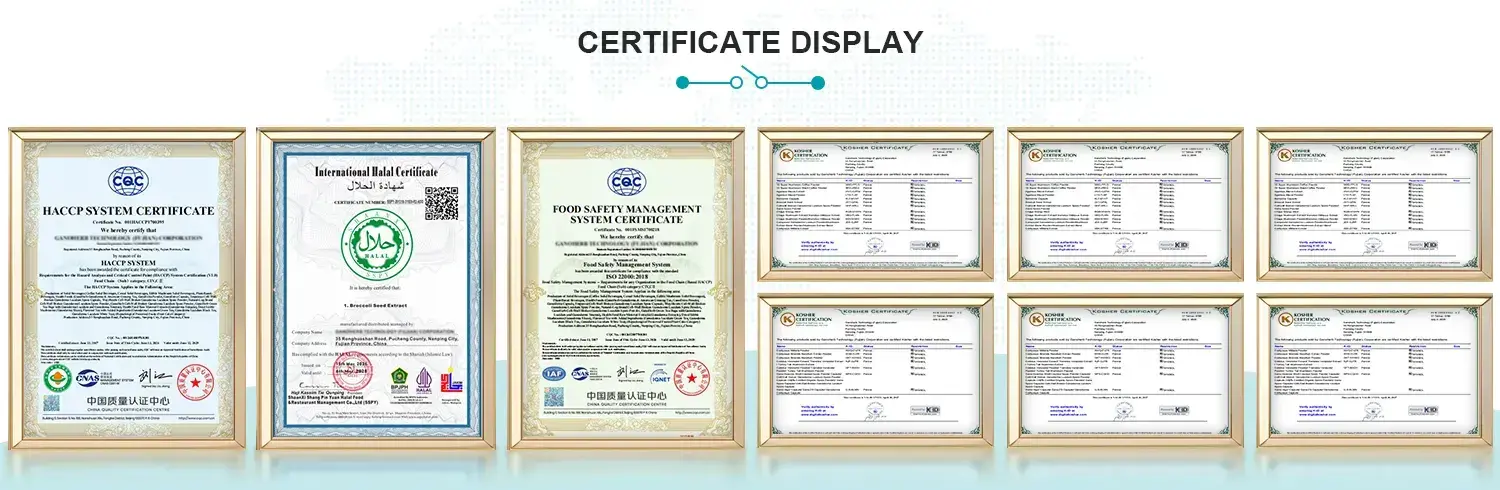
Ask for a specification sheet, a sample COA, an SDS, allergy and non-GMO statements, records of origin, and certificates that are up to date. All of these names are written on our powder: Kosher, FSSC22000, HACCP, and HALAL. Before signing a certificate, I think you should check it with the company itself. To get a certificate, I need to know which site grows, dries, packs, and tests the stuff. You can find out about tracking, change control, batch release, how to handle complaints, and how to return items. Not just the seed, but the whole process is well taken care of by us. How much does the minimum order quantity (MOQ) cost? What is the private label packaging like? Can you help OEM and distributor customers?
Pricing Based on Active Astaxanthin
It can be hard to tell that each gram of astaxanthin costs more when the price per kilogram of Haematococcus Pluvialis Astaxanthin Powder is low. How much does one gram of astaxanthin cost? Just divide the price by the amount of astaxanthin. In 1000 grams of 5% powder, there are 50 grams of astaxanthin. In 1000 grams of 3% powder, there are 30 grams. Even though they are the same weight, the 5% powder costs 40% less per gram of active than the other one. Then add the cost of shipping, insurance, import taxes, storage, payment terms, and any losses that you think will happen while the goods are being processed. Ask each price to list the Incoterm, like EXW, FOB, CIF, or DDP, along with the lead time for production and the time for samples. We can ship or fly freight, and with one-year plans, buyers can stick to their budgets and lower their yearly risk.
Common Sourcing Risks and How to Avoid Them
Four places are where buyers often go wrong. They mix the astaxanthin amount with the algae biomass, also known as the carrier percentage. They choose something that doesn't fit with how they work. Forms that aren't fully filled out will still be taken. When feed has already been worked on, dried, covered, and moved, they don't test it; only new powder comes in. To avoid these, make sure you check the carrier makeup, test base, and COA batch number before you look at the prices. Then, find out how much astaxanthin was still in the finished product after it had gone bad. In the US, it is illegal to say that your feed is natural, non-GMO, or organic without following specific rules. Make sure you know the rules about these claims before you go live.
A Practical Workflow and What FuYNature Offers
A Five-Step Procurement Workflow
Having a well-thought-out plan is safer when it comes to business, technology, and rules. Write down the details, such as where it came from, how much it weighs, how it was shipped, the particle size, the amount, how wet it is, the microbiological limits, how long it will last, how it was packed, the papers used, the amount, and the delivery terms. Next, make a short list of suppliers. After that, ask for samples and look at their tech files. Third, test the item in a lab to see how it looks, feels, and works. Fourth, test the product on a smaller scale in settings similar to those used in production. This will help you make sure that it is stable and spread out evenly. Fifth, write down what needs to be approved, how to handle problems, how to let the seller know about changes, the minimum order number (MOQ), payment terms, wait time, and how to keep track of each batch.
FuYNature Haematococcus Pluvialis Powder Specifications
These things about our goods are the most important. They will help your team see how they match up with your buying sheet.
- Product profile: Haematococcus Pluvialis Astaxanthin Powder is a fine, red or dark red powder made in China from Haematococcus pluvialis algae. The part that is used is astaxanthin, with normal ranges at ≥2%, ≥3%, ≥4%, ≥5%, and ≥6% checked by HPLC. Microbiology meets standards, and the item can be kept for 24 months.
- Process and certification: Algae grow in clean water in glass pipes that are tightly sealed. The dried algae powder is up to 99% clean when nothing else is added. From the seed to the finished product, every part of each batch is checked for quality. This item has been certified as FSSC22000, HACCP, HALAL, and Kosher.
Supply Capacity, Service, and Support
You can count on us to make 300 tons of goods every year. Please let us know if you want to ship by sea or air.FuYNature is backed by an R&D team led by PhD-level experts with 13 years of deep experience in the field of functional nutrition. We can tailor product specifications to precisely meet your specific requirements. Furthermore, we offer technical collaboration, formulation optimization, and combination recommendations, alongside support for High-Performance Liquid Chromatography (HPLC) testing and analysis. We also encourage you to review relevant pilot-scale production permits and conduct your own independent verification tests—we are fully prepared to support and cooperate with you in these processes.
Conclusion
Before buying Haematococcus Pluvialis Astaxanthin Powder for fish food or pet food, people should think about how strong it is, how stable it is, how much they need, and how much they can supply. Natural astaxanthin from algae has a different isomer structure than man-made astaxanthin because it comes from a different source. It's used to color salmonids, shrimp, and ornamental fish. It's also good for pets. You can use the price per gram of active astaxanthin instead of the price per kilogram to compare a product to others if it has a COA with an HPLC test, a clear moisture base, and batch information. Light, air, heat, and water can all break down feed, so there are rules about how it can be stored and tested to keep its effectiveness high. A standard can be used over and over again after it has been tested in the real matrix and its licenses have been tracked and checked.
FAQ
Is 5% or 6% astaxanthin powder better for feed?
In the end, both lose. Being able to work with less powder can be helpful when there is more active astaxanthin in a gram. As you look at your grid, compare how much the active and test spread cost per gram.
Is water-dispersible powder always better than oil-soluble?
No. Forms that break down in water work best for liquids and wet jobs. Forms that break down in oil work best for coatings that are made of fat. Your method should work with the form.
How should I store the powder?
Close it up, keep it dry, and keep it away from light. If you keep our powder below 4°C, it will last for 24 months.
What should a COA show?
Find out about the HPLC test, the microbiology, the batch number, the amount of moisture, and more.
Request a Sample and Bulk Quote for Haematococcus Pluvialis Astaxanthin Powder from FuYNature
Are you ready to check out some other specs? At FuYNature, we have 300 tons of Haematococcus Pluvialis Astaxanthin Powder in stock. This is what we test with HPLC, and we have proof from FSSC22000, HACCP, HALAL, and Kosher. You should email info@extrabroc.com with the name of the species you want to study, how much astaxanthin you need, how much you want, and where you want the product sent. We'll give you a quote and a sample plan when we get back to you. You can find out more about our business that sells Haematococcus Pluvialis Astaxanthin Powder at extrabroc.com.
References
1. Ambati RR et al., Astaxanthin: Sources, Extraction, Stability, Biological Activities and Its Commercial Applications—A Review, Marine Drugs, 2014
2. Shah MMR et al., Astaxanthin-Producing Green Microalga Haematococcus pluvialis: From Single Cell to High Value Commercial Products, Frontiers in Plant Science, 2016
3. Lim KC et al., Astaxanthin as Feed Supplement in Aquatic Animals, Reviews in Aquaculture, 2018
4. Capelli B, Bagchi D, Cysewski GR, Synthetic Astaxanthin Is Significantly Inferior to Algal-Based Astaxanthin as an Antioxidant and May Not Be Suitable as a Human Nutraceutical Supplement, Nutrafoods, 2013
5. Park JS et al., Astaxanthin Modulates Age-Associated Mitochondrial Dysfunction in Healthy Dogs, Journal of Animal Science, 2013
6. U.S. Food and Drug Administration, Code of Federal Regulations Title 21, Part 73: Listing of Color Additives Exempt From Certification, 2023