Astaxanthin Oleoresin Bulk Buying: Color, Assay and Batch Consistency
Astaxanthin Oleoresin bulk buying works best when you judge three things together: color, assay, and batch consistency. Color gives a quick visual check, but it cannot confirm astaxanthin content. The assay, measured by HPLC, tells you how much active ingredient each kilogram holds. Batch consistency shows whether the next shipment will match the lot you approved. When all three agree on paper and in your own trials, you protect your formula, your label, and your production schedule. Natural astaxanthin from Haematococcus pluvialis is the focus here. This guide explains how I would evaluate each point before placing a large order.
The sections below cover product identity, quality criteria, stability, documentation, and cost. I use Haematococcus pluvialis extract as a practical example throughout.
What Is Astaxanthin Oleoresin?
Definition and Natural Source
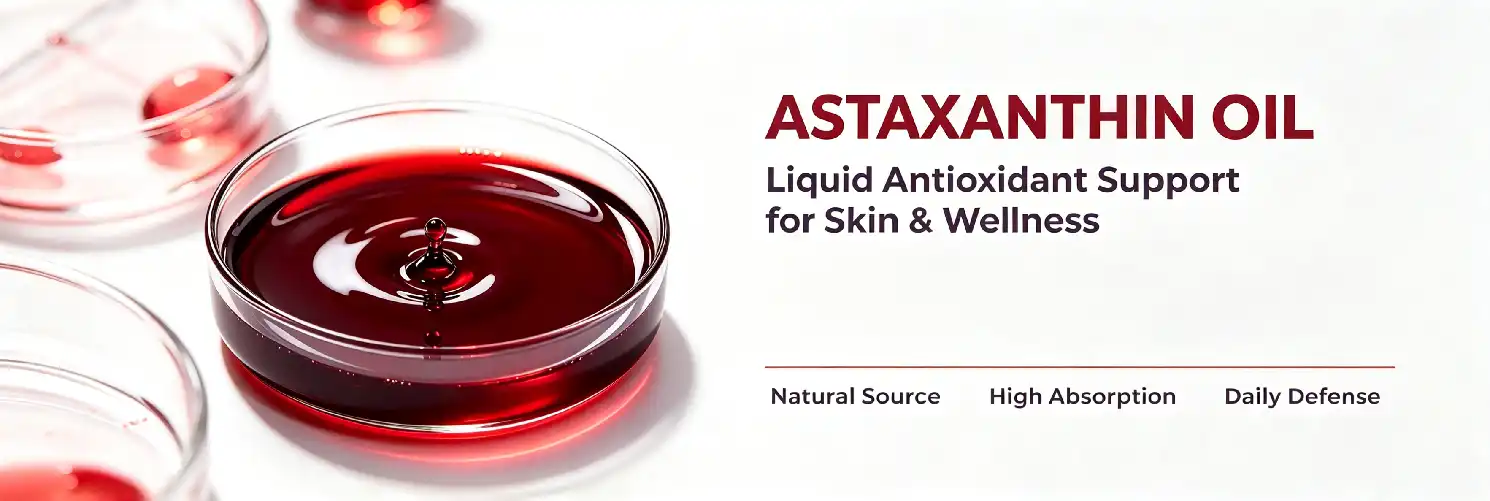
Astaxanthin Oleoresin is a dense substance that brings astaxanthin and lipids from its source because it is made of oil. The main source that comes from nature is the microalga Haematococcus pluvialis. When its cells are under a lot of stress, it stores astaxanthin. Astaxanthin is mostly found in this plant as esters, and its natural form is (3S,3'S). Astaxanthin made in a lab is made up of three different types that are mixed together in a 1:2:1 ratio. The carrier oil, how it is extracted, and the amount all affect the color, smell, viscosity, and reaction stability. For this reason, two items with the same name might not work at all the same way as a softgel fill or a makeup base.
How the Raw Material Is Made
The process of making it includes growing algae, gathering it, drying it, breaking down the cell walls, extracting it, concentrating it, making it uniform, and testing it. When the algae's tough cell wall is broken, the astaxanthin is released. For the production of FuYNature, algae are grown in glass pipes that are sealed and filled with clean water. Through our unique pre-treatment method, the cell walls of the dried algae powder are broken. This doesn't add anything else. It turns into a dark red oil that is very pure, runs easily, and doesn't leave behind much solution. You do not need to know private information, and you also need to know what steps change purity, solvent levels, and tracking.
Oil, Powder, and Synthetic Options
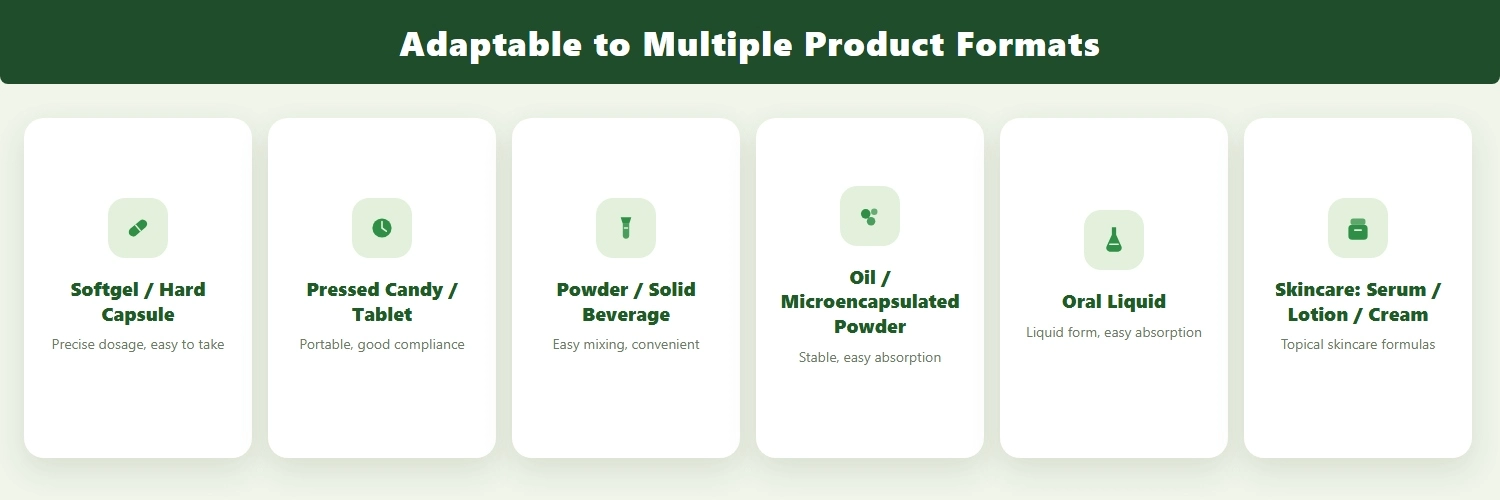
Format is what makes it possible to act. When mixed with lipids, Astaxanthin Oleoresin oil works well in many skin care items, softgels, and vitamins that are based on oil. When you mix microencapsulated powder with water, you can use it to make pills, hard sweets, and solid drinks. FuYNature has oil that is 2%, 3%, 5%, and 10%. They also have microencapsulated powders that are 1% and 2%. You can get manufactured astaxanthin from a number of different places, and the names of the products you buy don't always match up. Check out the paperwork, assay, and carrier. To get a good idea of the deals, divide the price per kilogram by the astaxanthin percentage. A 10% oil that costs twice as much as a 5% oil has the same amount of active that costs the same per gram.
The Three Core Buying Criteria: Color, Assay, and Batch Consistency
Color: A Useful Check, Not a Verdict
What does good Astaxanthin Oleoresin look like? It's a dark red oil that is smooth and shiny and doesn't have any sediment, particles in suspension, or phase separation. The next time you judge a color, use the same light and save a piece to put next to it. Oxidation can cause things to smell bad, fade, or turn brown. Even so, just because something is darker doesn't mean it has more astaxanthin. Adding different dyes, carrier oils, and different layers of color can change how the color looks. Color can be used to quickly sort new lots, and then lab data can decide if they should be added or not. Lots that aren't right or are split up should be looked at again before they are made.
Assay: Ask How the Number Was Measured
The test tells you how much to take, so know how the answer was found. HPLC is used to check for astaxanthin in FuYNature. This method takes astaxanthin out of the oil along with other acids. If you want to be sure that the COA is true, check the base, which could be astaxanthin. By law, there must be at least 5% astaxanthin and no more than 10%. At least 70% to 85% of the all-trans isomer can be set, and at least 15% or 20% of the content can be changed. Want more than one value? Find a range and get written proof that each batch is in that range. Without that range, a quote can only show the best case.
Batch Consistency Across Shipments
Batch consistency means that the tenth drum works the same way as the first. Assay, color, viscosity, carrier oil, moisture, and isomer profile changes from one lot to the next should be written down. The deal you sign when you buy something should also include accepted ranges. You should keep a sample from the accepted lot as a guide and compare it to each delivery. Process control can help you reach this goal. Astaxanthin from FuYNature comes from a mature and stable process that keeps an eye on quality the whole way through and lets you follow it from the seed to the finished product. They can handle both large orders and repeat purchases because they can produce 100 tons of goods every year. This means that your later lots come from the same production system.
Astaxanthin Oleoresin Stability, Solubility, and Storage
What Damages Astaxanthin
Astaxanthin is made up of a long chain of double bonds that are joined together. When air, light, or heat hit it, the structure changes. There is a lot of stress because of things like metal ions, moisture, opening and closing objects many times, and changes in temperature. Bad smells, sediment, changes in viscosity, and a falling test are all signs that something is wrong. Do not believe what the seller says about the chemical in general terms. Instead, ask for information about how stable the product is. Also, ask what the peroxide value is for each lot, since the color can also be damaged by oxidation in the carrier oil. All of these checks help you find problems before the oil fills up.
Oil Solubility and Water Dispersibility
It mixes with other fats and oils, but not with water. Because of this, it works well with creams, softgels, and oil mixes. Being able to mix microencapsulated powder with water makes it the best choice for making pills or stick-pack drinks. Just because you did well in the lab doesn't mean you'll do well in your own matrix. Check it out with your real base, emulsion, or carrier oil. Watch for color shifts, separations, and changes in the test as time goes on. Test a small amount first instead of making a whole batch that doesn't work. You can match the times of the results to lots that came after them if you write them down.
Storage, Shelf Life, and Packaging
Put the oil in a cool, dry place with a lid that is out of the way of light and heat. Keep it below 4°C to keep it for a long time. If you keep the item in its original, sealed packaging for 24 months, it will stay fresh. When you open something, quickly close it again, use smaller containers, or flush it with nitrogen, which is a common step for oils that are sensitive to oxygen. This will keep air from getting in. Choose paper bags that won't break easily in light, and learn which pack sizes work best for both small and large production. Keep track of the times that stores open so that the oldest items are sold first. Taking good care of your test will keep it safe.
COA, Testing, and Certification Requirements
Read the COA Line by Line
This proof of analysis for a certain batch is not the same as a general specification sheet. The COA should have the lot number, the date it was made, the test methods, the specification limits, the actual results, and quality control's sign-off. The number on the drum sticker should match the number on the lot. Not only is the HPLC test for astaxanthin important, but the other information is too. Ask for a COA from a recent lot and compare it to the specs that were given before you buy. Astaxanthin levels of at least 5% or 10%, HPLC testing, a shelf life of 24 months, and bacteria that meets standards are all part of the FuYNature definition. The color should be like dark red oil.
Tests Worth Requesting
Along with the test, you should request proof of identity, a carotenoid profile, microbiology, heavy metals, residual solvents, and oxidation tests such as the peroxide value. Microbiology tests make sure that your end product is safe, and heavy metal and liquid tests help your file with the government. A small amount of solvent is left over after our extraction method, and microbiology meets standards. To follow FDA's 21 CFR Part 111 for the US market, companies that make dietary supplements need to set standards for their ingredients and show that they are who they say they are. Getting information from providers about tests can help you do this. You should ask for any extra tests early on because they could change how long you have to wait. Figure out who will pay for each test.
Certifications and Traceability
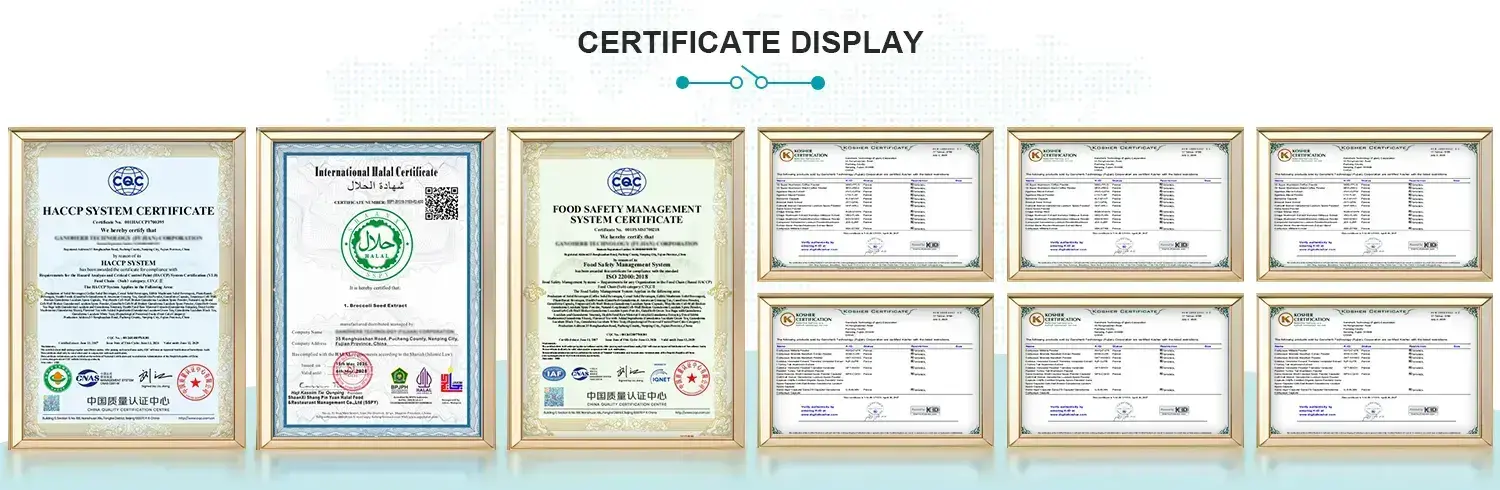
Haematococcus pluvialis extract is certified as kosher, FSSC22000, HACCP, and HALAL. There are processes in place to make sure food is safe and religion labels are clear on the market. Make sure that all of the tickets cover the same things by looking at the site name, the product it covers, and the date they expire. You should also find out what the rules are in your area before you bring the ingredient in or sell it. These rules are different for each country and type of goods. Having faith in something gives you even more hope. Our system checks the quality of everything from the seed to the finished item. In other words, output records can help you solve a lot of issues. Keep copies of all the papers in your source file.
A Practical Astaxanthin Oleoresin Bulk Buying Plan
Turn Your Application into a Specification
Start with what you want to achieve. Most softgels need Astaxanthin Oleoresin oil, but pills, candy that has been crushed, and drinks that come on a stick also work well with microencapsulated powder. With either form, it can be added to serums, creams, and masks for skin care. It can also be added to salmon, ornamental fish, and chicken feed to help their bodies color. Next, set goals for the test, the carrier, the color, the ability to mix, the awards, the packing, and other things. Choose the level of difference that you are okay with for test, color, thickness, microbiology, and fill weight before you ask for prices. When you make claims, follow the rules. Labels on beauty products must follow the rules for beauty labels, and labels on food supplements must not say they can cure diseases. Make sure that the brief has these limits.
Test Samples, Then Compare Suppliers
Get a normal amount and test it yourself. Look over the test, use your formula in a practice run, and save a sample from the approved batch. Before you choose one, you should ask all of them the same questions. These include where they get their materials, where they make their products, what kinds of tests they can do, how they do them, their current COA, their minimum order quantity, how they package their products, whether they offer OEM support, and more. FuYNature is backed by 54 filed invention patents and an R&D team led by four PhDs. We deliver customized ingredient solutions. Share your requirements, and we will develop targeted specifications, support HPLC testing, and arrange shipment by air or sea.
Price, MOQ, and Common Risks
It can be hard to understand the price per kilogram. First, find out how much a gram of active Astaxanthin Oleoresin costs. Then, add up the costs of tests, shipping, taxes, and how you'll pay. Make a separate MOQ plan for standard, customized, and private-label grades, and be sure you know how long the lead time will be. Some examples of hidden costs are new tests, re-mixing, oxidation losses, material that is thrown away, and production delays. It's easy to make mistakes when you only look at the color, take a general specification instead of a lot of COA, skip compatibility tests, or not be careful when you store the oil. It's not always best to pick the thing that costs the least. With the right product, you can meet your product, legal, quality, and supply goals.
Conclusion
You need more than one number on the quote when you buy a lot of Astaxanthin Oleoresin. Color lets you quickly check the screen, but HPLC research is the only way to be sure of the active ingredient. This check makes sure that the outcome is the same for every batch. Based on the use, oil is used for softgels and products that are based on lipids, while microencapsulated powder is used for products that are based on solids or water. Keep the color away from air, light, and heat to keep it fixed. So, pack and store things with just as much care as you pay for specs. There is proof in the form of a COA that is specific to the batch, valid certificates, and helpful test results. Test samples show how well the item really does work. If you want to compare prices, you should look at how much active Astaxanthin Oleoresin costs per gram instead of price per kilogram.
FAQ
Does a darker red color mean more astaxanthin?
Not all the time. The color doesn't really show what the oil looks like because the dyes and carrier oil change the color. You should use both an HPLC test and a batch COA to find the active ingredient.
Which astaxanthin levels does FuYNature offer?
Standard Haematococcus pluvialis extract oil has at least 5 to 10 percent astaxanthin in it. At least 70% of the all-trans isomer can be changed to 85%, and at least 15% or 20% of the content can be changed. Ask for the grade that fits your formula.
How should I store the oil?
Keep it closed, cool, dry, out of the light, and away from heat and light if you can. One thing can stay on the shelf for 24 months if it's still in its original, sealed box.
What documents should I request before ordering?
Bring the HPLC results, the specification sheet, and valid FSSC22000, HACCP, HALAL, and Kosher licenses with you when you ask for the COA. It should be unique to the batch you want. Check to make sure that the scope and expiry date of each certificate are right.
Request Astaxanthin Oleoresin Samples from FuYNature
Are you ready to look at Astaxanthin Oleoresin samples and specs side by side? Haematococcus pluvialis extract is available from FuYNature in grades of 5% and 10%. This company offers a wide range of options and can process up to 100 tons of material each year. Feel free to email info@extrabroc.com or visit extrabroc.com to find an Astaxanthin Oleoresin provider that can give you FSSC22000, HACCP, HALAL, and Kosher papers along with HPLC data. Just let us know what kind of test, format, and amount you need, and we'll send you a proposal that fits.
References
1. Marine Drugs (2014). Ambati, R. R., et al. "Astaxanthin: Sources, Extraction, Stability, Biological Activities and Its Commercial Applications—A Review."
2. Frontiers in Plant Science (2016). Shah, M. M. R., et al. "Astaxanthin-Producing Green Microalga Haematococcus pluvialis: From Single Cell to High Value Commercial Products."
3. Nutrafoods (2013). Capelli, B., Bagchi, D., and Cysewski, G. R. "Synthetic Astaxanthin Is Significantly Inferior to Algal-Based Astaxanthin as an Antioxidant and May Not Be Suitable as a Human Nutraceutical Supplement."
4. Critical Reviews in Food Science and Nutrition (2006). Higuera-Ciapara, I., Félix-Valenzuela, L., and Goycoolea, F. M. "Astaxanthin: A Review of Its Chemistry and Applications."
5. Code of Federal Regulations, Title 21, Part 111 (2007). U.S. Food and Drug Administration. "Current Good Manufacturing Practice in Manufacturing, Packaging, Labeling, or Holding Operations for Dietary Supplements."
6. Phytotherapy Research (2019). Brendler, T., and Williamson, E. M. "Astaxanthin: How Much Is Too Much? A Safety Review."