Astaxanthin Oleoresin for Oil-Based Softgel Formulations
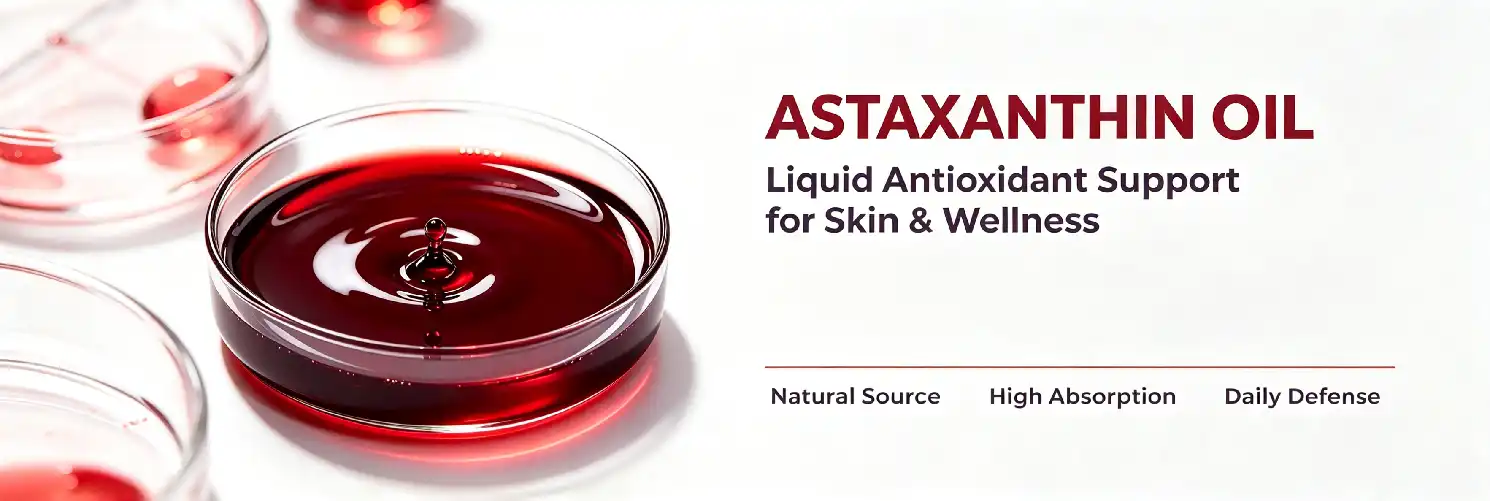
Astaxanthin oleoresin works well in oil-based softgel formulations because it mixes into lipid fills, so you can dose a fat-soluble carotenoid in a format that suits the capsule. Good results come from matching the oleoresin grade to the fill, then proving it in a pilot batch. Success rests on four checks: a verified astaxanthin percentage, carrier-oil compatibility, protection from oxygen, light, and heat, and complete batch documents. In this guide, I walk through formulation steps, stability, quality testing, and sourcing. I also share the specifications of our Haematococcus pluvialis extract, a dark red astaxanthin oil offered at 5% and 10%.
What Is Astaxanthin Oleoresin and Why Does It Suit Softgels?
Astaxanthin Oleoresin Defined
Astaxanthin Oleoresin is a strong mix of carotenes that is made up of astaxanthin that has been dissolved in a base like oil. This makes it easy to handle, measure, and spread the medicine through a softgel fill. It is a xanthophyll that gives plants their color. It breaks down in fat but not in water. Most people are aware that astaxanthin comes from the Haematococcus pluvialis microalgae. Astaxanthin can make up to 4% of the dry weight of this algae, according to some reports. The fact that a product is an antioxidant doesn't mean it can make a health claim that the FDA will allow. People who want to buy something should find out right away what it is, where it comes from, how concentrated it is, how it was tested, and if it is right for the market.
Why Oil-Based Softgels Fit This Format
You can add things to softgels that don't break down in water and they will spread out on their own. Some carriers that might work are MCT, olive, sunflower, or algae oil. However, you need to test each pair to see how well they mix. Carotenoids are also taken in better when eaten with fat, which is good for the lipid matrix. If you use a stronger oil, like a 10% grade, there may be less powerful stuff in each pill. This could make room for fish oil, lutein, or zeaxanthin, among other things. Feel, look, and smell of oil-based fillers aren't enough to tell if they will work in your fill, but these things can still help you decide. You should test these traits right away because they will tell you everything else.
Astaxanthin Oleoresin Compared with Other Formats
Based on how much you want to take, choose the style. Things that are oil-based go right into softgel fills. It works great for drinks on a stick, pills, and food that needs to be pressed down. You can use these with our 1% and 2% microencapsulated powders. Also, goods made by people and those made by nature are different. When it comes from algae, it's mostly the 3S,3'S form. But when it is made in a lab, the three stereoisomers are mixed 1:2:1. This means that the item is sold somewhere else and has a different name. This is because words like "oleoresin" and "astaxanthin oil" can mean different kinds of carrier systems. Find out about the assay base, carrier oil, stabilizers, and active dose on the data sheet. One more test needs to be done on all of the forms to make sure they work with water-based drinks and items.
Astaxanthin Oleoresin Formulation Process for Oil-Based Softgels
Set Your Targets Before Trials
Before you go to court, fill out a form. What does the package look like? How long does it last? How many pills are in it? How much astaxanthin is in each one? Where can I buy this product? Next, don't use the name to check the oleoresin. Instead, use a test that has been shown to work. You can talk about amount in a number of ways, such as oleoresin percentage, active astaxanthin, and so on. Each one grows at a different rate. At 10%, a pill that needs a certain amount of astaxanthin only needs half as much stuff as it does at 5%. It changes how much it costs, how much space it needs, and how it can be put together. What you know about safety and the rules for FDA warnings should help you decide how much to take.
Control the Oil Phase
The oil step is what makes the batter thick. Heat, light, and air can break down astaxanthin, so you need to keep an eye on the flow, the temperature, the amount of light and oxygen, and the order in which the colors are mixed. Do this with some of the carrier oil first, then add it to the main batch. Then add it slowly while stirring. As the pilot tests go on, keep an eye on the color, sedimentation, viscosity, fill weight, and how evenly distributed the active ingredient is. A good sign is a clear fill that doesn't have any junk in it. You can do each setting again when you're ready to make things if you write it down. It's easy to mix our Haematococcus pluvialis extract because it's smooth and doesn't have any flaws, silt, or phase separation.
Common Mistakes to Avoid
Production mistakes can increase costs, delay delivery, and create unnecessary quality risks when sourcing and formulating Astaxanthin Oleoresin. One common mistake is comparing different grades based only on product names or quoted prices without verifying their specifications and test results. Buyers should also check each batch for leakage, phase separation, and color changes rather than assuming that the carrier oil will guarantee product stability. When purchasing Astaxanthin Oleoresin, a general letter of compliance may not provide sufficient evidence of batch quality, so request a batch-specific certificate of analysis (COA) and relevant stability data. Shipping temperatures, exposure to light, and warehouse storage conditions should also be considered because they may affect product quality. Another important step is conducting a pilot-scale trial before moving into full-scale production. The mixing, deaeration, and encapsulation processes can behave differently at commercial production volumes, so the performance of Astaxanthin Oleoresin should be evaluated under conditions that closely reflect the intended manufacturing process. During the trial, assess fill consistency, capsule shell compatibility, seal integrity, and moisture migration to identify potential problems early. For reliable results, establish clear acceptance criteria and document the trial findings before approving the production batch. By testing Astaxanthin Oleoresin at the appropriate scale and confirming its compatibility with the complete formulation, manufacturers can reduce the risk of costly adjustments after capsules have already been filled. Careful planning, batch-level verification, and process validation help ensure that Astaxanthin Oleoresin performs consistently throughout production.
Astaxanthin Oleoresin Stability, Solubility, and Shelf Life
What Affects Stability
A lot of the lines are double and connect to each other. It can be hurt by ozone, light, heat, water, and metal ions, but its shape helps it fight free radicals. The oil that holds everything together is also important. If the oil is already broken, the active ingredient is lost more quickly. It adds up to be exposed over and over again at work. You won't know for sure until you put it in your own pipe. It works better in softgels with oil than in powder or water. Find out from the supplier what kind of carrier oil is used and what kinds of oxidation markers are on the COA, such as the peroxide value.
Test Both the Bulk Oil and Finished Capsules
To make things more stable, you should do these two things. First read the main part. Second, make sure the softgels will still work after you're done. How the test looks, how the color changes, the oxidation marks, and how long it stays in the HPLC are all things you should keep an eye on. Study things that happen right now to find out how long the name will last. Study things that happen quickly to find early signs. It's not proof that these things work faster; rather, use them as a guide. This is because capsule shells add extra things, like the exchange of oxygen and water, that make it impossible to know how the finished product will work. Read this with your high school team before you grow up. We can find out how much astaxanthin is in our extract with HPLC. It will last 24 months if you store it right.
Storage, Packaging, and Shelf Life
Keep the oil away from water and heat. Always keep it somewhere cool and dry. Keep it below 4°C to keep it fresh for a long time. Haematococcus pluvialis extract can be kept for 24 months as long as it is in its original box. Put things away in cases with clear lot numbers that don't let light or air through. This will keep them safe and make them easy to find. Hold on to a bottle for a short time before putting it away. As soon as you open it, quickly close it again. Keeping things in a hot building for too long is not a good idea. Talk to your freight partner about how they keep things cool while they ship and store them. The astaxanthin you bought will be safe if you do these things.
Quality, Testing, and Manufacturing Behind Astaxanthin Oleoresin
Documents Buyers Should Request
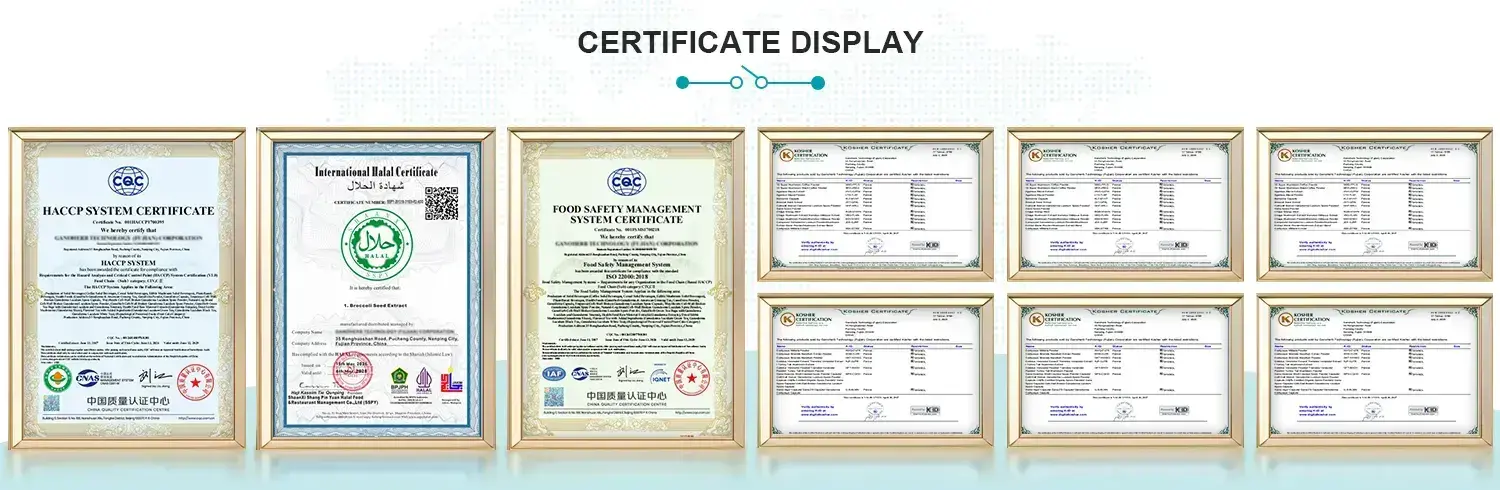
When your quality team looks over work, they can be sure it is good if they have all the documents they need. What does the item look like, what is it made of, are there any heavy metals or liquids left over, how will it be stored, and how long will it last? Ask for a measurement sheet and a COA that is specific to the batch. Write more about GMOs, allergens, and where the food came from if it makes sense. Marks for food safety like Halal, Kosher, and HACCP should say where the food was made. Part 111 of 21 CFR says that companies in the US that make supplements need to check that the names of the ingredients are correct. It takes less time to grade a paper that is easy to read. Look out for words like "FDA compliant" and learn the rules that back them up.
How Natural Astaxanthin Oil Is Made
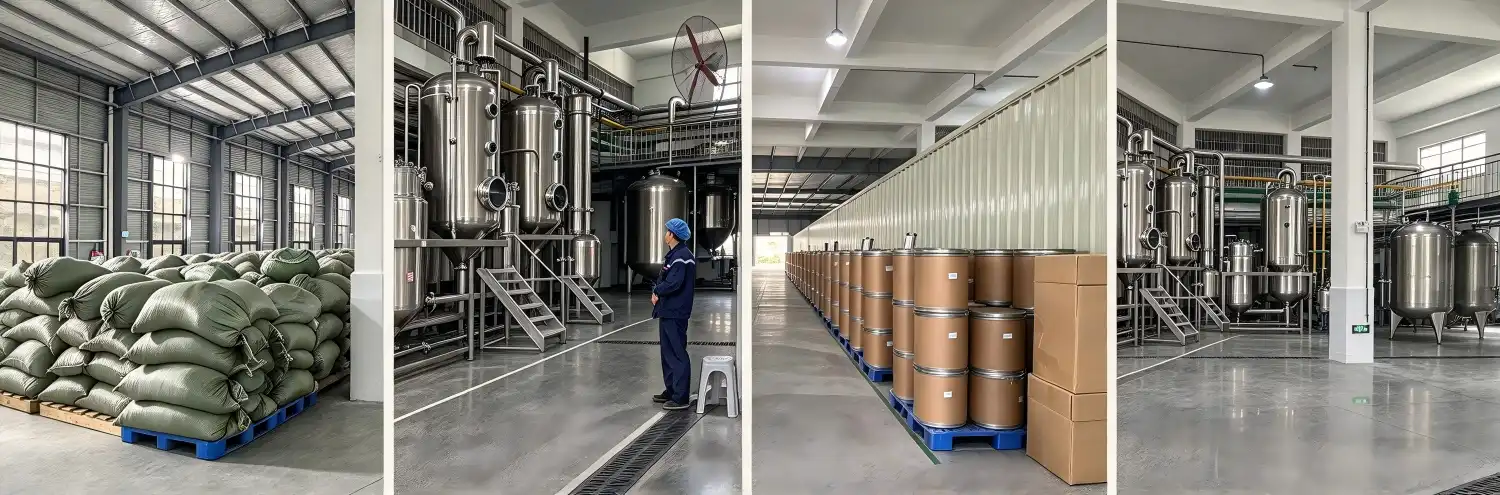
Astaxanthin Oleoresin can be produced from several types of algae, but buyers should understand the raw material source, cultivation conditions, processing methods, and storage requirements before selecting a supplier. A typical production process for Astaxanthin Oleoresin involves preparing the biomass, drying it, disrupting the cells, extracting the target compounds, filtering, concentrating, adding a carrier oil when required, packaging, and conducting quality tests. Haematococcus pluvialis is widely used because its cells accumulate astaxanthin and develop a strong cell wall that can be difficult to break down. Since extraction methods, purification procedures, and processing aids vary between manufacturers, buyers should request detailed process information and relevant quality documentation. For Astaxanthin Oleoresin made from dried algae cultivated in a controlled, closed-tube system, effective cell disruption is particularly important for releasing the astaxanthin from the biomass. Manufacturers should also explain whether solvents, carriers, or other processing aids are used and how any residuals are controlled. Some production methods may yield a concentrated oil with minimal additional ingredients, but the exact composition should always be confirmed through the product specification and certificate of analysis. When evaluating Astaxanthin Oleoresin, check the astaxanthin concentration, carrier-oil composition, residual solvent limits where applicable, appearance, and stability data. Choosing Astaxanthin Oleoresin with transparent sourcing and processing information helps formulators assess product purity, compatibility, and suitability for their intended applications.
Haematococcus pluvialis Extract at a Glance
Here are the core specifications and advantages of our dark red astaxanthin oil, FuYNature Haematococcus pluvialis extract.
- Specification and testing: The oil is dark red and contains astaxanthin at ≥5% or 10%, measured by HPLC, with microbiology that complies with standards. Custom grades reach ≥15% or ≥20%, and the all-trans isomer ratio can be set from ≥70% to ≥85%, so you can match the fill and the label.
- Certifications and traceability: The product carries FSSC22000, HACCP, HALAL, and Kosher certificates. Full-process quality control and traceability run from seed to finished product, covering cultivation, extraction, and the finished oil in each production run. Your quality team can use that traceability when it reviews the supplier and approves a batch for production.
- Supply and support: Production capacity is stable at 100 tons per year, which supports large-scale orders. The oil is made in China, and we support air and sea freight. Our team also offers HPLC testing support, formula customization, and collaborative technical development, so your softgel project gets technical help from the sample stage onward.
These points answer the common approval questions about potency, documents, and volume before you commit to a pilot batch.
How to Choose Astaxanthin Oleoresin for Softgel Production
Supplier Evaluation Criteria
Pick the correct base material for your item, your market, and the amount you need. There are three types of supplement companies, and they all have different ways of looking at pack size, expert help, source, grade, and certificates. There are also their own brands made by these businesses. We check the amount of astaxanthin, how often the runs happen, how stable the data is, the quality of the COA, the capacity, the wait time, how easy it is to export, and how much help there is with the application. These are the most important checks. The Fushan Biotechnology Co., Ltd. sells the same things that you buy. Fushan Biotechnology has been a top American tech company since it began in 2012. 54 patents have been given to its ideas all over the world. Four PhDs lead the company's research and development team. When we have a question, it's the first thing that comes to mind.
Application Guidance by Product Type
There should be a different set of rules for each use. They should look at how strong, stable, full, and how much the softgel is to make sure the oil and carrier mix well. People who make food and drinks and need to control the color, melt powder in water, and keep it from getting too hot can use it. The people in charge of cosmetics should test it to see how it feels, looks, and works with serums, creams, and oils. Labels need to follow rules for cosmetics. Salmon, fancy fish, and chicken feed all change color when astaxanthin is added. It also makes meat taste better. Vines for people and food for animals need to follow different rules, forms, and standards. Before you buy supplements for your eyes, skin, or to help you recover from working out, make sure they do what they say they will do.
Judge Total Landed Cost and Validate Samples
Not the price per kilogram, but the price as a whole. Things you should think about are the active strength, how well the dose works, the packing, the freight, the tests, and the chance of going bad. They might cost less per pill if they use less oil, though. Some grades, like 10%, might cost more per kg than 5% grades. Get a clear sample, the technical data sheet, and the COA before you buy a lot of something. After that, run a test batch. You can see how the colors blend, how stable they are, and how much fill weight there is by running test runs. Right away, let the service know what grade, focus, and amount you need each year. Then they can help you pick the best one.
Conclusion
Being able to mix with the fat in oil-based softgels makes Astaxanthin Oleoresin work well in them. The oil carrier and oil must mix well, and the oil must be kept away from air, light, and heat for it to work. There is less risk before the product is made when there is a clear preparation brief, a controlled oil phase, and a test run. There should be tests to see how stable the oil in bulk and the pills are. You should use a specification sheet, a batch COA, and certificates to show that the quality is good. If you look at the dose form and sign position, you should be able to tell the difference between types like oil, powder, natural, and man-made. There are several things that are checked about a source to make sure it is the right one: its ability, tracking, testing methods, and overall cost. Tests with HPLC have shown that an oil made from algae that is 5% or 10% is proof. It can be kept for 24 months.
FAQ
Is astaxanthin oleoresin suitable for oil-based softgels?
Yes, when the carrier oil, concentration, viscosity, and stability profile match your fill system. Run a compatibility trial with your chosen oil, then confirm fill weight, color, and sediment behavior in a pilot batch before commercial production.
How does oleoresin differ from powder and water-dispersible forms?
Oleoresin is oil-based and goes directly into softgel fills. Microencapsulated powder suits tablets, compressed candy, and stick packs, while water-dispersible forms suit beverages. The terms "astaxanthin oil" and "oleoresin" can describe different carriers, so check the assay basis.
How should I store it?
Keep it sealed, cool, dry, and away from light and heat. We recommend below 4°C for long-term storage. In original sealed packaging under those conditions, our Haematococcus pluvialis extract has a 24-month shelf life.
What should I request from a supplier, and can the grade be customized?
Request the specification sheet, batch COA, stability data, certificates, and technical support. We customize astaxanthin content from ≥5% up to ≥20% and set the all-trans isomer ratio from ≥70% to ≥85%. Judge customization by testing pilot samples against your fill.
Request an Astaxanthin Oleoresin Sample or Bulk Quotation
Want to get Astaxanthin Oleoresin for your softgel line from a company? Histamine pluvialis oil can be bought from FuYNature. in two different strengths [5% and 10%]. They have HPLC tests and come in different grades. They can handle 100 tons per year. Send an email to info@extrabroc.com with your application, the crude oil, the concentration you want to reach, the amount of oil you need, and the country where the oil will be sent. Then, our group will make a model and a price. To find out more, please visit extrabroc.com.
References
1. Marine Drugs, 2014: Astaxanthin: Sources, Extraction, Stability, Biological Activities and Its Commercial Applications—A Review.
2. Frontiers in Plant Science, 2016: Astaxanthin-Producing Green Microalga Haematococcus pluvialis: From Single Cell to High Value Commercial Products.
3. Nutrafoods, 2013: Synthetic Astaxanthin Is Significantly Inferior to Algal-Based Astaxanthin as an Antioxidant and May Not Be Suitable as a Human Nutraceutical Supplement.
4. Phytotherapy Research, 2019: Astaxanthin: How Much Is Too Much? A Safety Review.
5. Critical Reviews in Food Science and Nutrition, 2006: Astaxanthin: A Review of Its Chemistry and Applications.
6. Federal Register, 2007: Current Good Manufacturing Practice in Manufacturing, Packaging, Labeling, or Holding Operations for Dietary Supplements (21 CFR Part 111).