Astaxanthin Oleoresin for Oil-Based Formulas with Consistent Color
If you formulate oil-based dietary supplements, you already know how much color consistency matters on the shelf. Astaxanthin oleoresin — a dark red, lipid-soluble extract derived from Haematococcus pluvialis microalgae — delivers both the deep, uniform pigmentation and the antioxidant potency that premium softgel and oil-based products demand. This guide walks through the science, formulation best practices, sourcing criteria, and supplier evaluation tools that B2B manufacturers and OEMs need to make confident procurement decisions.
What Is Astaxanthin Oleoresin and Why It Matters in Oil-Based Formulations?
The Chemical Identity of Natural Astaxanthin
The color astaxanthin comes from plants and is a type of xanthophyll and a keto-carotenoid. Because its molecules go through both the top and bottom layers of the cell membrane, it can work as an antioxidant across membranes. It mostly shows up as monoester and diester molecules in its oleoresin form, which is much more stable than the free-form version that is made in a lab.
Why the Oleoresin Form Outperforms Powder?
Flaxseed oil, sunflower oil, or MCT oil are all good oils to use with Astaxanthin Oleoresin because they are lipophilic. Powdered forms need to be processed more to get the same spread. Oleoresin mixes with the lipid matrix right away, making a smooth fill that doesn't break up into small pieces. This helps make sure that the color stays the same from one production run to the next.
Color as a Quality Signal
The deep red color of good Haematococcus pluvialis extract is not just for looks. It shows how much color there is. If a substance is shiny, clear, and doesn't have any sediment or phase separation, it means it has a lot of astaxanthin, wasn't processed dirty, and has low oxidation. One of the first quality signs that business-to-business buyers should look for is an even color from batch to batch.
Key Considerations When Choosing Astaxanthin Oleoresin for Your Oil-Based Formulas
Natural vs. Synthetic: A Real Difference
Astaxanthin from H. pluvialis is mostly found in its natural form as it is (3S, 3'S) esterified. Synthetic astaxanthin is made up of three isomers that are mixed in a 1:2:1 ratio. It is not esterified. A lot of studies have shown that the naturally esterified form is better for absorption and staying stable in light. When it comes to marketing, natural origin is not only a choice in places like the US where clean labeling is important, it's also a must.
Concentration Flexibility and Dosing Precision
The quantity needs to be different for each oil recipe. When making softgels, astaxanthin oil levels of 5% or more are common. For eye care or sports recovery formulations, levels of 10% or more are better. People who are buying should see if the supplier has a range of concentrations (from 2% to 10% and above) and if they can specify the all-trans isomer ratio (≥70% to ≥85%) to get the desired effects.
Regulatory and Clean-Label Alignment
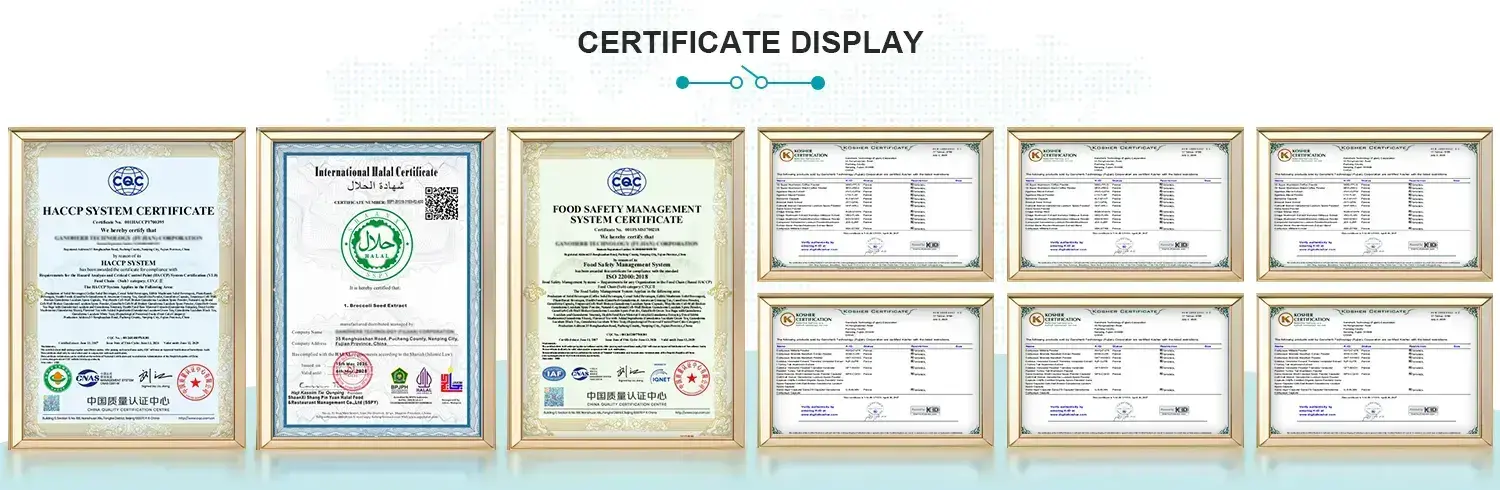
The Food and Drug Administration (FDA) sets the rules for the supplement market in the United States. Companies that have FSSC22000, HACCP, HALAL, or Kosher licensing for their goods show that they have a well-thought-out plan for keeping food safe. People who want to buy Astaxanthin Oleoresin should get HPLC-verified Certificates of Analysis, solvent residue reports, heavy metal screening data, and full microbiology compliance documentation before they decide where to buy it.
Optimizing Formulations with Astaxanthin Oleoresin for Consistent Color and Stability
Managing the Three Enemies of Color Stability
Heat, light, and air are the things that break down carotene colors the fastest. Pure Astaxanthin Oleoresin of high quality keeps its peroxide value below 5 meq/kg. This means that when it is shipped, it has little reactive damage. Formulators should mix the oleoresin with antioxidants like mixed tocopherols, store the mixtures in nitrogen-flushed containers, and make sure the oil doesn't get too hot while it's being filled.
Dosing for Consistent Hue Without Sacrificing Potency
What makes a finished softgel its signature deep red color? It depends on how clear the capsule shell is, how much astaxanthin oil is in the fill oil, and how much active pigment is in the fill oil. A normal 500 mg softgel should start with a 5% oleoresin that is mixed in at a rate of 2% to 4% of the total fill weight. Tests for rheology should be done during development because changing the thickness of the carrying oil can change how evenly the colors are spread.
When making the product, these are the key things that should be done to keep the colors the same and make it last longer:
- Nitrogen flushing during filling: Displaces oxygen from the headspace of softgel blisters and bulk containers, reducing carotenoid degradation and maintaining the red spectrum throughout shelf life.
- Opaque or amber packaging: Protects against photodegradation. Studies show that astaxanthin in clear packaging can lose measurable potency within weeks under standard retail lighting conditions.
- Matched viscosity between oleoresin and carrier oil: When the viscosity of the astaxanthin-rich fraction and the base oil are well-matched, the fill blends evenly, and the color distributes without streaking or pooling.
Taking all of these steps lowers the differences in color between batches of Astaxanthin Oleoresin. This changes how customers see the product and the number of returns.
Sourcing Astaxanthin Oleoresin: What B2B Buyers Should Know?
Evaluating Supplier Credentials
Any reliable Astaxanthin Oleoresin provider should have at least these things on file: microbiology data, heavy metal screening, and solvent residue tests. Manufacturers are less likely to not follow the rules if suppliers use the FSSC22000 or ISO22000 frameworks. This is because there is an organized audit path. You should expect to be able to track the whole process, from growing the algae to extracting it and packing it.
Production Capacity and Supply Continuity
When it comes to elements that come from algae, the supply may be limited by the time of year or the amount that can be stored. You should ask a seller for written proof of their yearly production capacity and proof of steady batch output before you buy from them. While shipping times may not change, a supplier whose yearly production capacity stays at 100 tons can handle changes in demand and help with scaling up.
Pricing, Customization, and Lead Time
There is a big difference in the price per kilogram based on the amount of approval, the quantity, and the size of the order. If someone wants to buy a lot of something, they should deal based on yearly commitments rather than purchasing things as they come up. It's also very important that the supplier can change the all-trans isomer ratio and concentration to help you reach your formula goals. Not all makers give you this much freedom.
Conclusion
Getting natural Astaxanthin Oleoresin from Haematococcus pluvialis is one of the hardest things in the world. Following the rules, keeping the color consistent, and making sure the antioxidants stay stable are not three separate problems; they are all part of the same upstream quality control process. If B2B buyers do their homework on sources, ask for all the paperwork, and test early on to make sure the recipes work well together, they will always be able to make oil-based products that meet customer needs and meet market review.

FAQ
What storage conditions does astaxanthin oleoresin require?
Keep it in their original, sealed box below 4°C, away from air and light. Nitrogen should be flushed through containers that store a lot of things. The shelf life is up to 24 months if kept in these conditions, and not much of the active ingredient is lost.
How do I distinguish natural from synthetic astaxanthin in a Certificate of Analysis?
Astaxanthin from H. pluvialis is mostly found in its natural form, which is in the (3S, 3'S) esterified form. Different types of racemic isomers can be seen in manufactured forms. This isomer profile will be shown by an HPLC test, which will prove the source.
What is the typical all-trans isomer ratio in quality-grade oleoresin?
The high standards begin with at least 70% all-trans isomer content and go up to at least 85%. Higher levels are better for eye health and sports nutrition because they make the nutrients easier for the body to use.
Can astaxanthin oleoresin be used in cosmetic formulations?
Yes. It can be mixed with vitamin serums, creams, and face masks to help fight the damage that UV light does to cells. All claims on cosmetics must be in line with what the FDA says about labels for cosmetics.
Does color intensity alone indicate quality?
That's not right. A deep red color means there is a lot of it, but a low peroxide value and active content that has been confirmed by HPLC are better signs. Data from a lab should always be used to back up what you see.
Request Your Sample from EXTRABROC® — Astaxanthin Oleoresin Supplier
You can get Haematococcus pluvialis Astaxanthin Oleoresin from EXTRABROC® in strengths ranging from 5% to 10%. All-trans isomer ratios can be changed, but the output each year stays at 100 tons. Each batch has certifications for FSSC22000, HACCP, HALAL, and Kosher. It also has HPLC data and all the paperwork needed to keep track of it. Email our team at info@extrabroc.com or visit extrabroc.com to get a sample or technical datasheet from a reputable Astaxanthin Oleoresin supplier.
References
1. Guerin, M., Huntley, M. E., & Olaizola, M. (2003). Haematococcus astaxanthin: Applications for human health and nutrition. Trends in Biotechnology.
2. Ambati, R. R., et al. (2014). Astaxanthin: Sources, extraction, stability, biological activities and its commercial applications — A review. Marine Drugs.
3. Yuan, J. P., et al. (2011). Potential health-promoting effects of astaxanthin: A high-value carotenoid mostly from microalgae. Molecular Nutrition & Food Research.
4. Naguib, Y. M. A. (2000). Antioxidant activities of astaxanthin and related carotenoids. Journal of Agricultural and Food Chemistry.
5. Coral-Hinostroza, G. N., et al. (2004). Astaxanthin esters, carotenoids and fatty acid composition of eggs from broodstock trout fed astaxanthin: A successful example of bioaccumulation. Comparative Biochemistry and Physiology.
6. Fassett, R. G., & Coombes, J. S. (2011). Astaxanthin: A potential therapeutic agent in cardiovascular disease. Marine Drugs.