Natural Lycopene for Beverage Manufacturing: Stability and Ingredient Selection
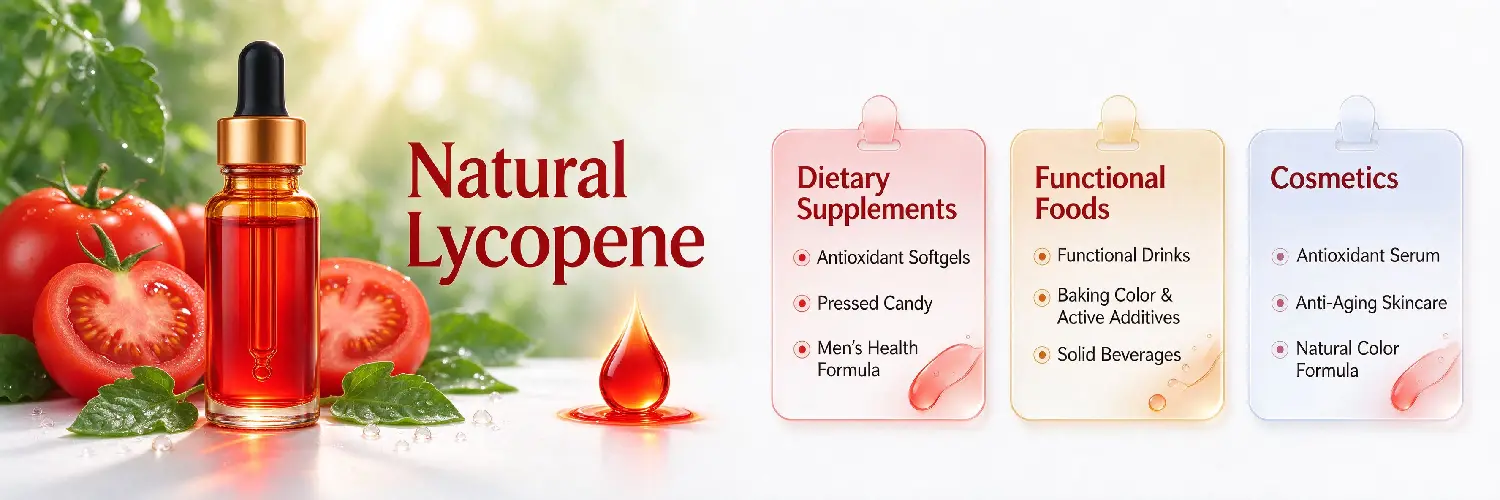
Natural Lycopene works well in drinks as long as the format fits the drink, it is kept safe from light, heat, and oxygen, and it is tested in its final packaging. Lycopene is a red carotenoid that dissolves in fat, so a microencapsulated powder works better in water-based drinks than an oil. It is more important than the percentage on the label to look at the stability, color, and paperwork. This guide tells you how to compare sources, figure out how stable they are, look over paperwork from suppliers, and pick a grade that works for your process. I also talk about how the different grades of FuYNature Lycopene meet the needs of most drinks.
Understanding Natural Lycopene as a Beverage Ingredient
What Natural Lycopene Is and Where It Comes From?
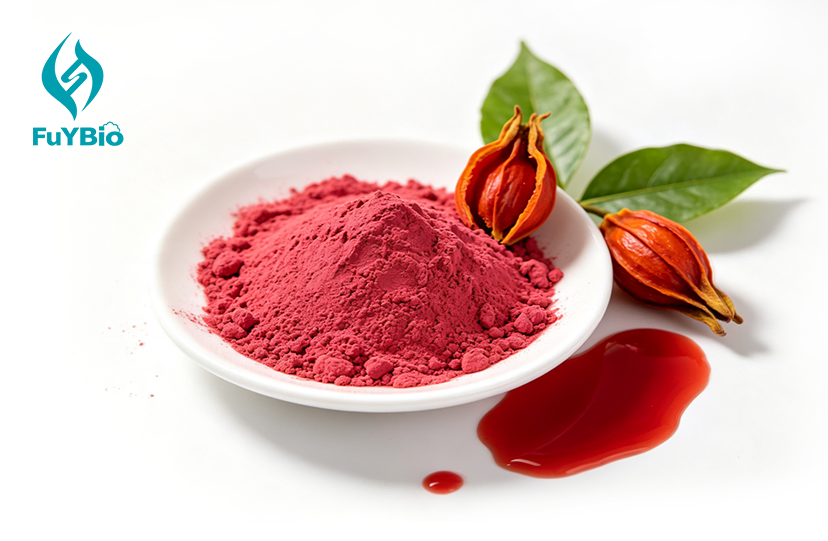
To make tomatoes red, lycopene is what gives them their color. It's also found in watermelon, guava, and pink grapefruit. It is a carotenoid, which means it has long chains of double bonds. Its bright color and susceptibility to light, heat, and oxygen are both due to that structure. Lycopene is not changed into Vitamin A by the body like beta-carotene is, so its main job is to act as an antioxidant. Researchers said in 1989 that lycopene was better at blocking singlet oxygen than the other carotenoids they looked at. Also, lycopene only dissolves in fat and not in water, which is the first problem that beverage developers have to deal with.
Common Commercial Sources and Forms
Tomato parts are frequently where Natural Lycopene is found. It could be sold as a tomato oleoresin, a tomato extract with more ingredients, or a pure lycopene. Standardization, color, taste, and cost change with each choice. A more general extract might have more tomato compounds and a stronger taste, while a purified grade has a more accurate test and is easier to handle. How the ingredient is extracted, the carrier oil it is mixed with, and the concentration all affect how it works in a drink. There are different labels for natural, tomato-derived, organic, and synthetic. To be organic, a product and its production site must each have their own certificate. Before you make your label, ask each supplier where the raw materials come from.
Positioning Claims Responsibly
Scientists are still studying lycopene to find out more about its antioxidant properties, effects on the skin, and effects on the heart. A lab result or a small test does not mean that a label claim is true. In the United States, there are different rules for labeling drinks that are sold as regular foods and supplements that are sold as dietary supplements. Each color has its own set of rules for how it can be used. I think you should wait to write your claims until you've talked to regulatory counsel about the format, dose, and market requirements. Keep your message about antioxidants simple and back it up with proof that you can show.
Key Stability Factors in Natural Lycopene Beverage Formulation
Light, Oxygen, and Heat
The most damage is done by these three things. Light and oxygen break up the chain of double bonds, which makes the red color fade. Heat can change the natural trans form into cis isomers, which speeds up the oxidation process. Shi and Le Maguer did a review in 2000 that talked about how processing food changes the chemical and physical properties of lycopene in tomato products. That means that pasteurization, hot filling, and long holding times should be looked at closely in a beverage plant. Cut down on the oxygen in the headspace, pack the ingredient in something opaque or UV-blocking, and keep it cool until it goes into the tank.
pH, Minerals, Proteins, and Sugars
The drink is just as important as the ingredients. In 2010, Boon and his colleagues looked at how stable carotenoids are in foods and talked about how oxygen, metal ions, and the matrix around them affect degradation. Transition metals like iron and copper can speed up oxidation, so it's important to pay attention to the quality of the water and add minerals to it. A pH that is too acidic can change the charge of an emulsion and push droplets together. Proteins may help keep particles stable, and some plants may add color or help fight free radicals. As the project is being made, change one variable at a time so you can figure out which ingredient caused the color to change.
Physical Instability in the Bottle
Loss of chemicals is only half the story. It's possible for Natural Lycopene particles or oil droplets to settle, rise as a cream layer, separate into phases, or not spread out again after shaking. Even if the lab test looks good, any of these issues will make a deep red drink look bad. What controls this behavior are the particle size, the carrier composition, the viscosity, and the homogenization. After being stored in the cold, being shipped with vibrations, and reaching the end of their shelf life, check samples. At the bottleneck, look at the color, the sediment, and the rings that are forming. If you can, test in the real company package instead of a glass jar.
Choosing the Right Delivery Format and Understanding Bioavailability
Powder, Oil, and Encapsulated Systems
The way lycopene works in your drink depends on the form it’s in. You must emulsify the oil to get it evenly distributed in the water. Oil works well with lipid systems and soft gels. A microencapsulated powder can be mixed into liquids and solids, but the outcome depends on the carrier, the particle size, and the moisture. To keep your crystal powder from becoming too light, you need to be careful with it and keep it out of the light. Choose based on the type of beverage, desired dosage, package type, processing method, and the tools you have at hand. Ask for samples in more than one format before you commit.
Matching Format to Beverage Type
Picks should be made based on the drink. Since clear functional water doesn't have any fat, a powder that can be mixed is a more natural choice. It's easy to mix powder with a dry beverage mix, and a microencapsulated grade works well for that. It may be easier for an oil format to work with a creamy or oily drink, but emulsification is still important. For products that are hot-filled or pasteurized, you should ask for data at the temperature where your process takes place. Also, ready-to-drink drinks need to have the same amount of medicine in each bottle. Before you ask for samples, write down your pH, fat level, and filling temperature.
Bioavailability Beyond Assay
To show good absorption, an assay number that is high is not enough. As lycopene dissolves in fat, the amount that the body absorbs can be changed by the type of fat, carrier oils, particle size, and processing. In 1992, Stahl and Sies found that people took in more lycopene from tomato juice that had been heated than from juice that had not been heated. It is still more likely that cooked tomato products will give you more lycopene than raw ones. It shows that matrix and processing are important. Make sure that the data a supplier gives you is in the format you want to buy. Make sure that in vitro, animal, and human studies are all kept separate before you approve any bioavailability message.
Evaluating Natural Lycopene Quality and Stability Testing
Reading a Specification
A good specification includes things like identity, active ingredients, physical properties, contaminants, packaging, and being able to track the product. There should be a clear way for active content to be determined. HPLC, a common chromatographic method for carotenoids, is used to test FuYNature Lycopene. Find out if a picture only shows lycopene or if it shows all the carotenoids together. Also, ask if the report lists the cis and trans isomers. Make sure you also look at the carrier content. A 5% powder and a 10% oil have different amounts of non-lycopene material in them. Heavy metals and microbiology are listed in our specification as meeting standard without any numerical limits. To find out your grade, please ask for the documents.
Documents Worth Requesting
Your brand is safe if there is a clear paper trail for Natural Lycopene. Ask for the Certificate of Analysis, the technical data sheet, the safety data sheet, the allergen and GMO statements, information on where the product came from, and any stability data. The companies that make our products are certified by GMP, ISO22000, HACCP, and HALAL. Available paperwork and legal standing can be different depending on the grade and market, so let us know what grade you want and where you want it sent before you place your order. Often, application data is more useful than a blank sheet. What the ingredient does in your drink can be seen in its dispersibility, color strength, moisture, particle size, and how well it stores. Compare lots over time to make sure that each batch is the same.
Building a Practical Stability Study
Plan the study before starting. Set test intervals, pass/fail limits, processing temperature, quantity, packaging and storage time. Use HPLC to monitor lycopene retention and pH, color, viscosity, sedimentation, phase separation, flavor and microbiological quality. The faster studies and higher temperature studies help formulators to make decisions faster and real time studies confirm the shelf life. Then make a small batch. This is because the mixing and filling in the laboratory is not always representative of the shear, hold times and heat exposure in the plant. The ingredient has a shelf life of 24 months in a cool, dry place protected from light and heat but the data for your finished drink is different.
Comparing Options, Choosing a Supplier, and Moving to Production
Comparing Solutions and Quotes
You need to compare not just prices or percentage labels but also apps. Natural Lycopene is not absolutely better than Synthetic Lycopene. Choice is a matter of what you want to say about the market, the color, the isomer profile and the cost per unit of active lycopene. The standards are tougher for pure lycopene, but a tomato extract could add flavor and variety. Powders are easy to handle in dry blends, and oils do well in lipid systems. Before comparing quotes, make a list of the MOQ, lead time, freight, customs, Incoterms, and price per active unit. We can help with both air and sea freight. You also have to add in the costs of processing, packaging, testing and possibly reformulation to arrive at the total cost of use.
Matching FuYNature Lycopene Grades to Beverage Needs
This is how our grades relate to common projects for drinks.
-
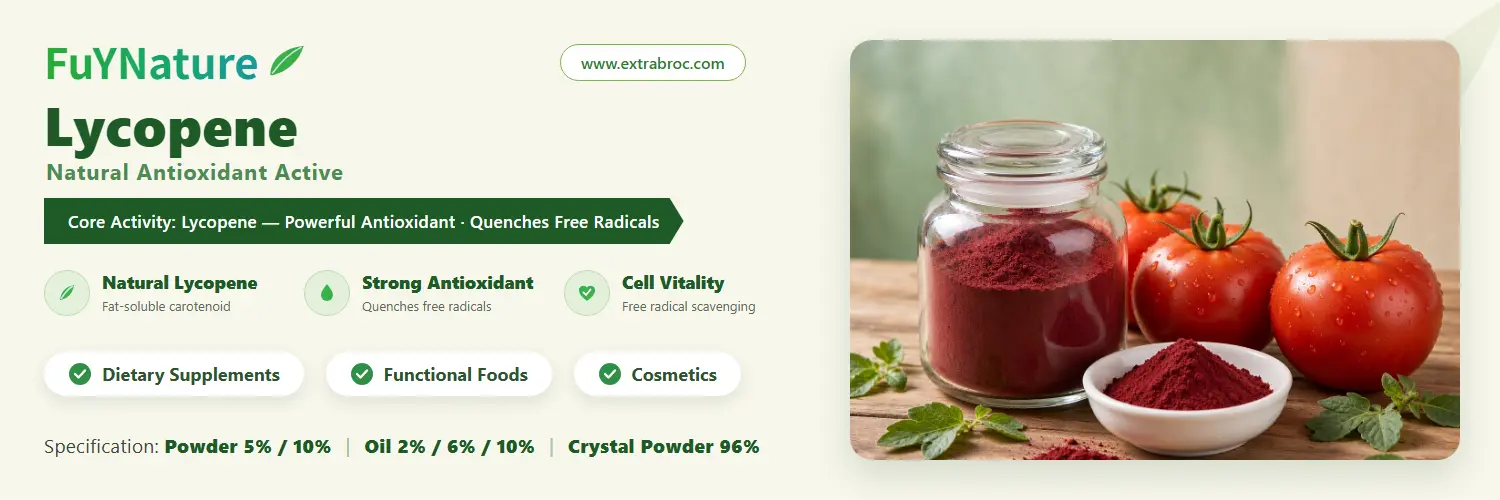
Powder 5% or 10%: This microencapsulated powder suits aqueous systems, solid beverages, and compressed tablets. Powder also simplifies dry blending. It is the first format I suggest testing for water-based drinks and dry mixes. Please confirm the powder format with us before purchase, so the carrier and dispersibility match your formula and process.
-
Crystal Powder 96%: This is the highest concentration in the range. It suits formulations that need a high level of active in a small quantity. The deep red shade is strong, so check how it looks in your own base, and keep the material away from light and high temperature during processing.
-
Oil 2%, 6%, or 10%: Oil grades suit oil-based formulations and softgel capsules. A beverage with a lipid phase may use them, though water-based drinks usually need emulsification first. Emulsifier choice decides stability. Tell us your target content level and beverage type, and we will suggest a suitable grade and dosage form for your project.
All grades are deep red to dark red, have their own smell, are tested using HPLC, and can be stored for 24 months.
From Bench Trials to Commercial Launch
Do some tests on a bench using more than one type of lycopene. For each run, write down the amount, the order of mixing, the shear, the temperature, the holding time, the homogenization, and the look. One variable at a time can be changed, such as the oxygen control, particle size, emulsifier, or carrier. Make sure that the dose you choose fits your formulation goals, the evidence that is available, and the rules in each market you want to reach. Before launch, look at the results from the pilot and the commercial scale, approve the final package, set specifications for the incoming and finished products, and make sure you have a backup supplier or an alternative format that works. Getting quick and clear technical answers from a supplier during sampling is a good way to tell how helpful they will be in the future.
Conclusion
Natural Lycopene can work when the ingredient is right for the drink. Lycopene is a red, light-sensitive, fat-soluble carotenoid, which is sensitive to light, heat, and oxygen. Its stability also depends on minerals, pH and processing. Physical separation can ruin a drink even if the chemical retention looks okay. The microencapsulated powder is suitable for water-based and solid beverages and the oil can be used in lipid-based systems. Assay alone does not determine absorption. Matrix, dietary fat and processing all play a part. Choose either price or label percentage. It is preferable to utilize unambiguous specifications, supplier documentation, and stability testing in both the final package and pilot scale. Claims must be based on knowledge and the rules of the respective markets.
FAQ
Can Natural Lycopene work in water-based beverages?
Yes, as long as the format is right. Plain oil doesn't mix well with water. A microencapsulated powder works well in both liquids and solids. Before you buy, make sure you know the exact powder format from the seller, and test it in your own base.
Should I choose powder or oil?
For systems that are water-based or dry, pick powder. For systems that are lipid-based or softgels, pick oil. Crystal powder with a 96% active level works well in recipes that need a lot of it. Prepare test samples ahead of time.
How do I check stability?
Check the final package for flavor, color, pH, sedimentation, and HPLC retention over the course of the planned shelf life. Add a pilot batch because mixing in the lab is different from processing in a plant.
Which documents should I request?
For your grade and target market, ask for specifications, a Certificate of Analysis, safety data, origin statements, certifications, and information on stability.
Develop a More Stable Natural Lycopene Beverage
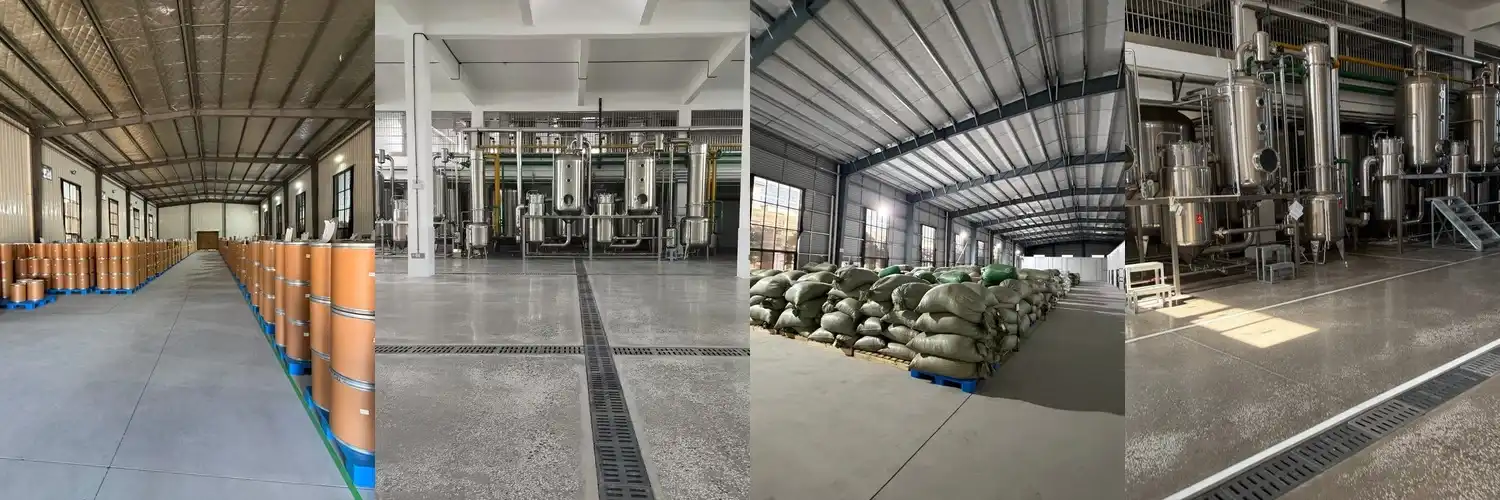
Are you ready to add Natural Lycopene to your next drink? FuYNature comes in powder, crystal powder, and oil grades. All of them have been tested by HPLC and have a shelf life of 24 months. Our team will suggest samples based on the type of drink, the target market, the annual volume, the dosage, the processing conditions, and the package that you send to info@extrabroc.com. Visit extrabroc.com to find out more about a Natural Lycopene supplier.
References
1. Archives of Biochemistry and Biophysics, 1989
2. The Journal of Nutrition, 1992
3. Nutrition Research, 1999
4. Journal of the American College of Nutrition, 2000
5. Critical Reviews in Food Science and Nutrition, 2000
6. Critical Reviews in Food Science and Nutrition, 2010