What Should Buyers Check When Sourcing Natural Lycopene in Bulk?
If you are planning to buy a lot of Natural Lycopene, there are six things to take into account: the plant source, the extraction method, the verified lycopene content, the product form, the quality documents, and the total shipping cost. If the test results are ambiguous, the powder doesn’t fit your formula or the paperwork is not right for your market, you can’t choose based on how cheap it is per kilogram. This guide was written to help US purchasing teams easily compare lycopene suppliers, manufacturers, or distributors before placing a large order.
1. Confirm the Natural Lycopene Source and Extraction Process
Ask Where the Lycopene Comes From
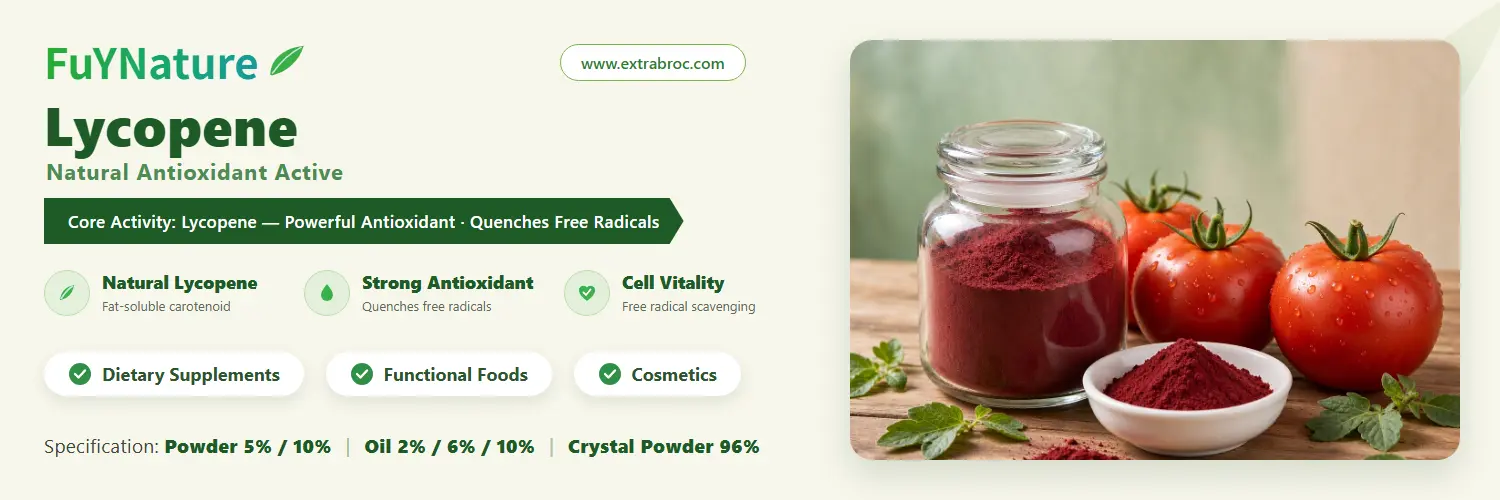
Lycopene is the pigment which gives tomatoes their red color. It is also found in watermelon, guava and pink grapefruit. Tomato sauces and other tomato-based foods are some of the best. So many ingredients start with tomatoes, but a buyer should not count on this. Ask the supplier what part of the plant is used, where it is grown and how each batch can be traced back to its source. A clear traceability record makes it easier for your quality team to investigate an issue immediately if it occurs. If the supplier can’t tell you where the goods are from, then you should wait and ask for samples.
Understand How the Extract Is Made
Each step of extraction, concentration, purification, and drying changes the final ingredient. These steps change the color, purity, stability, and the path your team has to take to follow the rules. Light, heat, and oxygen can change lycopene, so it's important to be careful when handling it and to package it safely. If solvents are used, ask for a report on the amount of solvent that was used and a manufacturing flow chart. A short summary of the process will tell you whether you are buying an oil, a powder that has been watered down, or a pure crystal. As well, find out how the supplier stops oxidation while the product is drying and filling. Over time, oxidation can fade the deep red color and lower the active ingredient level.
Separate Natural, Synthetic, and Broad Tomato Extract
Names that sound alike are often used for three different things. A standard lycopene ingredient lists the amount of lycopene that has been measured. Lycopene is found in a wide range of tomato extracts, but the amount of lycopene in them may be low or not stated at all. Chemical synthesis is how synthetic lycopene is made. Write down what kind of one of the three you are buying and ask the seller if any synthetic material is mixed in. That written statement backs up what your label says. In the United States, it also helps your regulatory team decide whether the ingredient is safe for use in food, supplements, or cosmetics.
2. Check Lycopene Potency, Form, and Bioavailability
Read the Assay Carefully
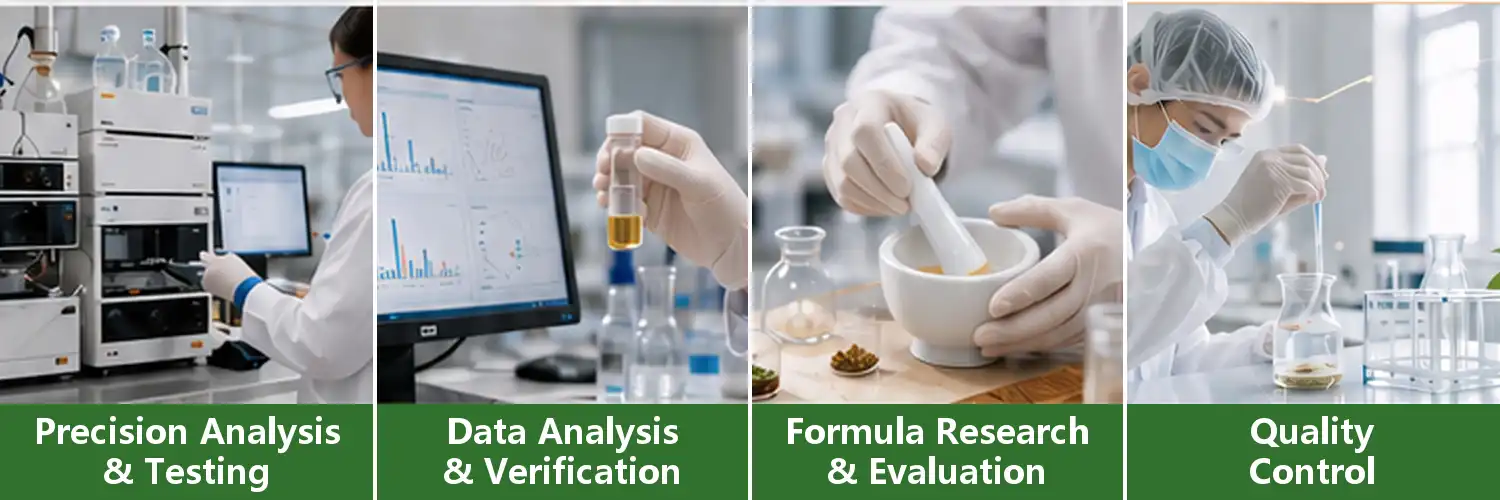
A percentage on a spec sheet doesn't always show what's going on. Find out if the number shows total lycopene, all-trans lycopene, or a combined isomer count. Also, find out how it was made. HPLC is the standard way to measure carotenoids because it can separate lycopene from pigments that are related to it. Color-based methods, on the other hand, can give false readings about the amount present. An HPLC test is done on our Natural Lycopene. Instead of a generic sheet, ask for a Certificate of Analysis that is specific to the batch, and if you can, compare more than one lot. Numbers that stay the same from batch to batch say more about a supplier than one great result.
Match the Form to Your Formula
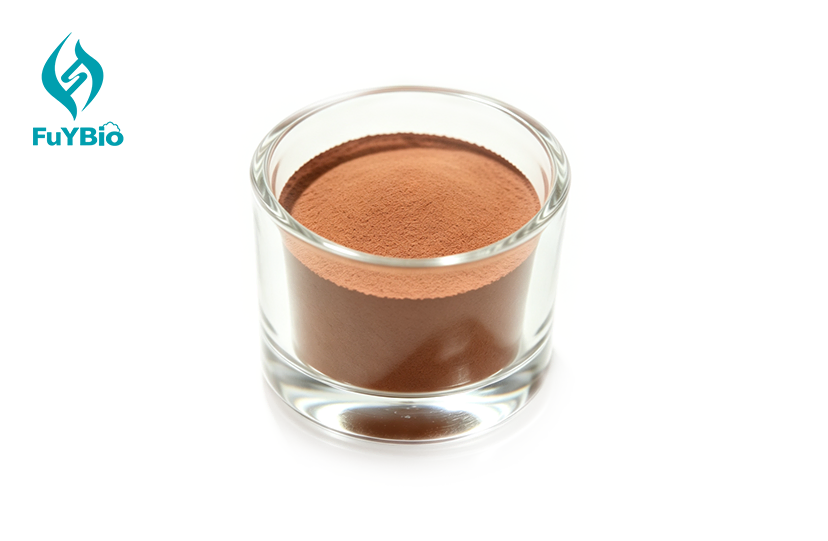
Having the right format saves time when reformulating. Powder at 5% or 10%, crystal powder at 96%, and oil at 2%, 6%, or 10% are all in our range. The microencapsulated powder works with liquids, solid drinks, and compressed tablets. Before buying, buyers should confirm with us the powder format. Crystal powder works well in recipes that need a lot of active ingredient in a small amount. Oil goes well with softgel capsules and other items that are made from oil. If your target content isn't in one of these grades, send us a description of your goal, and we'll help you find the right grade and dosage form.
Think About Absorption and Stability
Because Natural Lycopene dissolves in fat, the body absorbs it best when it is combined with fat. Also, studies show that tomato products that have been heated have more lycopene that can be absorbed than raw tomato products. This means that format and processing change the results. This is one reason why oil-based and softgel products are so popular. The body doesn't change lycopene into vitamin A, so it only serves as an antioxidant. During the processing, keep the material away from light and high temperatures. Before you make a lot of them, see how the deep red color looks in your own base. The people you want to buy your product should be able to understand any claims you make about it.
3. Evaluate Quality Documents, Certifications, and Supplier Capability
Request the Full Document Set
You should ask for proof of a supplier's work before you approve them, not after the first shipment arrives. A useful set has a Certificate of Analysis, a product specification, a Safety Data Sheet, a manufacturing flow chart, an allergen statement, and results for microbiology and contaminants. Heavy metals and microbiology are listed in our specification as "Meets standard" without any numerical limits. Because of this, we encourage buyers to ask for the documents that are available for their grade. Match the paperwork to what it will be used for. For the US market, your regulatory team should look over the records for a dietary supplement, a drink, and a cosmetic. Each may need different ones.
Verify Certifications at the Production Site
If the certificate is from a different facility, it doesn't mean much. Make sure that the GMP, ISO22000, HACCP, or HALAL certificate covers the site where your lot is made, and look at the dates that it was issued and when it expires. The companies that make our products are certified by GMP, ISO22000, HACCP, and HALAL. We make sure we can offer the right paperwork and regulatory status once we know your grade and the market you want to reach. Dietary supplement makers in the US also have to follow the FDA's current good manufacturing practice rules, which can be found in 21 CFR Part 111. Ask your supplier how their records will help your own audits.
Judge Capacity and Communication
Having a product available is just the beginning. Find out if the company controls production or just acts as a middleman in trade. Also, find out how much it can produce each month and how it handles lead times and safety stock. If you need to ship or fly freight, you should also look at the export support. We can handle both air and sea freight, and the details of our products can be changed to fit the needs of our clients. Getting clear, quick answers during the quotation stage is often a good indicator of how well orders will go in the future. Ask for the name of a technical contact person who can answer questions about the formulation and specifications.
4. Analyze Pricing, MOQ, and Total Procurement Cost
Compare Cost per Unit of Active Lycopene
Price per kilogram gross can be misleading. The amount of active in a 10% powder and a 96% crystal powder is very different. To find the cost per unit of active, divide each quote by the percentage of lycopene it contains. Then add up the costs of shipping, testing, packaging, freight, insurance, duties, and any processing losses that are likely to happen. This gives you a landed cost that you can use to compare prices from different suppliers. A simple spreadsheet with one line for each supplier makes it easy to negotiate later and keeps the math clear for your finance team. It also shows right away if a lower price masks a weaker item.
Break Down MOQ and Lead Time
Ask for price quotes that are broken down into different levels to cover samples, pilot orders, standard commercial volumes, and custom batches. Since powder, crystal powder, and oil are all different products, there should be a minimum order quantity for each grade. Lead time is made up of three parts: shipping, quality release, and production. When you split them up, you can see where delays might happen and plan your inventory around the dates of your launches. A supplier who goes over each step in great detail is likely to plan capacity carefully. For a new project, a small pilot order lets you try out an ingredient in your recipe before you buy more of it.
Lock In Commercial Terms
Having written terms stops most disagreements. Before the first order, agree on the Incoterms rule, the payment terms, the packaging, the amount of time the food has left to go bad at delivery, and how to file a claim. The Incoterms rules are put out by the International Chamber of Commerce. They say who pays for the freight and who is responsible for risk at each stage of the shipment. Explain what happens when a lot doesn't meet the requirements, such as retesting, replacement, or credit. If you keep our Natural Lycopene in a cool, dry place away from light and high temperatures, it will last for 24 months. Check the shelf life every time a shipment comes in to make sure it's still good.
5. Match Lycopene to Your Application and Avoid Common Risks
Choose by Product Category
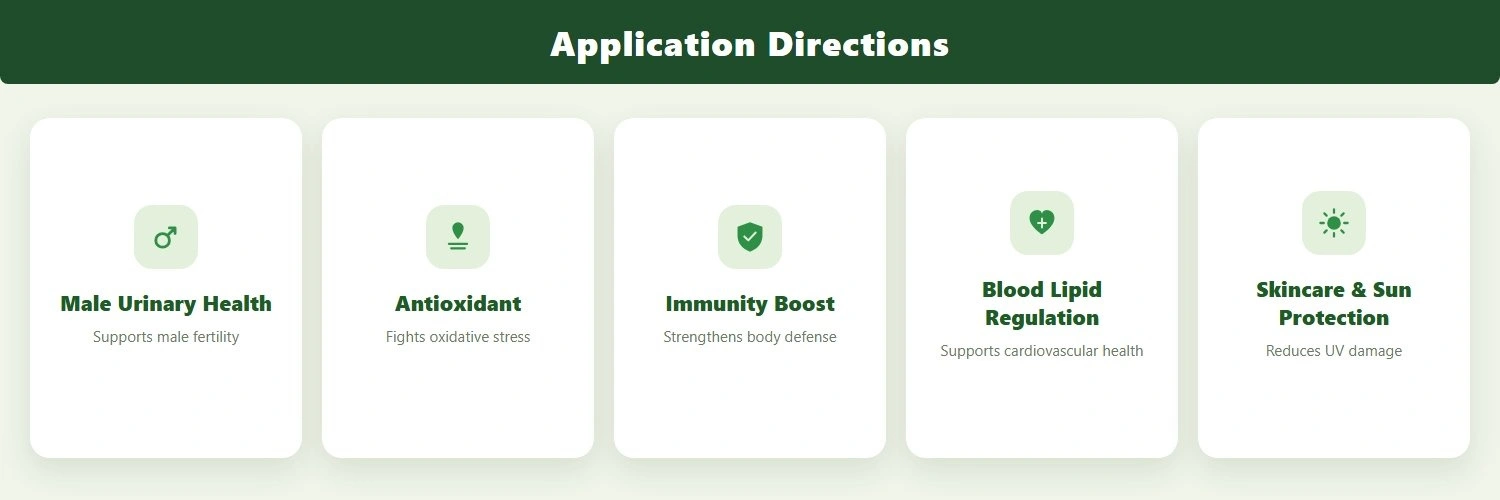
The needs in each group are different. Some supplement brands, such as antioxidant softgel capsules, compressed candy, and men’s health formulations, place a heavy emphasis on ensuring their products are of a standard strength and dosage form. Food and drink companies consider how the color and active ingredients mix. For example, lycopene adds color and active ingredients to functional drinks, solid drinks and baked products. Cosmetic teams test antioxidant essence or anti-aging skincare and natural pigment formulas for color stability and compatibility with oils. Test it on your own base no matter what category it falls into, because the deep red color and stability can vary from one formula to the next.
Avoid Common Buying Mistakes
There are 3 errors that keep repeating themselves. If it says natural or high potency and doesn't say where it came from, people will buy it. They took the cheapest quote in the end without testing the material. They also don't look into storage, considering that lycopene can be broken down by oxygen, light and heat. You can avoid these mistakes by asking for batch records, testing the application and checking the packaging and storage conditions when the goods arrive. Add change-control and rejected-batch procedures to the supply agreement so your team is aware of any changes to the process or specs before they hit the production line.
Follow a Step-by-Step Procurement Process
First you need to decide on the use, target potency, dosage form, annual volume and market you want to reach. Find suppliers with documented capabilities and test samples for identity, potency, stability, dispersibility and sensory performance. If possible, test more than one batch. Check the systems for quality and traceability. Score each supplier on a sheet with different weights for price, quality and documentation. Finally, include rules for acceptance, delivery dates, and how to cope with changes in the contract. We can discuss reference ideas for formulation and dosage forms, but development of a custom finished product is something that must be discussed separately.
Conclusion
If you need Natural Lycopene in bulk, you’re better off comparing facts rather than headline numbers. The main checks are the test method and isomer details, product form, botanical source and match between the documents and target market. Different powders work best with different formulas. Crystal powder and oil. Light, heat and fat solubility all impact performance and testing in the final base is therefore important. The certificates shall indicate the real place of production and the price shall be fixed per unit of active lycopene. Please clarify MOQ, lead time and terms. A structured process with change control language, involving multiple batch review and sample testing, reduces risk and ensures production consistency.
FAQ
What should I confirm first?
Check the source, the assay method, and the material to make sure it is natural. Ask for an HPLC-based Certificate of Analysis that is specific to the batch.
Should I choose powder, crystal powder, or oil?
Oil works well for softgels and oil-based formulas. The microencapsulated powder works well in tablets, solid drinks and water systems. Crystal powder at 96 percent is a good choice for recipes that require a lot of active ingredients in a small amount.
What are the storage conditions and shelf life?
Keep the stuff in a cool, dry place that is out of the way of light and heat. When kept this way, the shelf life is 24 months.
Which certifications apply?
The companies that make our products are certified by GMP, ISO22000, HACCP, and HALAL. Sort the documents by grade and market, and then tell us both.
Can I request a different content level?
Yes. Send us your target specifications, and we'll help you choose the right grade and dosage form.
Request a Natural Lycopene Bulk Quotation
Do you want to make a supplement, functional food, drink, or skin care product? FuYNature has Natural Lycopene in the form of powder, crystal powder, and oil. It has been tested by HPLC and can be stored for 24 months. We can make sure you get the right grade of Natural Lycopene for your formula and the people you want to sell it to. Send your application, the content you want to use, and an estimate of the volume to info@extrabroc.com. You can find out more at extrabroc.com.
References
1. Story EN, Kopec RE, Schwartz SJ, Harris GK. "An Update on the Health Effects of Tomato Lycopene." Annual Review of Food Science and Technology, 2010.
2. Stahl W, Sies H. "Uptake of Lycopene and Its Geometrical Isomers Is Greater from Heat-Processed than from Unprocessed Tomato Juice in Humans." The Journal of Nutrition, 1992.
3. Khachik F, Carvalho L, Bernstein PS, et al. "Chemistry, Distribution, and Metabolism of Tomato Carotenoids and Their Impact on Human Health." Experimental Biology and Medicine, 2002.
4. Rao AV, Agarwal S. "Role of Antioxidant Lycopene in Cancer and Heart Disease." Journal of the American College of Nutrition, 2000.
5. Boileau TW, Boileau AC, Erdman JW. "Bioavailability of All-trans and cis-Isomers of Lycopene." Experimental Biology and Medicine, 2002.
6. U.S. Food and Drug Administration. "Current Good Manufacturing Practice in Manufacturing, Packaging, Labeling, or Holding Operations for Dietary Supplements, 21 CFR Part 111." Federal Register, 2007.